

Content syndication can dramatically increase the reach and engagement of your technical articles. By republishing or cross-posting your content on developer-focused platforms like Dev.to, Hashnode, and Medium, you can expand your audience by 300–500% while maintaining SEO integrity through proper use of canonical tags. Paid options, such as daily.dev Ads and newsletter sponsorships, offer targeted visibility for lead generation.
Here’s what you need to know:
- Free Channels: Platforms like Dev.to, Hashnode, and Medium are ideal for tutorials, guides, and technical posts. Use canonical tags to safeguard SEO and time syndication 7–21 days after publishing on your site.
- Paid Channels: daily.dev Ads and developer-focused newsletters provide precise targeting for promoting tools and frameworks. Podcast sponsorships enable deeper connections through audio.
- SEO Best Practices: Always use canonical tags, delay syndication to avoid conflicts, and track performance with UTM parameters.
- Automation: Tools like Omni-Publisher or custom workflows can streamline syndication, reducing manual effort and ensuring consistent distribution.
Content syndication is a scalable way to maximize the ROI of your technical content while connecting with engaged developer communities.
What Content Syndication Means for Developer Marketing
::: @figure 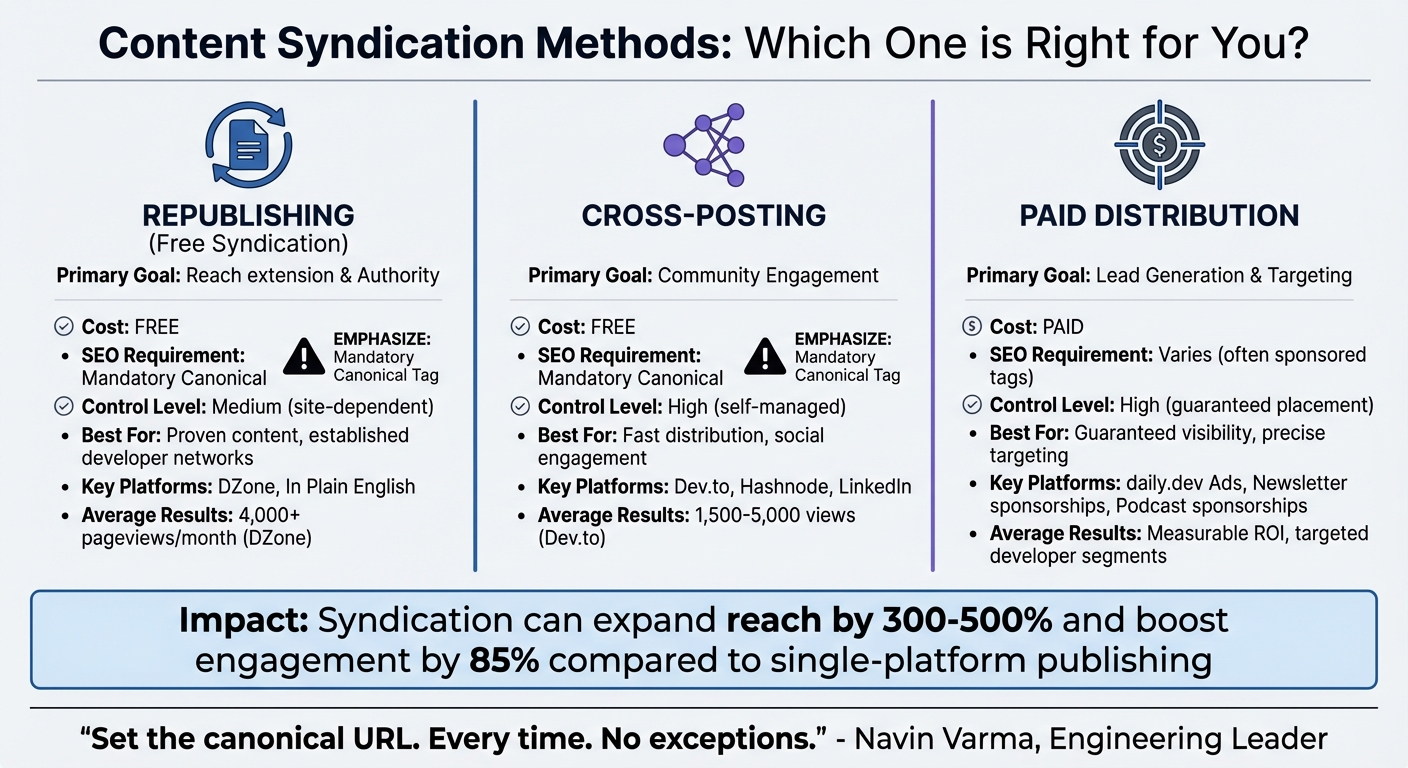 {Content Syndication Methods Comparison: Republishing vs Cross-Posting vs Paid Distribution}
Content syndication takes your technical articles and shares them on third-party platforms, always with proper attribution . This approach allows your content to reach new audiences within developer communities, giving it a fresh wave of visibility. To ensure your original work remains the authoritative source, a rel=canonical tag is essential. This tag signals to search engines which URL holds the original content .
The impact? Syndication can expand the reach of your technical content by 300-500%, and engagement rates soar by 85% compared to sticking to a single platform . For instance, articles on DZone average over 4,000 pageviews in just the first month, while posts on Dev.to typically gather between 1,500 and 5,000 views . By syndicating, you’re no longer limited to your blog’s audience - you’re stepping into developer communities with millions of monthly readers.
To get the most out of syndication, it’s crucial to understand the differences between republishing, cross-posting, and paid distribution, so you can pick the right method for each piece of content.
Republishing vs. Cross-Posting vs. Paid Distribution
Each syndication method serves a distinct purpose. Here’s how they stack up:
Republishing (or free syndication) involves sharing your existing technical articles on third-party websites, always with clear attribution back to the original source . This method helps expand the reach of content that’s already proven successful while boosting your credibility in established developer networks. Using a rel=canonical tag is non-negotiable here .
"Set the canonical URL. Every time. No exceptions." - Navin Varma, Engineering Leader
Cross-posting focuses on distributing your content across platforms you control or community-driven spaces like Dev.to, Hashnode, and LinkedIn . It’s all about fast distribution, sparking social engagement, and connecting with developers. You retain full control over how and when your content appears. As with republishing, canonical tags are a must .
Paid distribution involves purchasing placements for your content on high-visibility platforms to target specific audiences and generate leads . This could mean in-feed ads on developer platforms, newsletter sponsorships in niche communities, or even podcast sponsorships. The return on investment is measured differently here - you’re paying for guaranteed visibility and direct access to targeted developer segments.
Here’s a quick comparison of these methods:
| Method | Primary Goal | Cost | SEO Requirement | Control Level |
|---|---|---|---|---|
| Republishing | Reach extension & Authority | Free | Mandatory Canonical Tag | Medium (site-dependent) |
| Cross-posting | Community Engagement | Free | Mandatory Canonical Tag | High (self-managed) |
| Paid Distribution | Lead Generation & Targeting | Paid | Varies (often sponsored tags) | High (guaranteed placement) |
Your choice depends on your objectives. For quick interaction and community engagement, cross-posting to platforms like Dev.to is a smart move. If you’re aiming for broader reach and authority, republishing on editorial-heavy sites like DZone or In Plain English (which attracts roughly 3.5 million monthly views from over 200 countries ) can deliver strong results. For guaranteed visibility and precise targeting, paid distribution is hard to beat.
Up next, we’ll explore both free and paid channels to help you syndicate your developer content effectively.
sbb-itb-e54ba74
Free Syndication Channels for Developer Content
Free syndication channels allow you to connect with established developer communities without spending a dime. Each platform comes with its own quirks, audience preferences, and technical requirements. Selecting the right one and using canonical tags correctly can help protect your SEO. Here's a breakdown of some popular free channels, setting the stage for paid options discussed in the next section.
Dev.to: Community Engagement
Dev.to is all about fostering quick feedback and active conversations, making it ideal for tutorials and how-to guides that thrive on developer input. The platform supports automation through a simple REST API but comes with a few quirks - posts are limited to four lowercase tags without special characters. Since your content is hosted on Dev.to's domain, you'll have less control over SEO compared to platforms that allow custom domains.
To safeguard your SEO, set the canonical_url in your Markdown front matter or API payload. This is important because Dev.to's high domain authority could otherwise cause its version of your content to outrank your original post.
"Dev.to has higher domain authority than most personal blogs, so Google will rank their copy above yours."
- Ryan Cwynar, Software Developer
For best results, wait 7 to 21 days after publishing on your own site before syndicating to Dev.to. This gives search engines enough time to index your original content .
Hashnode: Developer-Focused Blogging Platform
Hashnode strikes a balance between SEO control and community visibility. You can publish on a custom domain while benefiting from network discovery, which makes it a strong choice for technical posts. The platform uses a GraphQL API for syndication, and you can set your canonical link through the originalArticleURL field. Keep in mind that tags on Hashnode are objects requiring both a name and a slug, so you may need to tweak your automation scripts.
Hashnode is particularly well-suited for long-form content, such as thought leadership pieces and detailed technical tutorials. It’s a great way to build your personal brand while maintaining your SEO equity.
Medium: Broad Reach with Paywall Tradeoffs

Medium offers access to a massive audience, thanks in part to partnerships with publications like In Plain English, which draws around 3.5 million monthly views . The platform’s "Import a story" tool automatically sets the rel=canonical tag, but you’ll want to double-check formatting, especially for code snippets . Medium supports up to five title-case tags and is best for explainers and opinion pieces rather than quick, technical guides.
Reddit and Hacker News: High Visibility with Community Rules
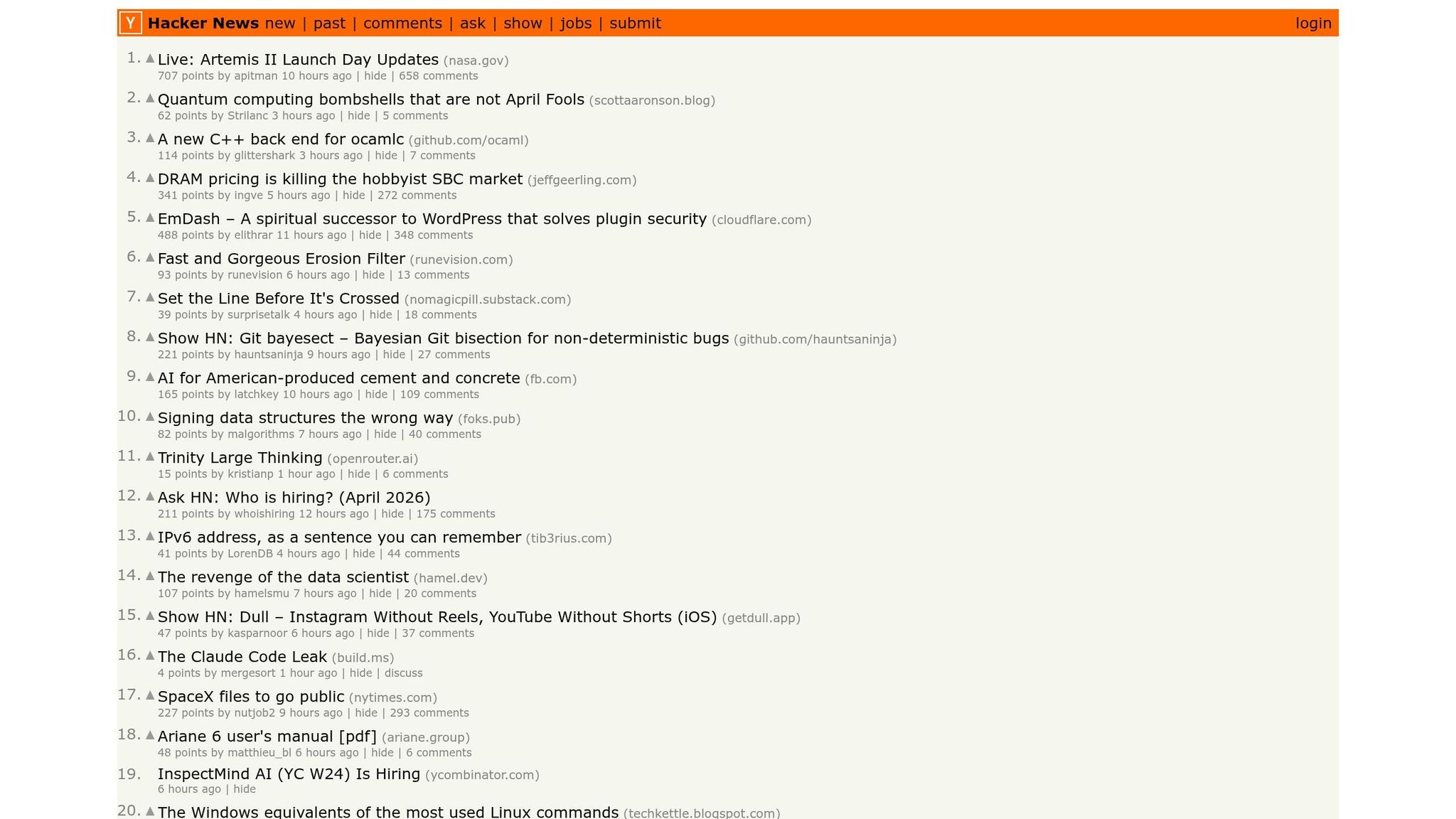
Reddit and Hacker News are more about sharing links and summaries than full-text syndication. These platforms can drive significant traffic back to your original content, but they come with strict community guidelines. Self-promotion without meaningful engagement is often flagged as spam . If your post gains traction on Hacker News, expect a substantial traffic spike - but keep in mind that this is highly unpredictable.
When sharing links, always use absolute URLs. Relative paths may break when shared outside your domain .
| Platform | Best For | SEO Control | Syndication Method | Tag Limit |
|---|---|---|---|---|
| Dev.to | Quick feedback & Community | Low (Platform-hosted) | REST API / Front matter | 4 tags |
| Hashnode | Personal branding & Network | Medium (Custom Domain) | GraphQL API | Object-based |
| Medium | Broad reach & Essays | Low | Manual Import Tool | 5 tags |
| Reddit/HN | Traffic spikes & Discussion | High (Link-only) | Manual submission | N/A |
Each of these platforms offers distinct advantages. Choose the ones that align best with your content goals and audience strategy. By leveraging these free options effectively, you can increase your visibility while safeguarding your SEO.
Paid Syndication Platforms for Developer Marketing
Paid syndication in developer marketing provides predictable ad placement and precise targeting. While it involves upfront costs, a well-planned syndication strategy can yield measurable returns through better-quality traffic and more accurate lead tracking.
daily.dev Ads: In-Feed Targeting for Developers
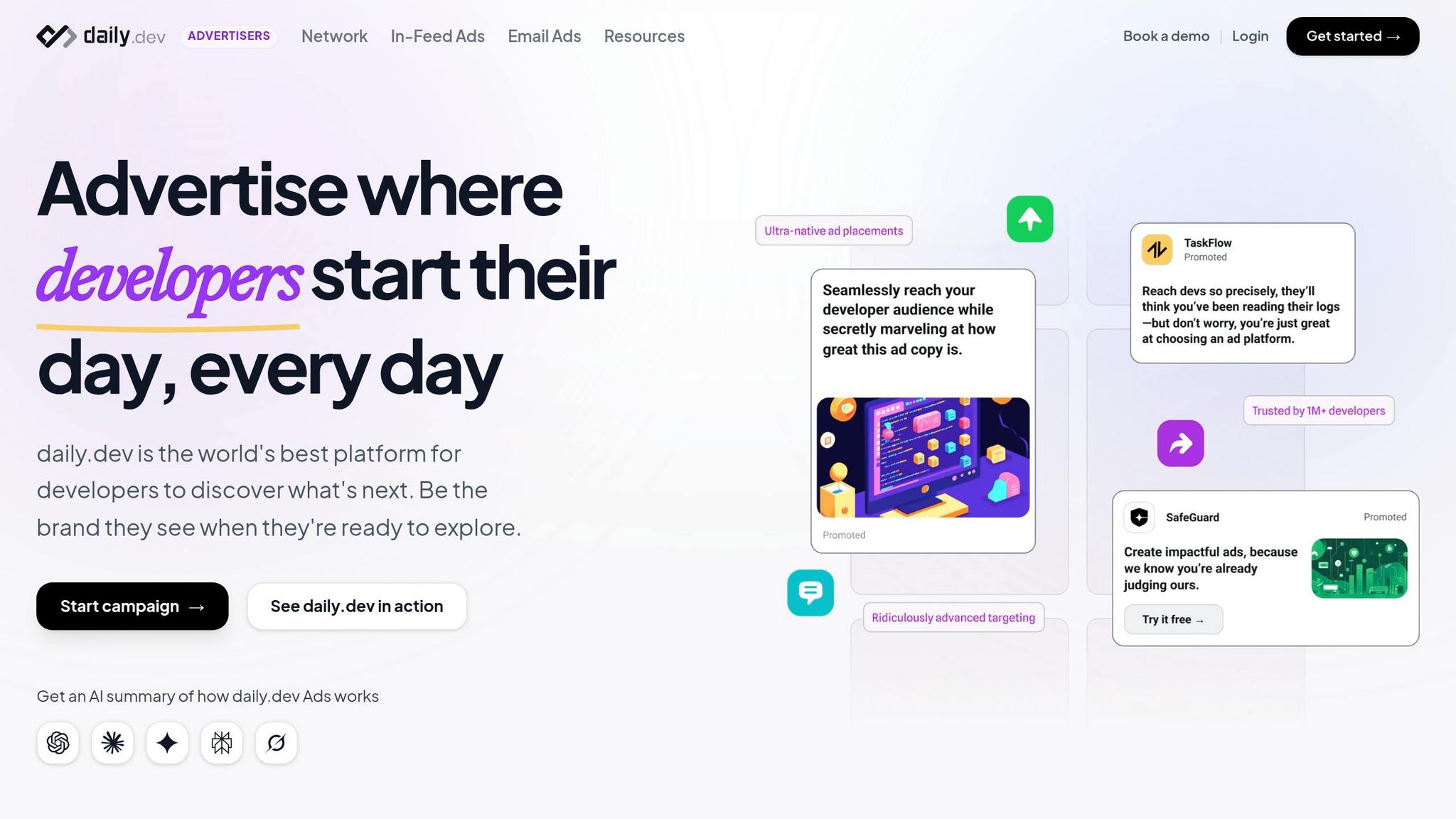
daily.dev Ads integrates sponsored content directly into personalized feeds, offering precise targeting options. You can focus on factors like seniority (from aspiring to senior engineers), programming languages (e.g., JavaScript, Python, Swift), and popular tools (like Docker, Kubernetes, and Visual Studio Code). This platform reaches over 1 million developers worldwide and stands out with a 4.8/5 rating on Product Hunt, earning "Product of the Year" recognition .
Unlike general social platforms, daily.dev caters specifically to developers in an active discovery mode - perfect for those exploring technical tools and solutions. It’s designed as a desktop-first platform, aligning with how developers evaluate APIs and software tools. Major brands like Google, Atlassian, Notion, and JetBrains have used daily.dev Ads to position their products alongside industry leaders, leveraging the platform’s credibility.
daily.dev also supports server-side ad tracking APIs for real-time monitoring while prioritizing user privacy. Additionally, it offers personalized email ads tailored to developers' specific interests, extending its reach beyond the feed.
For those looking to expand further, newsletter sponsorships serve as a complementary paid channel to tap into engaged developer audiences.
Newsletter Sponsorships: Reaching Niche Developer Audiences
Newsletter sponsorships are another effective way to connect with developers. These newsletters often focus on specific languages, frameworks, or technical topics, ensuring your content reaches a highly engaged and opt-in audience. Subscribers actively choose to receive these updates, leading to higher engagement rates compared to standard display ads.
The cost of newsletter sponsorships varies, depending on factors like audience size and quality. However, the ability to target niche developer communities makes this option particularly appealing for brands looking to establish thought leadership or promote specialized tools.
Developer Podcast Sponsorships: Audio Engagement
Podcast sponsorships offer a unique way to build brand credibility and connect with developers. Many developers listen to podcasts during their commutes or while coding, making audio an effective medium to reach them during these moments. Host-read ads, in particular, feel more authentic and allow for deeper explanations of complex products or concepts.
Typical pricing for podcast sponsorships ranges from $25 to $50 per thousand downloads (CPM), with premium shows sometimes charging more. Multi-episode campaigns tend to perform best, as they help build familiarity over time. Partnering with a host who has a technical background aligned with your product can further enhance the impact of your sponsorship.
| Platform Type | Best For | Typical Cost Range | Key Advantage |
|---|---|---|---|
| daily.dev Ads | Product adoption, lead generation | Custom pricing | Precise targeting by language, seniority, tools |
| Newsletter Sponsorships | Niche communities, thought leadership | Varies | High engagement from opt-in subscribers |
| Podcast Sponsorships | Brand credibility, detailed storytelling | $25–$50 CPM | Authentic host endorsements |
Building a Content Syndication Strategy
Syndication works best when you carefully decide what content to share, where to share it, and when. It’s a way to expand your reach using proven content without undermining your site’s authority.
Start by pinpointing your highest-performing content - think tutorials, SDK guides, or case studies that already show strong engagement, like high completion rates or extended time-on-page. These are your top candidates for syndication. However, be sure to keep 20–40% of your best material exclusive to your site. This could include cornerstone guides or proprietary research, which add unique value and encourage readers to visit your domain directly .
Timing is crucial for SEO. To protect your site’s authority, wait 7 to 21 days after publishing content on your own site before syndicating it elsewhere. This delay ensures search engines recognize your original URL as the primary source. Always include canonical tags in syndicated pieces to maintain proper attribution (see the SEO Considerations section for more details).
When it comes to platforms, match your content to the right channels. For instance, free platforms like Dev.to are great for tutorials, while paid options like daily.dev Ads work well for thought leadership and lead generation . Tailor your calls-to-action for each audience - developer-focused communities often respond better to options like "View Docs", "Try the Sandbox", or "Clone the Repo" .
Once your content is prioritized, focus on scheduling its release to maximize SEO benefits.
What to Syndicate and What to Keep Exclusive
Not every piece of content should follow the same path. Evergreen tutorials, quickstart guides, and architecture deep dives perform particularly well on free platforms like Dev.to and Hashnode. These articles often generate between 1,500 and 5,000 views and cater to developers looking for practical solutions .
Other strong syndication candidates include comparison guides and postmortems, which provide lasting value without requiring frequent updates. On the other hand, content like product announcements, proprietary methodologies, or original research should stay exclusive to your site - at least for the first few weeks. This ensures you maintain a competitive edge while building anticipation.
For paid platforms like daily.dev Ads, focus on thought leadership content. This type of material helps position your brand alongside industry leaders and is ideal for promoting tools, frameworks, or technical concepts that require more in-depth explanation. With over 1 million developers actively exploring content, daily.dev Ads offers a prime opportunity. Use paid syndication wisely - limit it to 1–3 high-quality pieces per partner each month to avoid overwhelming your audience .
Creating Templates and Schedules for Consistent Distribution
In syndication, consistency matters more than perfection. Start by maintaining a single canonical Markdown file for each piece of content. Use tools like adapter functions or a "Transformer Engine" to convert this source file into formats tailored to specific platforms, such as Dev.to's front matter or Hashnode's GraphQL API .
For example, in March 2026, developer Lee Jackson used a Python-based Transformer Engine to syndicate 140 posts across five platforms in just 14 days. The system handled platform-specific quirks, like Medium's triple-backtick formatting, and used checksum-based deduplication to prevent reposting. This approach reduced the failure rate to 2.8% and saved roughly 32 hours of manual formatting each month .
Your templates should also include scripts that sanitize content automatically. These scripts can strip out platform-specific code like MDX, convert relative image paths to absolute URLs, and replace interactive components with links to the original content . To avoid accidental double-posting, track published content using a JSON file or checksum system . Automation ensures your syndication process remains consistent and error-free.
Finally, schedule your syndication to match platform engagement trends. For example, B2B technical content tends to perform best on weekday mornings, while LinkedIn engagement peaks between Tuesday and Thursday . Use tools like GitHub Actions or other CI/CD tools to automate distribution whenever new content is added to your blog directory .
"The ROI is not in the publishing - it is in the consistency. Publishing every day is easy when it costs zero effort." - Ryan Cwynar, Full Stack Developer
This structured approach ensures you extend your content’s reach while protecting its SEO value.
SEO Considerations for Syndicated Content
When sharing developer content across multiple platforms, protecting your site's SEO while expanding its reach is a delicate balancing act. Done right, syndication can boost your content's reach by up to 500%, but only if you safeguard your original content from duplicate content penalties . The key lies in using canonical tags effectively and timing your syndication strategically.
Search engines need clarity on which version of your content is the "master" copy. Without proper signals, Google might mistakenly prioritize a syndicated version on a high-authority site, leaving your original post in the shadows. To prevent this, you need two essential tools: canonical tags and smart timing.
Using Canonical Tags to Protect Original Content
A canonical tag (rel="canonical") acts as a signpost for search engines, pointing them to the authoritative version of your content. When syndicating developer content, the platform reposting your work should include a canonical tag linking back to your original URL. This ensures that SEO credit - like backlinks and domain authority - flows back to your original article.
"One line [of code] can protect your content's SEO value." – SEORCE
Here are a few tips for using canonical tags effectively:
- Always use fully qualified URLs (e.g.,
https://example.com/post) instead of relative paths to avoid confusing search engine crawlers. - Add a self-referencing canonical tag to your original article to account for URL parameters.
- If a platform doesn’t support canonical tags, request they use a
noindex, followmeta tag to keep the syndicated version out of search results.
Many developer platforms make this process easy. For instance:
- Dev.to: Offers a "Canonical URL" field in draft settings.
- Hashnode: Includes a canonical option in its "SEO" tab.
- Medium: Automatically sets the canonical link when you use its "Import Story" feature.
If a platform lacks these features, consider alternatives like a noindex meta tag to prevent indexing conflicts.
A real-world example: In December 2025, developer Chudi Nnorukam implemented a cross-posting system on his blog with a 72-hour delay using Zapier and RSS. By monitoring "Index Coverage" in Google Search Console, he confirmed that his original domain remained the primary indexed source, even though Dev.to had higher domain authority .
To double-check your canonical setup, use tools like Google Search Console's URL Inspection feature or Screaming Frog. Keep in mind that a canonical tag pointing to a page blocked by robots.txt or marked as noindex can create conflicting signals, so avoid these pitfalls.
| Feature | Canonical Tag | 301 Redirect | Meta Noindex |
|---|---|---|---|
| User Experience | Both pages remain accessible | Users are automatically redirected | Page remains accessible but hidden from search |
| SEO Signal | Consolidates ranking signals to the master | Transfers ranking signals to the redirect target | Prevents the page from being indexed |
| Best Use Case | Syndication and handling tracking parameters | Permanent URL changes or migrations | Excluding low-value or duplicate pages from search |
| Authority | Maintains original content authority | Transfers authority to the target page | Does not consolidate authority |
With canonical tags in place, the next step is timing your syndication to avoid SEO conflicts.
Timing Syndication to Avoid SEO Conflicts
The timing of your syndication is just as critical as the technical details. Always publish on your primary domain first and wait 2–10 days before syndicating. The exact delay depends on the platform’s authority and how often Google crawls it:
- High-authority platforms (e.g., Dev.to, Medium): Wait 2–3 days.
- Newer or lower-authority sites: Wait 7–10 days.
- Domains less than six months old: Extend the delay to 1–3 weeks.
"Wait 2–10 days after publishing on your domain. High-authority sites with frequent Google crawling can syndicate after 2–3 days, while newer sites should wait 7–10 days." – Draft.dev
Some platform-specific timing tips:
- LinkedIn: Often works with just a 24-hour delay.
- Hashnode: Typically benefits from a 48-hour delay.
- Dev.to and Medium: A 72-hour delay is ideal due to their high domain authority and frequent crawls.
Chudi Nnorukam followed the 72-hour rule to ensure Google indexed his original content before syndicating it on Dev.to.
"The 72-hour delay eliminates the need for the net [canonical]. After 72 hours, Google has had time to crawl and index. The canonical relationship is established." – Chudi Nnorukam, AI Automation Engineer
To further safeguard your content, manually request indexing after publishing on your primary domain. Always confirm that your original post has been indexed before cross-posting.
When done right, syndication not only preserves your site’s SEO authority but also amplifies engagement. Syndicated developer content can see up to an 85% increase in engagement compared to single-platform publishing . For instance, while DZone articles may generate over 4,000 pageviews in a month, Dev.to posts typically receive between 1,500 and 5,000 views.
Measuring Syndication ROI
Once you've secured your SEO setup with proper canonical tags and timing, it's time to focus on tracking how each platform drives developers through your funnel. This requires precise tracking to connect engagement with tangible outcomes, like demo requests or trial sign-ups.
Start by using consistent UTM parameters for every syndicated post. For example: utm_source=devto&utm_medium=syndication&utm_campaign=api-tutorial-march2026. Ensure these parameters match your CRM campaign names, creating a seamless connection between your syndication efforts and your sales pipeline .
"Tie syndication to full‑funnel metrics, not just pageviews." – In Plain English
Developer audiences often take their time to make decisions, so set a 30–90 day multi-touch attribution window . For instance, a developer might read your tutorial on Dev.to today but only request a demo weeks later after exploring your documentation and GitHub repository. Track mid-funnel actions like documentation views, CLI downloads, and GitHub stars alongside bottom-funnel metrics such as demo requests and product-qualified leads.
By building on previous SEO strategies, these tracking methods help turn reader engagement into measurable results.
Tracking Referral Traffic and Engagement
Google Analytics referral reports are a great way to identify which syndication platforms drive traffic to your site. Compare referral sessions from platforms like Dev.to, Hashnode, or Medium against organic traffic to your original post. If Dev.to generates more traffic than your original, it shows the canonical relationship is working - expanding your reach without cannibalizing your content .
Each platform also offers its own engagement data. For example:
- Dev.to tracks views and reactions.
- Hashnode measures "reads" alongside standard views.
Ryan Cwynar, a full-stack developer who automated his cross-posting workflow, explains:
"Each platform has its own stats dashboard. I can see views on Dev.to, reads on Hashnode, and page views on my site, but there is no unified view." – Ryan Cwynar, Full Stack Developer
To get a complete picture, you may need to manually gather data or build custom API integrations to combine performance metrics from multiple channels.
Attributing Leads Across Channels
Once you’ve tracked referral and engagement metrics, the next step is aligning these insights with lead attribution. Whether you're republishing on Dev.to or running paid placements, map each funnel stage to specific metrics and tools. Proper attribution means tracking more than just the initial click:
| Funnel Stage | Key Metrics to Track | Tools |
|---|---|---|
| Top-of-Funnel | Referral sessions, unique readers, scroll depth | Google Analytics, UTMs |
| Mid-Funnel | Docs pageviews, CLI downloads, GitHub stars | Segment, PostHog, GitHub API |
| Bottom-Funnel | Demo requests, trial sign-ups, PQLs/MQLs | CRM (Salesforce/HubSpot) |
| Authority/SEO | Backlinks earned, canonical indexation, brand lift | Search Console, Ahrefs/Semrush |
For content with interactive elements or code samples, include "see original post" links to drive high-intent traffic back to your site. This approach ensures deeper engagement is tracked while avoiding duplicate publishing. Replace generic CTAs like "Contact Sales" with direct links to documentation, sandboxes, or sample app deploys - these resonate better with developers .
If you're using platforms like daily.dev Ads, apply the same UTM framework to track in-feed placements. Tag sponsored content with unique campaign identifiers to measure how developer audiences engage compared to organic syndication channels. The platform's precise targeting capabilities can help attribute leads from specific developer segments, making ROI calculations more accurate.
"The ROI is not in the publishing - it is in the consistency." – Ryan Cwynar, Full Stack Developer
In Plain English, a developer-focused publication, draws about 3,500,000 monthly views from over 200 countries . While this scale highlights syndication's potential reach, the real success lies in converting those readers into qualified leads for your product or service.
Building a Scalable Syndication Engine
Once you’ve confirmed that syndication generates qualified leads, the next hurdle is scaling the process without adding extra workload to your team. Cross-posting manually can take up to 50 minutes per post, thanks to platform-specific quirks and reformatting needs . But with a well-designed automation engine, that time can drop to under 90 seconds .
The key to building a scalable syndication engine lies in having a single source of truth. From this central repository, automation can handle tasks like converting image paths, stripping out non-portable MDX, and adding canonical tags . Back in February 2026, developer Lee Jackson created a Python-based pipeline that published 140 posts across 5 platforms in just 14 days, saving his team around 32 hours of manual work every month . His system even included a checksum-based deduplication guard, which successfully avoided three accidental reposts during the trial phase .
"One canonical Markdown file is the single source of truth. Everything else is derived." – Lee Jackson, Founder, Jackson Studio
Another example comes from Ryan Cwynar, who developed a CLI-callable function using a self-hosted Convex backend. His AI agent could syndicate 14 posts across three platforms in a single week, requiring zero manual formatting. The process cost $0 in infrastructure expenses, and each post took just 8 seconds to distribute . By automating two posts per day without human intervention, Cwynar showcased how automation can maintain a consistent publishing schedule while minimizing effort.
Automation Tools for Streamlined Syndication
If your team lacks engineering resources, tools like StoryChief (starting at $200/month) and HubSpot Content Hub (starting at $20/month) can simplify the process. Both offer one-click publishing to blogs, social media, and syndication partners . StoryChief, rated 4.6/5 on G2, allows marketers to write content once and distribute it simultaneously to platforms like WordPress, HubSpot, Shopify, and developer-focused sites . HubSpot’s "AI content remix" feature goes a step further, automatically generating social media posts and email snippets from a single blog, ensuring consistent messaging across formats .
For developers, Omni-Publisher is an open-source tool built with Node.js and TypeScript that supports distribution to 17 platforms, including Dev.to, Hashnode, and Medium . It uses a modular adapter pattern, meaning each platform has its own class that follows a standard interface. This setup makes it easy to add new channels without overhauling the core system . Omni-Publisher also includes a "dry run" mode, allowing teams to test API configurations and formatting before publishing live .
To maximize automation’s benefits, follow these three essential rules:
- Always inject canonical URLs that point back to your original post.
- Stagger distribution by 7–21 days after the original publish date to protect SEO rankings.
- Integrate with CI/CD tools like GitHub Actions to trigger syndication automatically whenever new content is merged .
Conclusion
Content syndication for developer audiences works best when you balance free and paid channels. Platforms like Dev.to and Hashnode are excellent for building community credibility and can amplify the reach of your tutorials by 300–500% . Meanwhile, paid placements help drive targeted traffic to your most important resources . A good rule of thumb? Syndicate 60–80% of your key content while keeping 20–40% of your top-tier material exclusive to your domain .
daily.dev Ads plays a unique role in this mix. Unlike platforms that republish full articles, daily.dev functions as a feed aggregator, directing engaged developers back to your original content. This ensures your best-performing content reaches the right audience - developers who are actively searching for tools and insights - while aligning perfectly with your broader syndication strategy.
To refine this approach, protect your SEO by using rel=canonical tags and delaying syndication by 7–21 days after the original content is published . Use UTM parameters to track performance, including referral traffic, documentation views, and conversions. This data will help you pinpoint which platforms are delivering the most qualified leads.
"Use syndication to scale reach of proven content and guest posts to earn authority, backlinks, and net‑new demand - then layer both for maximum developer marketing impact." – In Plain English
FAQs
Will syndicating my post hurt SEO?
Syndicating your post can be safe for SEO as long as you handle it correctly. The key is using proper canonical tags to signal the original source of the content. This helps search engines understand where the content originated, avoiding any confusion or penalties for duplicate content.
Without these measures, syndication could cause duplicate content issues, which might hurt your rankings. Always ensure the original source is clearly attributed to maintain your SEO advantages.
How long should I wait before syndicating?
When it comes to syndicating your content, timing is crucial to avoid SEO problems tied to duplicate content. A good rule of thumb is to wait roughly 72 hours before sharing your content on other platforms. This gives search engines enough time to index your original post first, helping to maintain its SEO strength.
Delaying by 2–3 days is especially important if you're using canonical tags to point back to the original source. This practice not only protects your content's authority but also aligns with widely accepted cross-posting guidelines.
What should I track to prove ROI?
Tracking developer engagement metrics is crucial for understanding how effectively your tools and resources are being utilized. Key metrics to monitor include:
- API call frequency: This reveals how often developers are interacting with your API, indicating its utility and integration into their workflows.
- GitHub activity: Monitoring contributions, issue reporting, and pull requests can provide insight into how engaged developers are with your codebase.
- Documentation views: High traffic to your documentation suggests developers are actively exploring and using your resources.
- SDK implementation rates: This metric shows how often your SDKs are being adopted, reflecting ease of use and relevance.
- Feature activation: Tracking which features developers enable can highlight what’s resonating most with your audience.
- Onboarding completion: A completed onboarding process often correlates with long-term engagement and satisfaction.
Beyond these, it’s important to assess referral traffic, engagement levels, and lead attribution. These metrics not only help gauge developer interest but also play a key role in demonstrating return on investment (ROI) for your developer-focused initiatives.