
Developers don’t buy tools like traditional customers. They operate in a unique "discovery loop", testing tools quietly, relying on technical performance, and skipping sales pitches. To reach them effectively, you need a precise Developer ICP (Ideal Customer Profile). This means identifying specific developer roles, their tech stacks, pain points, and how they evaluate tools.
Key takeaways:
- Developers prioritize problem-solving, speed, and seamless integration over company size or ROI.
- Your ICP should address developers, managers, and CTOs, tailoring messaging to their needs.
- Use measurable signals like GitHub activity, preferred platforms, and online behavior to find the right audience.
- Regularly refine your ICP with feedback and data to improve targeting, reduce churn, and drive adoption.
The best developer tools eliminate friction, making it easy for engineers to test, adopt, and share solutions within their teams. A clear, data-driven ICP ensures your product speaks directly to the developers who will champion it.
Why Generic ICPs Don't Work for Developer Products
Traditional Ideal Customer Profiles (ICPs) are designed for top-down sales strategies. They focus on metrics like company size, industry, and annual revenue - factors that resonate with procurement teams. But developers? They’re a different story. They don’t care if a company has 500 employees or brings in $50 million annually. What matters to them is whether your tool solves their problem right now, integrates seamlessly with their tech stack, and doesn’t require a painful onboarding process.
These traditional ICPs also assume buyers follow a neat, linear journey: awareness, consideration, and purchase. Developers, however, don’t operate this way. Instead, they’re part of an ongoing discovery loop, constantly searching for solutions through technical channels rather than responding to traditional marketing tactics. If your ICP doesn’t recognize this individual-first, company-second behavior, you’ll miss the developers who are the real drivers of adoption. This sets the stage for understanding how developers evaluate and choose tools.
How Developers Evaluate and Choose Tools
Developers approach tools differently, focusing entirely on technical performance. Business ROI? That’s not their first concern. Instead, they’re asking: Does this API respond in under 200ms? Can I install it with a single command? Is the documentation written by engineers and loaded with architecture diagrams, or is it just marketing fluff?
Take a backend engineer, for example. They might test your database tool on a weekend using a burner email just to avoid sales follow-ups. If your SDK doesn’t support their preferred language or your API playground is buggy, they’ll move on without a second thought. This "quiet comparison" phase - where developers dig into your documentation, pricing page, and GitHub issues - is often the make-or-break moment for adoption.
For senior developers and architects, the evaluation process goes even deeper. They’re looking at compliance and security. SOC 2 reports, clear data handling policies, and proof that your tool can scale are non-negotiables. A junior engineer might use a tool for a side project, but it won’t make it to production without passing a rigorous security review.
This technical evaluation process naturally ties into the bottom-up adoption model.
The Bottom-Up Adoption Model
Developer adoption doesn’t start with a purchase order - it starts with one engineer solving a specific problem. This journey moves from individual to team to organization, flipping the traditional sales funnel on its head. That means your ICP can’t just define the "ideal company." It also needs to identify the ideal individual developer who will champion your tool internally. Think about their role and the specific pain points driving them to find a solution. For instance: Are CI tests taking 30 minutes? Did their scraper get blocked?
You can also look for technical signals that show they’re actively searching for a solution - like GitHub commits in a certain language, attending specific conferences, or engaging with platforms like daily.dev.
The best developer tools eliminate friction entirely. Free tiers, one-click deployments, and immediate value allow developers to test and validate your tool without needing budget approval. Your ICP should reflect this reality by focusing on the individual engineer first, ensuring they can seamlessly adopt the tool and champion it within their team.
How to Build Developer Personas
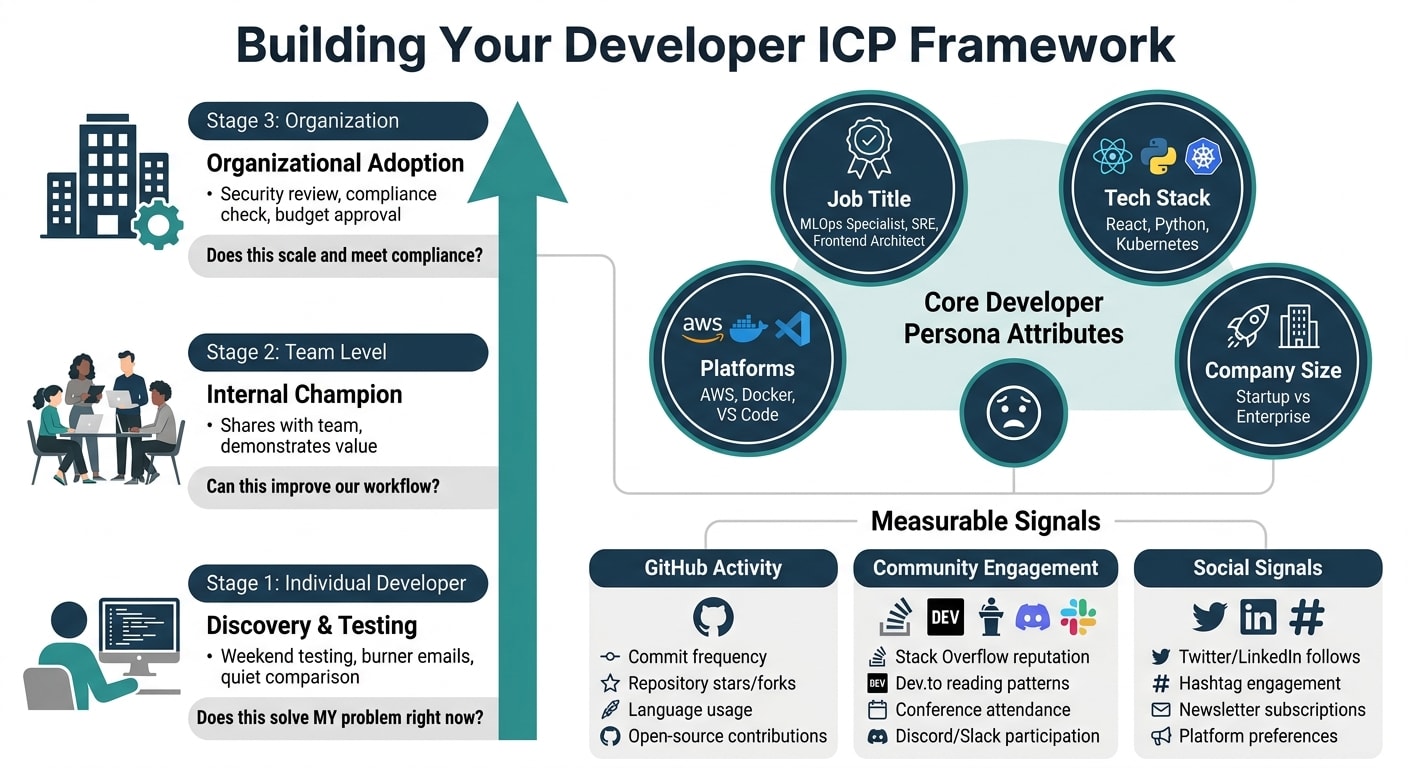
Creating developer personas isn't about making them up from scratch. Instead, it's about capturing the specific technical profiles of your users. The more detailed these personas are, the better your messaging and targeting will be. By building well-defined personas, you can shape a precise developer ICP (Ideal Customer Profile) that caters to a variety of technical buyers. Filip Nakov puts it well: a detailed persona outlines the role, context, and success criteria .
To start, map out the technical and organizational contexts that influence how developers work. Avoid broad labels like "software engineer" and instead focus on specific job titles such as MLOps Specialist, Site Reliability Engineer, or Frontend Architect - titles you’d commonly find on LinkedIn. Document their key tech stack, which typically includes two or three core languages or frameworks, along with the platforms they rely on, like AWS, Docker, or VS Code. Also, consider the size of their company. A developer at a startup will approach tool evaluation differently than someone working at a large enterprise.
Next, identify the exact moment that triggers their search for a tool. It could be something like continuous integration tests taking too long or hitting vendor rate limits that slow down productivity. Pinpointing this "inciting event" helps you craft messaging that directly addresses their pain points. Without this clarity, your communication risks becoming too broad to resonate.
Core Attributes to Map
When building a developer persona, focus on five key technical attributes:
- Job title: Be specific about their role.
- Languages/frameworks: Understand their core tech stack.
- Preferred platforms: Identify the tools they rely on daily.
- Company size: Recognize how their work environment shapes their needs.
- Key pain point: Know the problem they're trying to solve.
This approach keeps you from lumping all developers into one group, allowing you to create messaging and features that genuinely connect with them.
Behavioral Patterns to Track
Once you've nailed down the technical details, shift your attention to how developers interact with tools. While technical attributes explain who they are, behavioral patterns reveal how they discover, evaluate, and adopt new solutions.
Start by mapping their discovery channels. Developers often frequent platforms like Hacker News, niche subreddits, newsletters, or sites like daily.dev to stay informed. Then, consider their research habits. For instance, senior developers or architects might look for architecture diagrams, SDK overviews, or SOC 2 compliance reports, while junior developers lean toward getting-started guides and code samples.
It’s also crucial to understand their evaluation process. Developers often test tools within their own environments, sometimes using burner emails and skipping direct contact with support. As Nakov points out:
"The speed of learning how your tool works is the key."
To help them reach that "aha moment", identify activation helpers like one-line install scripts, interactive API playgrounds, or quick-start repositories.
Examples from Vercel, Supabase, and Postman
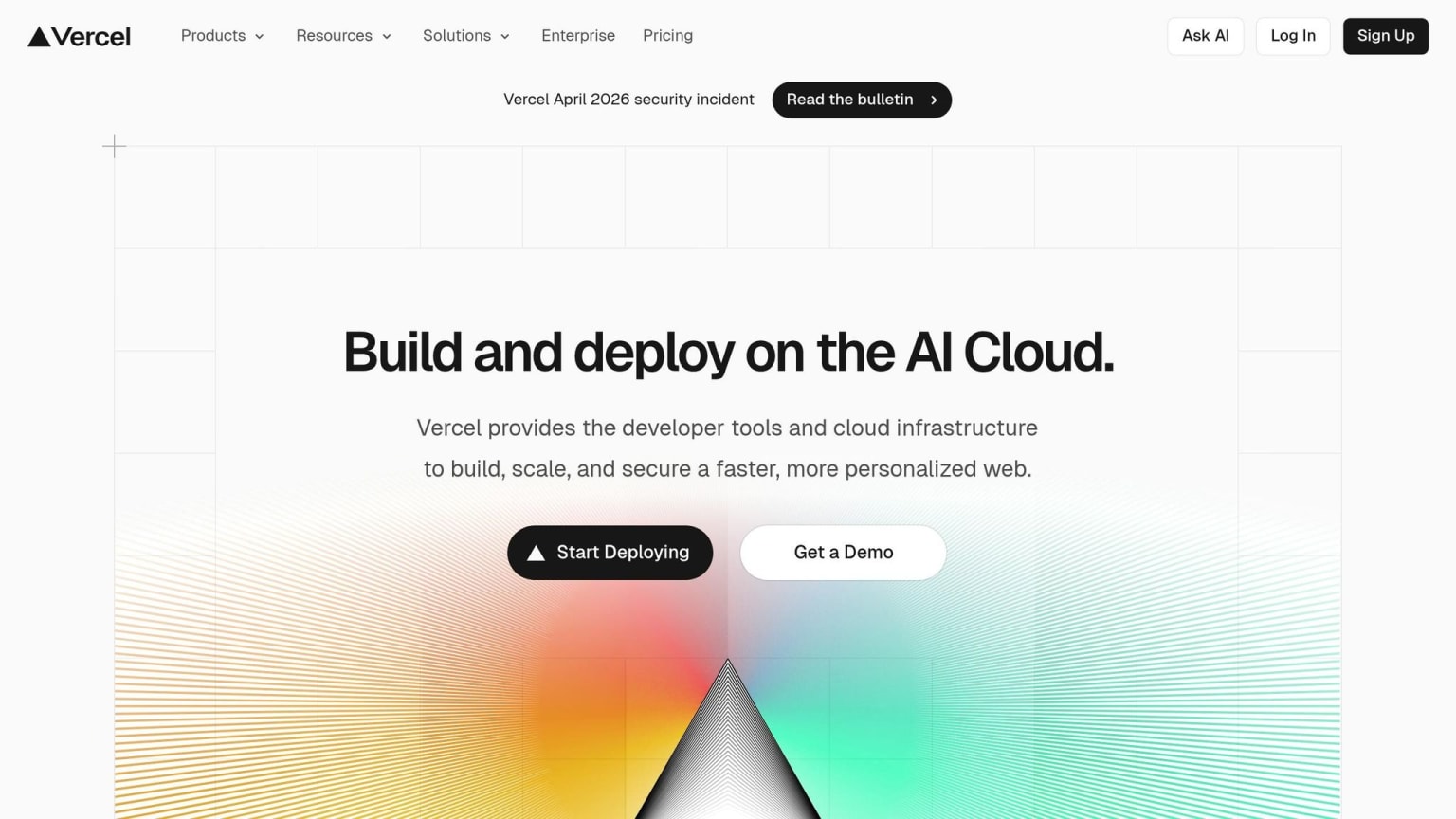
Real-world examples can bring these principles to life. While the internal details of their personas are private, companies like Vercel, Supabase, and Postman offer clues through their product positioning.
- Vercel speaks to frontend developers and full-stack engineers using modern JavaScript frameworks. Their messaging focuses on simplicity, fast deployment, and zero-configuration setups, enabling developers to ship code quickly.
- Supabase targets backend developers and indie hackers seeking real-time database solutions. Their approach emphasizes open-source values, quick project setup, and avoiding vendor lock-in.
- Postman appeals to API developers and QA engineers, highlighting collaboration, efficient testing, and thorough documentation.
These examples show how tailored personas can sharpen ICP creation and improve messaging. By aligning communication with developers' real-world needs and behaviors, you can ensure your product resonates with its intended audience.
Mapping Your ICP to Measurable Signals
Once you've nailed down your developer personas, the next step is turning those profiles into measurable signals. This involves identifying where your ideal developers hang out online and what activities indicate they're aligned with your Ideal Customer Profile (ICP). Without these signals, you're essentially guessing when it comes to targeting.
The trick is linking persona traits to actual behaviors. For example, if your ICP includes frontend developers who work with React, you should track developers contributing to React repositories on GitHub, engaging with React-related content, and participating in discussions on platforms like Stack Overflow under React tags. These actions confirm both their tech stack and their active involvement in the developer community.
Where Developers Gather Online
Knowing where developers congregate online is critical for identifying the right signals to track. Developers tend to gather in digital spaces that align with their learning styles and technical interests:
- GitHub: The go-to platform for code sharing and open-source collaboration, where developers showcase their projects and contributions.
- Stack Overflow and Reddit (e.g., r/programming): Popular for troubleshooting, technical Q&A, and broader discussions.
- Dev.to, Hashnode, and daily.dev: Platforms where developers consume technical articles and stay updated on industry trends.
- Twitter/X and LinkedIn: Spaces for professional networking, where developers follow thought leaders and share insights.
- Discord and Slack: Framework-specific communities, such as Reactiflux for React developers, offering real-time discussions and support.
- Hacker News: A hub for those interested in tech trends and startup culture.
Beyond online platforms, industry conferences like AWS re:Invent, Google I/O, and React Conf attract developers with specific tech interests and often influence team-level decisions.
Tracking Developer Activity
GitHub provides some of the clearest measurable signals for ICP alignment. Key indicators include:
- Commit frequency: Regular activity shows consistent engagement with coding.
- Repository stars and forks: Popular projects often indicate expertise.
- Languages used: Public repos reveal preferred tech stacks.
- Open-source contributions: Contributions to well-known projects can signal seniority and specialization.
Other platforms also offer valuable insights. For instance, engagement patterns on daily.dev can reveal a developer's focus - reading history around topics like Node.js or Postgres optimization highlights current interests. Similarly, high reputation scores on Stack Overflow in tags like "machine learning" or "kubernetes" showcase expertise and specialization.
Social media is another goldmine for signals. Developers who follow accounts like @vercel or @supabase and engage with hashtags such as #golang or #webdev demonstrate both their interests and their influence in the community. By combining multiple signals - like GitHub contributions in TypeScript with social media engagement around Vercel content - you can build a highly accurate ICP match.
To make these signals actionable, leverage tools like the GitHub API to pull activity data, Google Analytics for site engagement insights, and platforms like daily.dev to map reading habits to tech stacks and seniority levels. This data allows you to create custom audiences for ad targeting, ensuring you're reaching developers who genuinely fit your ICP instead of casting a wide, inefficient net. Platforms like daily.dev even support contextual targeting, helping you connect with developers who align precisely with your profile.
Testing and Refining Your Developer ICP
Once you've pinpointed measurable signals, the next step is to test and fine-tune your Ideal Customer Profile (ICP) using real-world data and insights from developers. Think of building your developer ICP as an ongoing process - validate your assumptions with performance metrics and direct feedback from developers.
Measuring ICP Accuracy with Data
Start by segmenting your conversion funnel based on ICP characteristics like seniority, tech stack, company size, and role. Then, compare conversion rates at each stage - from awareness to trial to paid customer. For example, if your primary ICP converts at 2%, but mid-level engineers convert at 8%, it’s time to rethink your definition of "ideal." Evaluate lead quality by tracking how many ICP-aligned leads become paying customers compared to non-ICP leads. Also, monitor how quickly they hit key activation milestones - like their first API call, deployment, or integration. Ideally, ICP-matched developers should have lower churn rates and a higher likelihood of expanding their usage over time.
Pay attention to feature adoption trends across user segments. Developers who align with your ICP should engage more with core features. Metrics like API call frequency, project creation rates, and time-to-first-value can highlight gaps. For instance, if you’re targeting senior backend engineers but find that junior frontend developers are adopting your product more actively, it’s a sign to revisit your targeting criteria.
Use cohort analysis to compare ICP-matched users with non-matched users throughout the customer lifecycle. This can help identify patterns that either confirm or challenge your ICP assumptions.
Gathering Developer Feedback
Structured interviews with developers - both those who adopt your product and those who don’t - can provide invaluable insights. Ask them about their evaluation process: What problems were they trying to solve? What other tools did they consider? Why did they choose your product - or why did they pick a competitor? These conversations can reveal whether your assumptions about decision-making align with reality. Combine this qualitative feedback with your quantitative data for a well-rounded view of your ICP’s accuracy.
Dive deeper into their habits and preferences. Ask about the communities they engage in, the conferences they attend, and the technical blogs or platforms they follow. This helps verify whether your ICP’s behavioral attributes align with actual developer behavior. Include questions about their tech stack preferences and seniority to confirm these factors correlate with product adoption. Aim to conduct 15-20 interviews for each ICP segment to uncover consistent patterns.
Don’t overlook developers who churned or showed low engagement despite matching your ICP criteria initially. Interview these users to understand why they didn’t succeed. Was your product misaligned with their real-world use case? Did they lack the technical expertise your ICP assumed? Were their company’s priorities different from what you expected? These conversations can highlight gaps in your ICP and help you distinguish between developers who are a strong fit and those who only superficially align. Use these insights to refine your ICP and adjust your marketing and product strategies accordingly.
Turning ICP Insights into Ad Campaigns
Once you've validated your developer ICP using data and feedback, the next step is putting those insights into action by creating campaigns that genuinely connect with technical buyers. This involves moving beyond generic developer targeting to focus on specific roles, tech stacks, and challenges that align with your ICP attributes. The goal? Crafting messages that stand out and speak directly to your audience.
Writing Messages That Resonate with Developers
Generic messages are the death of developer campaigns. Use your validated ICP to zero in on specific roles and technical contexts - like MLOps Specialists grappling with deployment roadblocks or SREs tackling slow incident response times. Your messaging should address the critical pain points or "trigger events" that compel developers to take action.
Keep in mind that you're often speaking to multiple stakeholders. Tailor your messaging for each audience. For developers (the end users), focus on things like high-quality documentation, seamless integration, and practical guides. Engineering managers, on the other hand, care about how your product fits into workflows and impacts delivery timelines. CTOs? They're looking for proof of scalability and compliance certifications.
"The speed of learning how your tool works is the key." - Filip Nakov, Founder, Nakora
In your ad creatives, highlight tools and resources that provide immediate value - things like one-line install scripts, CLI tools, API playgrounds, and quick-start repositories. These assets reduce friction during the evaluation phase, which often happens during a developer's downtime, like a weekend project or a quick break between tasks.
Choosing the Right Advertising Channels
Your ICP research should guide you to the online spaces where your target developers spend their time. Developers often discover tools through channels like GitHub trending projects, Hacker News threads, Stack Overflow answers, and niche Slack groups. Position your ads in these trusted spaces - consider sponsoring technical newsletters like Data Eng Weekly or partnering with YouTube creators who have earned credibility with your audience.
Platforms like daily.dev allow you to target developers based on their reading habits, preferred tech stacks, and seniority levels. For example, if your ICP includes senior backend engineers working with Kubernetes, you can use contextual targeting to reach them based on the content they consume. This approach is far more effective than casting a wide net with generic "developer" targeting on broader platforms.
For LinkedIn campaigns, translate your ICP attributes into precise targeting filters. Use job titles like "Platform Lead" or "Staff Engineer", specify company size ranges that align with your ideal customer, and include tech stack keywords like "Kubernetes" or "Jenkins" in profile searches. This level of granularity ensures your ad spend is focused on developers who match your ICP criteria. Once you've nailed down your channels, the next step is creating content that speaks directly to what developers need.
Designing Developer-Focused Campaign Content
Developers trust content created by engineers over traditional marketing materials. Your landing pages should reflect this by featuring tutorials and documentation written by engineers, along with architecture diagrams, SDK overviews, code snippets, and compliance details like SOC 2 certification.
Align your content with the developer's journey. During the Discovery phase, offer quick-start guides and demos that showcase value in just a few minutes. In the Evaluation phase, provide in-depth technical resources like API documentation, integration guides, and performance benchmarks. For Activation, focus on helping developers reach their first success milestone - whether that's making their first API call, completing a deployment, or integrating your tool. Use the activation helpers mentioned earlier to smooth this process.
"If activation fails, adoption never starts, so these helpers are your biggest conversion lever." - Filip Nakov, Founder, Nakora
If your tool isn't easy to get up and running, developers will move on to alternatives. Design your campaign flow to take developers from clicking your ad to a working implementation as quickly and smoothly as possible, eliminating friction at every step.
Conclusion
Creating a developer ICP is an ongoing process of refinement. Start by focusing on the essentials: identify the specific individual and their problem. Think about the job title, tech stack, and pain points that drive your ideal developer to explore solutions. Then, map out the entire buying committee - from the developer evaluating your tool, to the engineering manager weighing its impact on workflows, to the CTO considering scalability and risk.
When you align technical details with practical signals, your ICP becomes actionable. Use it to guide critical decisions, from content strategy to onboarding flows. Validate your ICP using signals like GitHub activity, content consumption patterns, and engagement in developer communities. Monitor conversion rates across segments and conduct interviews to challenge your assumptions. Developers choose tools for themselves, so your ICP must reflect both the individual engineer and the broader company context.
This approach mirrors the adaptability required for effective developer engagement.
"The best teams treat [personas] like code: reviewed, tested, and refactored often." - Filip Nakov, Founder, Nakora
Each campaign or feature release provides data to improve your ICP. If you let your personas stagnate, they’ll lose relevance. Instead, treat your ICP as a living document - constantly updated with real-world feedback and performance insights.
FAQs
What’s the fastest way to define a developer ICP?
Defining a developer ICP (Ideal Customer Profile) can be streamlined by building detailed developer personas. These personas should take into account factors like their role, preferred tech stack, level of seniority, and online habits.
To start, segment developers based on insights such as their technical interests, participation in communities, and how they consume content. Then, align these insights with actionable signals like GitHub activity or attendance at industry conferences. This approach allows you to pinpoint and connect with the most relevant developer groups efficiently.
Which signals best predict developer tool adoption?
Developers' behavior can reveal a lot about their likelihood to adopt new tools. Key indicators include their technical interests, the tools and tech stacks they currently use, and their activity on platforms like GitHub. Other valuable signals include whether they attend conferences and their content consumption habits, such as the blogs, tutorials, or videos they engage with. These patterns offer a window into their preferences and how actively they engage with the developer ecosystem.
How do I validate my developer ICP with data?
To ensure your Ideal Customer Profile (ICP) aligns with your developer audience, rely on both quantitative and qualitative data. Here’s how to approach it:
- Usage Data: Analyze how different segments interact with your product. Are certain groups using specific features more than others? This can reveal which developers find the most value in your offering.
- Conversion Rates by Segment: Break down conversion rates across various personas or industries. This helps identify which segments are most likely to move through your funnel.
- Engagement Signals: Pay attention to platform activity, content consumption, and participation in your community. These behaviors indicate how well your messaging and product resonate with your target audience.
On the qualitative side, conduct interviews with developers to gain deeper insights into their needs, challenges, and goals. Combine these findings with your quantitative data to refine your ICP continuously. By doing so, you’ll ensure your targeting evolves alongside your audience, keeping your approach relevant and effective.