

Supabase, Vercel, and Cloudflare have thrived by focusing on one thing: educating developers. Instead of relying on traditional sales tactics, they provide actionable resources like tutorials, open-source tools, and clear documentation that solve specific problems. But creating great content isn't enough - distribution is key. Without reaching the right audience, even the best content can fail to make an impact.
Key Takeaways:
- Supabase: Gained 3.5 million developers in a year by offering practical tutorials tailored for beginners and experts, turning onboarding into a growth engine.
- Vercel: Scaled through open-source engagement, building trust with free tools like Next.js and focusing on real developer needs instead of sales pitches.
- Cloudflare: Simplified complex topics with clear, vendor-neutral resources, positioning itself as a trusted source for technical knowledge.
Why Distribution Matters:
Even the most useful content needs the right strategy to reach developers. Platforms like daily.dev help by targeting developers based on skills, tools, and interests, ensuring content is delivered where it matters most.
If you want your brand to grow, focus on creating content that solves real problems, and use smart distribution to get it in front of the right audience.
What the Education-First Playbook Looks Like in Practice
::: @figure 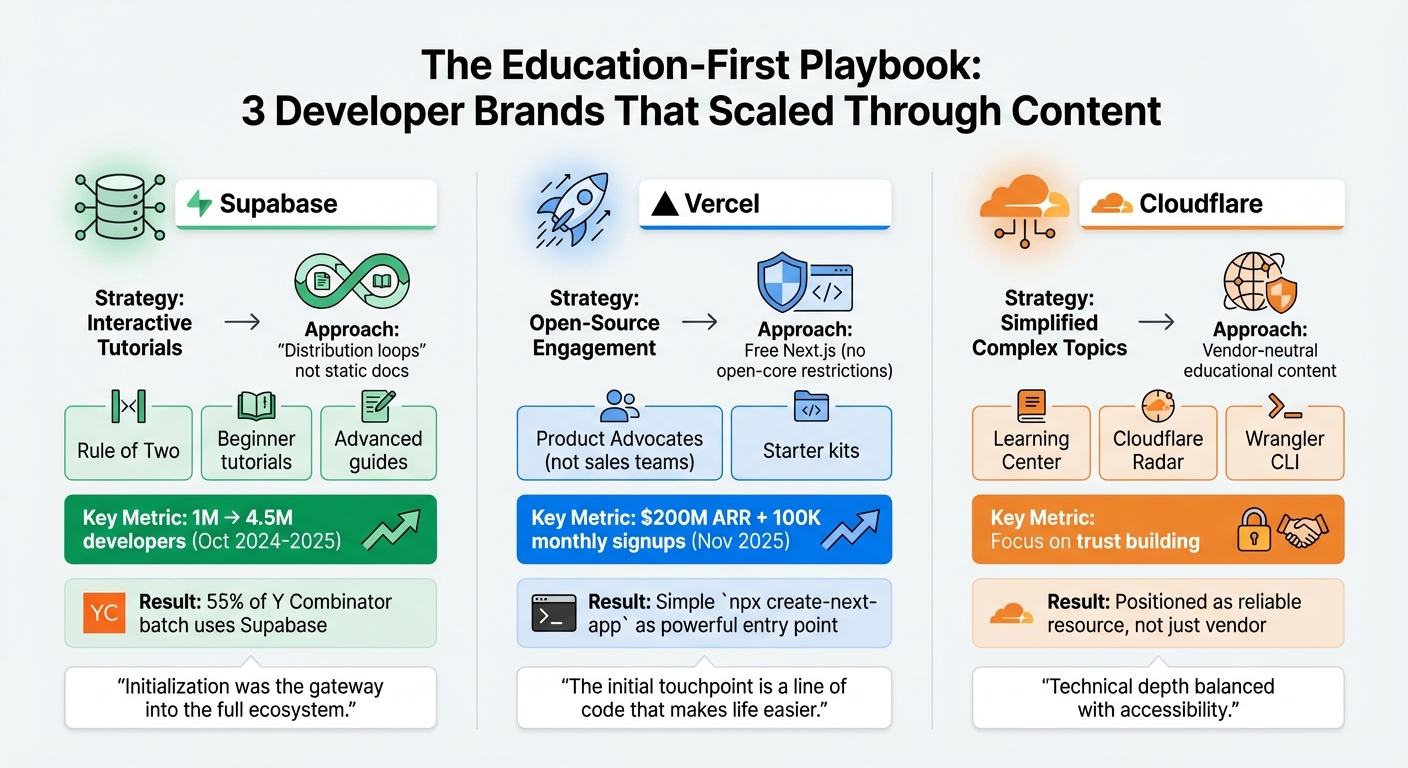 {How Supabase, Vercel, and Cloudflare Grew Through Developer Education}
These examples highlight how actionable, well-crafted content can drive developer engagement while setting the stage for broader distribution. Each brand showcases a unique aspect of the education-first approach - whether it's onboarding, fostering open-source communities, or providing clear, vendor-neutral resources.
Supabase: Tutorials That Developers Can Apply Instantly
Supabase achieved rapid growth by transforming database initialization into an interactive tutorial experience. By October 2025, the company expanded its developer base from 1 million to 4.5 million in under a year by treating tutorials as "distribution loops" rather than static documentation . Spearheaded by CEO Paul Copplestone and Head of Marketing Craig, the tutorial library was redesigned to focus on the critical first step: creating a database. This initial action naturally led developers to explore other features like Auth, Storage, and Realtime.
To cater to varying skill levels, Supabase split its content into two distinct tracks: simplified, step-by-step tutorials for beginners and advanced technical guides for Postgres experts. This "Rule of Two" ensured that newcomers weren’t overwhelmed, while experienced developers could dive deeper into complex topics.
"Initialization wasn't just an onboarding step, it was the gateway into Postgres and the full Supabase ecosystem."
- Aaron Cort, Operating Partner, Craft Ventures
The results speak for themselves - 55% of the latest Y Combinator batch now uses Supabase, and the platform supports tens of thousands of new databases daily . By prioritizing community-driven, practical content, Supabase created a natural flow for developers to engage deeply while amplifying distribution opportunities.
Next, Vercel illustrates how open-source community efforts can drive similar results.
Vercel: Growing Through Open-Source Engagement
Vercel’s growth strategy hinges on leveraging open-source projects as a core engine. By keeping Next.js completely free and avoiding the restrictive open-core model, the company built trust through accessible and functional code . A simple command like npx create-next-app served as a powerful entry point, offering instant utility and credibility.
By November 2025, this approach helped Vercel achieve $200M in annual recurring revenue and 100,000 monthly signups . Instead of relying on traditional sales teams, Chief Revenue Officer Kevin Van Gundy and his team employed Product Advocates - technical experts who observe developer behavior, such as repository cloning or documentation usage, to identify when teams are ready to scale. These advocates focus on removing technical barriers and offering real solutions rather than delivering sales pitches.
"The initial touchpoint isn't a marketing pitch; it's a line of code that makes a developer's life easier."
- Michael, Pro Developer
Vercel also provides pre-built starter kits tailored to industries like e-commerce and publishing, enabling developers to clone a repository and launch projects in minutes. This immediate success creates a "wow moment" that encourages developers to share their experiences, fueling a cycle of community growth and product adoption .
While Vercel leans on open-source as a growth driver, Cloudflare focuses on simplifying complex topics to build trust.
Cloudflare: Breaking Down Complex Topics
Cloudflare’s educational strategy revolves around offering clear, vendor-neutral information. Its Learning Center simplifies key internet concepts like DNS, BGP, and TLS, while Cloudflare Radar provides real-time insights into traffic and security trends. This positions the company as a reliable resource rather than just another vendor.
Their developer-focused documentation incorporates tools like the "Wrangler" CLI, guiding users through detailed architectural overviews. By balancing technical depth with accessibility, Cloudflare creates content that developers naturally want to reference and share. This approach not only builds credibility but also lays the groundwork for organic distribution.
sbb-itb-e54ba74
Why Distribution Determines Whether Content Investment Pays Off
Creating great content is only half the equation. Without proper distribution, even the most insightful materials can go unnoticed. Strategic distribution amplifies the impact of education-first content, ensuring it reaches the right audience. Let’s dive into why many teams fail to bridge this critical distribution gap.
The Distribution Gap Most Teams Miss
The distribution gap is where content investments often fall short. Many traditional marketing methods fail to connect with developer audiences because their content consumption habits are quite different. Approaches like gated content or nurture email sequences usually don’t resonate with developers who are actively searching for solutions to specific technical challenges .
"Developer marketing only works when the product delivers immediate, obvious value. No landing page, brand campaign, or 'community strategy' can cover for a bad product experience." - Daphna Giniger
For example, imagine a company publishes a detailed tutorial on optimizing database performance. Without a clear distribution plan, that tutorial may never reach the backend engineers who would benefit from it most. This missed connection means lost opportunities to establish credibility and trust with the intended audience.
How Developer Platforms Surface Content to the Right Audience
Developer-focused platforms like daily.dev take a different approach from conventional marketing channels. These platforms are built around how developers naturally consume information. By aggregating technical content and tailoring it to developers’ specific skills, interests, and tools, they ensure the right content reaches the right people .
For instance, if a brand publishes a tutorial on implementing real-time features with WebSockets, platforms like daily.dev can distribute it directly to developers who work with JavaScript frameworks and have a keen interest in backend systems. The platform handles the matchmaking, connecting in-depth content with the developers who are most likely to engage with it at the exact moment they’re seeking those insights. This targeted distribution transforms content into a strategic tool, aligning it with developers’ needs and delivering it in a way that maximizes its value.
How daily.dev Ads Works as a Distribution Layer for Developer Content
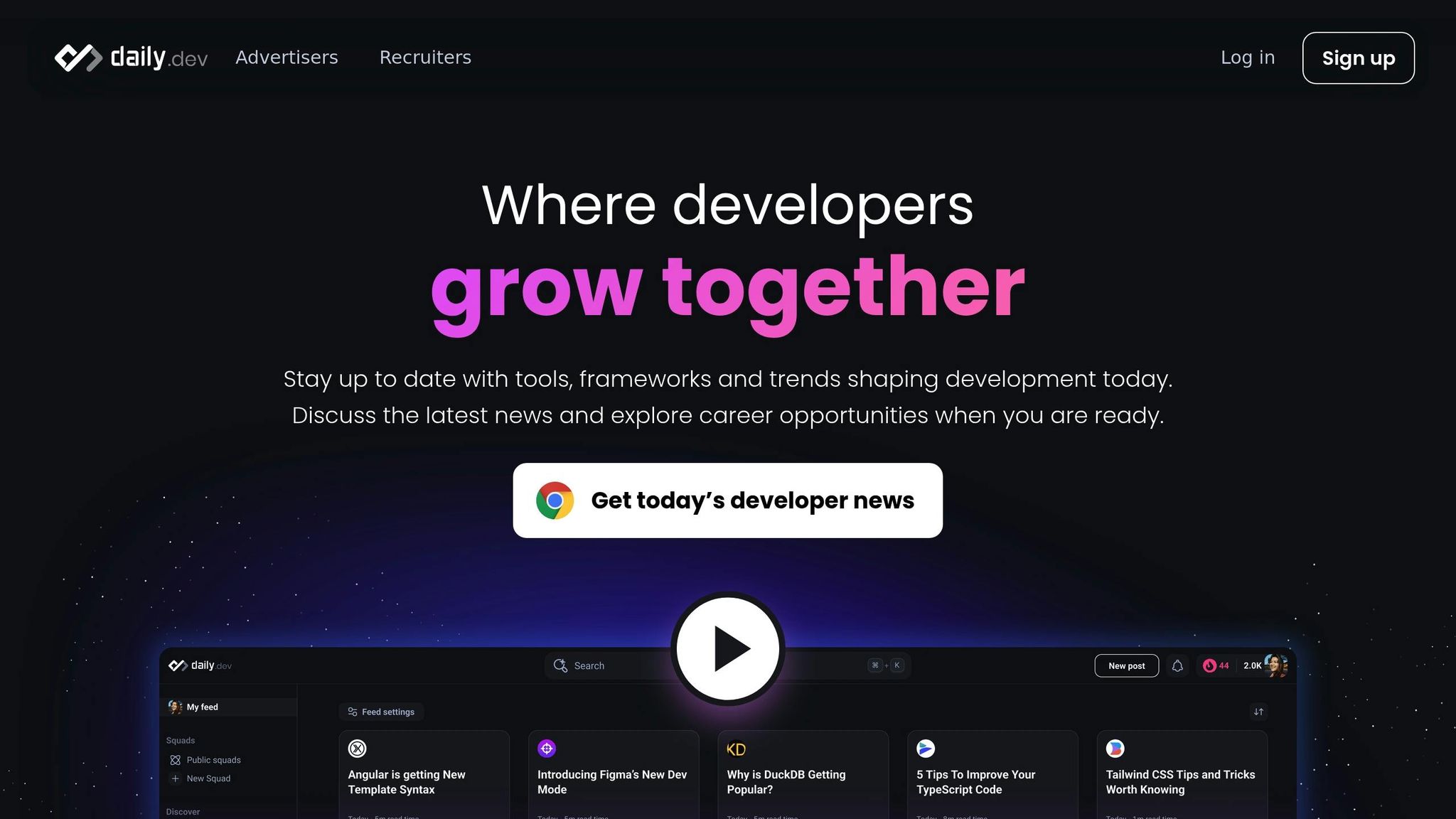
daily.dev Ads takes your education-first approach to the next level by acting as a powerful distribution channel for developer-focused content.
With over 1 million developers engaging monthly and content sourced from more than 10,000 platforms, daily.dev connects your message directly with the developer community, ensuring your content gets in front of the right audience.
Targeting Developers by Skills, Seniority, and Interests
daily.dev Ads allows for precise audience targeting based on various developer attributes. You can tailor your campaigns to reach developers by:
- Programming languages (e.g., JavaScript, Python)
- Tools and frameworks (e.g., React, Docker)
- Seniority levels (junior, mid-level, senior)
- Specialized topics (e.g., AI, DevOps)
For instance, you could focus on backend engineers working with Node.js who are exploring real-time systems. This multi-layered targeting ensures your content aligns with the specific needs and interests of developers actively seeking solutions.
Native Ad Formats That Integrate Into Their Reading Flow
Ads on daily.dev are designed to feel like a natural part of the developer’s experience. Native ad placements include:
- In-feed ads: Displayed alongside other relevant content.
- Post-page ads: Positioned within articles for seamless visibility.
- Digest emails: Customized to match developers' preferences.
These formats ensure your content blends into their reading habits, making it more engaging and less intrusive.
Performance Tracking and Campaign Optimization
daily.dev Ads provides real-time analytics to measure impressions, clicks, engagement, and conversions. You can also run A/B tests on headlines and copy, refining your campaign as it runs. With insights from daily.dev, you can adjust targeting or creative elements to improve performance mid-campaign.
What Consistent Presence Builds Over Time
Building Familiarity Before Developers Start Evaluating Solutions
Developers rarely create solutions entirely from scratch - they gravitate toward brands they already know and trust.
Take Vercel, for example. By consistently sharing open-source projects and deployment guides, they established themselves as a familiar name in the developer community. By 2025, surveys revealed that Vercel had become a go-to Next.js host, with a 3x boost in unaided brand recall among mid-level developers.
The key here isn't churning out endless content but maintaining a steady presence. By being there when developers are learning, experimenting, or tackling challenges, your brand becomes their natural choice when they’re ready to evaluate solutions. This familiarity lays the groundwork for long-lasting trust.
How Trust and Engagement Compound Over Time
Consistency doesn’t just build familiarity - it nurtures trust and deepens engagement.
Short-term campaigns may grab attention but tend to lose 20–30% of their impact within a month. On the other hand, a consistent presence ensures that every piece of educational content builds on the previous one, strengthening trust. Over time, developers begin to see your brand as not just visible but technically reliable and credible.
"Developer marketing isn't about selling - it's about enabling. When done right, it creates long-term relationships, fosters organic growth, and builds a strong developer ecosystem around your product." - Nimrod Kramer, daily.dev
Brands that prioritize a steady stream of high-quality content often achieve 2x market share growth compared to those banking on sporadic viral moments. Regular engagement ensures that each interaction reinforces the last, turning casual readers into loyal advocates.
Putting the Playbook Into Action
Effective content distribution can make or break the success of your content investments. As highlighted earlier, standout brands don’t just create great educational content - they ensure it reaches the right audience at the perfect moment. This bridge between creating content and ensuring it connects with the target audience is what sets successful campaigns apart.
Start by designing your content for immediate usability. Incorporate live coding examples, interactive sandboxes, and authentic scenarios that show how your product addresses real technical challenges. Stick to a clear "Problem → Solution → Value" framework. Developers don’t need generic tutorials - they want to see exactly how your tool solves the specific problems they encounter in their daily work.
Once your content is ready to deliver value, focus on meeting developers where they already spend their time. Don’t limit yourself to your own blog. Use platforms like daily.dev Ads to place your content directly into developers’ daily feeds. This ensures your material appears alongside the technical articles they’re already consuming, seamlessly integrating into their workflow.
To fine-tune your outreach, leverage behavioral data to target developers based on how they use tools and engage with content. A/B testing should be a constant part of your strategy - experiment with headlines, ad formats, and messaging to see what resonates. Monitor performance in real time and make adjustments to optimize results.
FAQs
What should I publish first to educate developers?
Start by creating detailed, hands-on technical content that tackles the actual problems developers encounter. Prioritize guides, tutorials, or documentation that offer straightforward solutions and actionable steps. When your content is precise, relevant, and packed with technical depth, it not only builds trust but also positions you as a reliable source. This approach helps establish authority while delivering real value to your audience.
How do I distribute developer content beyond my own blog?
To get your developer content in front of the right audience, go beyond just posting on your blog. Focus on platforms where developers actively interact with technical and educational resources. Engage in spaces like GitHub, Reddit, and Discord, where conversations often revolve around coding and problem-solving. Share valuable resources - think tutorials, code snippets, or project examples - on niche platforms like daily.dev to meet developers where they already are.
Building consistency in posting and interacting is key to establishing trust and credibility within these communities. Additionally, tools like daily.dev Ads can help you target your content to developers based on their specific interests and expertise, ensuring your efforts reach the audience that matters most.
How often should I post to build trust with developers?
To earn trust among developers, consistency is key. Posting high-quality, insightful content on a regular schedule helps establish reliability and builds credibility over time. On the other hand, sporadic or irregular updates can undermine your efforts. Aim to become a dependable source of knowledge, prioritizing steady engagement over flooding your audience with excessive or poorly timed content.