

Native ads outperform display ads across key metrics like click-through rates, engagement, and conversions. They blend seamlessly with content, making them harder to ignore, even for skeptical audiences like developers. Developers, often resistant to traditional ads, respond better to targeted, relevant native ads that offer useful insights or solutions. Platforms like daily.dev Ads allow advertisers to tailor messages based on developer-specific criteria, leading to higher interaction and ROI. However, success depends on precise targeting and creating content that aligns with developers' needs.
Key Points:
- Native ads achieve 8–10x higher CTRs than display ads.
- Developers engage 53% more with native ads compared to banners.
- Targeting options like programming languages and tools improve relevance.
- Native ads work best mid-funnel, focusing on educational or technical content.
For businesses aiming to connect with developers, launching a successful advertisement campaign using native ads can be a powerful tool when executed thoughtfully.
Native Ads vs. Display Ads: Performance Metrics
::: @figure 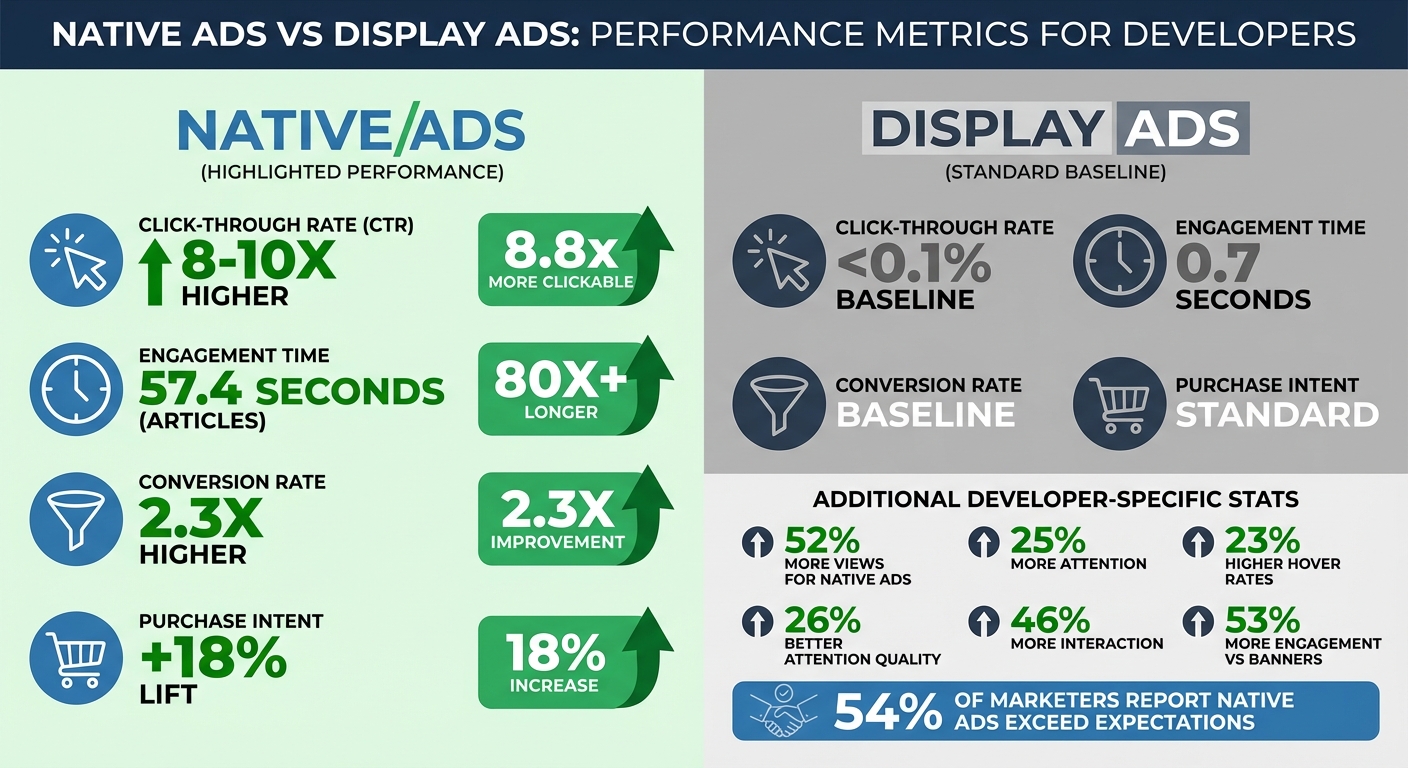 {Native Ads vs Display Ads Performance Comparison for Developers}
The difference in performance between native ads and traditional display ads is striking. Across every key metric, native ads consistently deliver stronger results than their display counterparts.
Click-through rates (CTR) highlight this gap most clearly. Native ads achieve CTRs that are 8 to 10 times higher than traditional display ads, which typically hover below 0.1% . On mobile devices, the difference is even more pronounced, with native ads generating over three times the CTR of banner ads . Overall, native ads drive 85% to 93% more clicks compared to display ads . These higher click-through rates lay a solid foundation for increased engagement and conversions.
Engagement time is another area where native ads shine. While traditional display ads manage to hold attention for less than a second, native article formats keep users engaged for nearly a minute - an 80x improvement . For video content, native formats perform 2.4 times better in terms of viewing time compared to banner videos . This extended engagement ensures that users are actively consuming the ad's message rather than simply scrolling past it.
But clicks and engagement are only part of the story. The ultimate measure of success lies in conversion rates, and native ads excel here as well. They deliver 2.3 times higher conversion rates than traditional display ads . Additionally, native ads increase purchase intent by 18% , meaning users are significantly more likely to take action after seeing them. For video ads specifically, native formats show an 18% lift in conversions compared to standard video ads .
Here’s a side-by-side comparison of the metrics:
| Metric | Display Ads | Native Ads | Relative Gain |
|---|---|---|---|
| CTR | <0.1% baseline | 8-10x higher | 8.8x more clickable |
| Engagement Time | 0.7 seconds | 57.4 seconds (articles) | 80x+ longer |
| Conversion Rate | Baseline | 2.3x higher | 2.3x improvement |
| Purchase Intent | Standard | +18% lift | 18% increase |
These performance advantages explain why more than half of marketers - 54% - report that native ads exceed their expectations . Native ads resonate because they align with the way people naturally engage with online content. They manage to break through ad fatigue and avoidance, even among audiences like developers, who are often resistant to traditional advertising formats.
How Developers Respond to Native Ads
Developers are experts at tuning out traditional display ads. This phenomenon, often called banner blindness, is especially pronounced in this audience. They’ve mastered the art of ignoring anything that looks like a typical ad - whether it’s a top banner, a sidebar placement, or a pop-up. For developers who spend countless hours skimming through technical content, these ads fade into the background, becoming just another part of the digital noise.
Native ads, however, take a different approach. By seamlessly blending into the content developers are already consuming, they avoid the pitfalls of banner blindness. These ads are designed to match the look and feel of the platform they appear on. For example, on developer-focused platforms like daily.dev Ads, native ads appear in-feed alongside articles, tutorials, and discussions. They don’t scream “advertisement,” which is why they get noticed. In fact, native ads on these platforms attract 52% more views and hold 25% more attention than traditional banner ads.
The real power of native ads lies in their ability to deliver content that feels relevant and useful. Platforms like daily.dev Ads allow advertisers to target developers based on criteria like programming languages, seniority levels, and preferred tools. Instead of bombarding developers with generic messages, advertisers can present solutions and resources tailored to their specific needs. This targeted, non-intrusive approach turns advertising into something more valuable - a source of information developers actually want to engage with.
The numbers back this up. Native ads on developer platforms show 23% higher hover rates, 26% better attention quality, and 46% more interaction compared to standard display ads. These metrics highlight how well this format aligns with developers’ preferences and browsing habits.
Pros and Cons
Native ads offer some clear benefits for reaching developers, but they come with trade-offs. Weighing both sides can help you determine if this approach aligns with your marketing goals.
Let’s start with the positives. Native ads boast an impressive average ROI of 13:1, with advertisers reporting 15% higher returns compared to banner ads . They’re also cost-effective - delivering 20% lower cost-per-click than search ads and 10% lower cost-per-lead than traditional formats .
However, there are challenges to consider. The success of native advertising depends heavily on precise targeting, and results can vary significantly across publishers and placements. Poorly targeted campaigns often fail to deliver . Additionally, native ads tend to perform better in the middle of the sales funnel, making them less suitable for top-of-funnel awareness campaigns . To get the most out of your efforts, you’ll need detailed tracking at both the creative and placement levels to pinpoint underperforming elements .
For developer audiences, these nuances are especially important. Developers respond best to ads that provide meaningful, educational content rather than flashy promotions. Native ads that feature useful resources - like how-to guides, product comparisons, or technical insights - consistently outperform generic messaging . Aligning your content with the platform’s editorial tone and addressing developers’ real needs is essential for success.
Here’s a quick comparison of key metrics for developer-focused campaigns:
| Metric | Native Ads | Display Ads |
|---|---|---|
| CTR | 0.30% (2-3x higher) | 0.12% |
| Engagement | 53% more views, 25% more attention | Baseline |
| Targeting Options | Seniority, programming languages, tools, interests | Basic demographic/contextual |
| Cost Effectiveness | 2.3x conversions, 15% higher ROI | Higher CPC, lower results |
Ultimately, understanding these pros and cons will help you craft a native ad strategy that resonates with developers and maximizes your campaign’s impact.
Conclusion
The evidence is clear: native ads deliver for developers. Compared to traditional display banners, native advertising consistently achieves higher click-through rates (CTR), stronger engagement, and better conversion rates. Developers spend far more time interacting with native content - an average of 57.4 seconds on native article ads versus a mere 0.7 seconds on display ads. This extended interaction highlights the deeper connection developers have with this format.
Success in native advertising hinges on understanding what developers care about. They value content that educates, provides technical insights, and offers practical solutions to real-world challenges - not flashy or overly promotional material. Native ads should seamlessly align with the platform’s tone and provide real benefits. Think how-to guides, product comparisons, or in-depth technical analyses - not generic sales pitches. These principles are at the core of crafting effective campaigns on daily.dev Ads.
For businesses aiming to connect with developers, platforms like daily.dev Ads provide the tools to reach the right audience. With targeting options based on seniority, programming languages, tools, and technical interests, your message can land exactly where it’s needed. Plus, native placements maintain a smooth user experience while ensuring your content gets noticed.
To make the most of native ads, experiment with different content formats to see what resonates. Keep a close eye on the performance of your creatives and placements, and adjust your campaigns for optimal results. Remember, native ads excel in the mid-funnel stage, so tailor your strategy accordingly. With 54% of marketers reporting that native ads exceed their performance expectations, the potential for success is undeniable.
FAQs
What makes developers click native ads?
Developers are drawn to native ads that match their technical interests and career objectives. Ads offering useful, precise, and informative content - such as tutorials, code examples, or developer tools - tend to grab their attention. Adding interactive elements, like live demos, can further enhance engagement. Trust plays a significant role: ads from credible sources on well-regarded platforms, like daily.dev, are more effective because they blend naturally into a developer's daily routine and feel genuine, not disruptive.
How should I target native ads to developers?
To effectively reach developers with native ads, prioritize content that matches their technical needs and fits naturally into their workflows. Focus on topics they care about, like specific programming languages, tools, or frameworks. Contextual targeting works well here, as it respects privacy while ensuring relevance.
Place ads on platforms developers trust, such as tech blogs, forums, or developer communities. Accuracy is key - ads must be technically precise and use clear, straightforward language. Formats like tutorials, how-to guides, or even embedded code snippets can grab their attention and provide value, making the ads feel less intrusive and more useful.
How do I measure native ad ROI with developers?
To gauge the return on investment (ROI) for native ads aimed at developers, focus on tracking specific metrics such as click-through rate (CTR), engagement indicators (like time spent on content, scroll depth, and social shares), and conversion or bounce rates. Tools provided by platforms like daily.dev Ads allow you to monitor these metrics in real time. This helps you assess how well your ads are performing and fine-tune your campaigns to match developer preferences, ensuring your efforts deliver clear, measurable outcomes.