

Paid advertising is essential for promoting developer tools in a crowded market. With over 5.5 million apps competing for attention as of late 2023, you can’t rely on organic reach alone. Developers are skeptical of traditional marketing, so ads must focus on delivering solutions and value where developers already spend their time.
Here’s how to use paid channels effectively:
- Google Ads: Target developers searching for specific solutions like "billing API" or "CI/CD pipeline tool." Use retargeting for those who visit your site but don’t convert.
- LinkedIn Ads: Reach decision-makers (e.g., CTOs, engineering managers) with targeted job titles and skills. Use lead generation forms for higher-quality leads.
- daily.dev Ads: Advertise to over 1 million developers based on programming languages, tools, and behavior, ensuring your ads appear in a developer-focused environment.
Success requires precise targeting, technical messaging, and tracking metrics like trial-to-paid conversions and lifetime value. Combine paid campaigns with organic strategies like open-source projects and documentation to maximize impact.
::: @figure 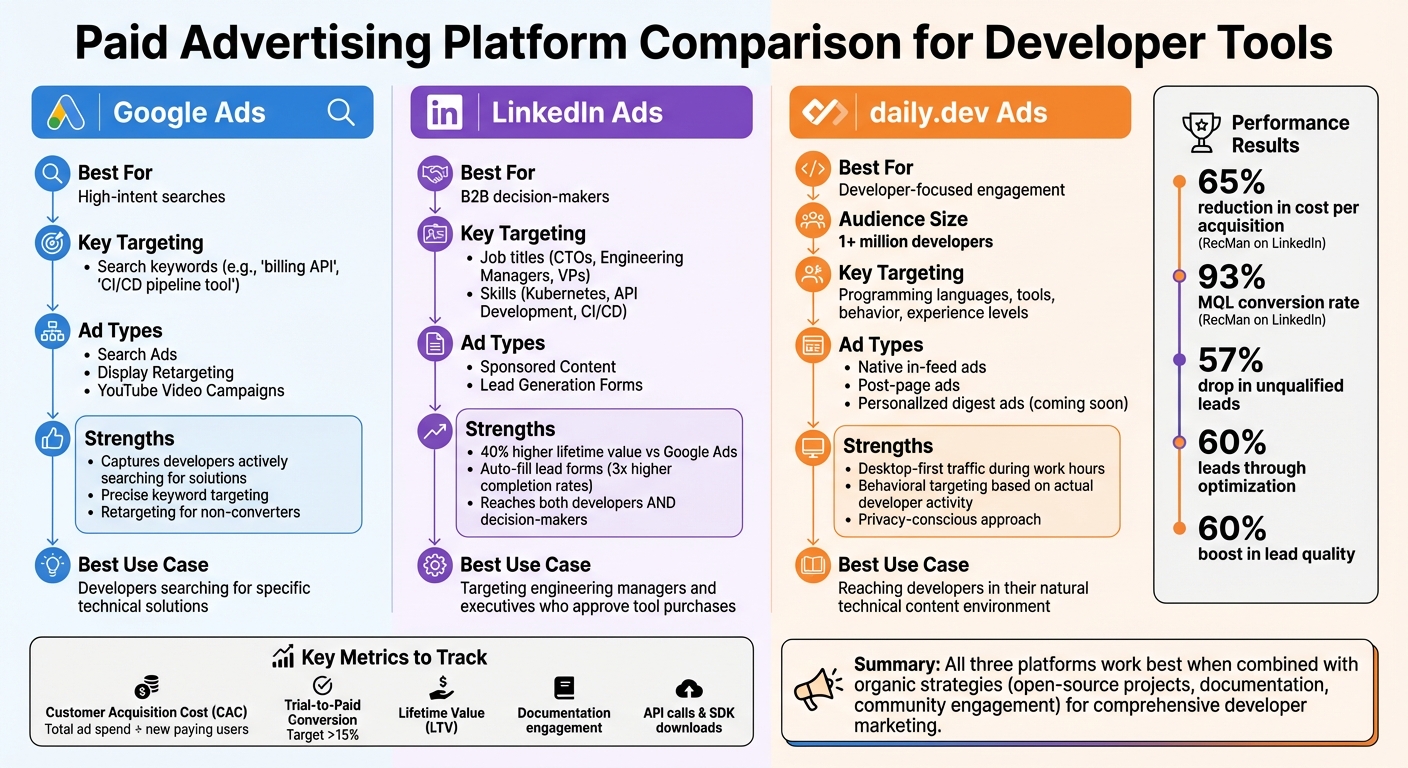 {Comparison of Paid Advertising Platforms for Developer Tools: Google Ads vs LinkedIn vs daily.dev}
Google Ads: Targeting Developers Searching for Solutions
Google Ads can be a key component of a multi-channel strategy, especially when targeting developers. Why? Because it allows you to connect with them at the exact moment they're searching for solutions. When someone types in phrases like "billing API" or "Kubernetes monitoring tool", they’re signaling a clear intent to solve a problem. That’s your cue to deliver the right message at the right time.
Search Ads for Developer-Specific Keywords
To reach developers effectively, focus on high-intent, specific keywords they’re likely to use. Forget broad terms like "software tools" - developers are searching for precise phrases like "REST API authentication", "CI/CD pipeline tool", or "GraphQL client library." The more specific the keyword, the better your chances of connecting with their needs.
Organize your campaigns by product category, creating dedicated ad groups for each (e.g., API management or database monitoring). This approach allows you to tailor your ad copy to match the exact query. Use headlines that mirror the search term, and craft descriptions that directly address their technical challenges. Keep an eye on metrics like CPC (cost-per-click) and CTR (click-through rate) to ensure your messaging is hitting the mark.
Display Retargeting for Developers
Let’s face it - most developers won’t convert on their first visit. They’re likely to explore your documentation, compare your tool with others, and maybe even test it out before making a decision. That’s where display retargeting becomes invaluable.
Create retargeting audiences based on specific actions, such as visiting your pricing page, reading API documentation, or starting a free trial but not completing it. Tailor your ads to reflect where they are in their decision-making process. For example, someone who viewed your pricing page is closer to converting than someone who only skimmed a blog post.
When designing display ads, focus on showcasing your product. Use clear screenshots, relevant code snippets, or even dynamic video demos to keep your tool top of mind. Avoid abstract imagery - it’s the product itself that developers care about.
YouTube Campaigns for Product Demos
YouTube is a powerful platform for showcasing your tool in action. A great example? Postman’s developer-focused video campaign, which racked up over 10 million views . Videos like these can grab attention and demonstrate your product’s capabilities in a way static ads simply can’t.
While pre-roll ads might seem intrusive, they’re incredibly effective if done right. As markepear.dev points out, they occupy prime screen real estate . The trick is to break the pattern - use creative elements that grab attention immediately, rather than relying on a generic sales pitch.
Address common developer objections head-on. For instance, Auth0 tackles the "We can build it ourselves" mindset by highlighting how in-house solutions often require more time and resources than using a dedicated tool . Pair this with YouTube remarketing campaigns that feature video testimonials or case studies from other developers. Companies like CircleCI and Teleport have successfully used this approach to build trust and reinforce their product’s value.
Keep your videos authentic and educational. Robusta, for example, uses hand-drawn animations to create a more approachable learning experience. When showcasing your UI, include visual aids like high-contrast indicators to guide viewers through complex workflows. This attention to detail can make all the difference in engaging a developer audience.
sbb-itb-e54ba74
LinkedIn Ads: Targeting B2B Developer Audiences

LinkedIn stands out as a go-to platform for reaching both developers and the decision-makers who greenlight tool purchases. Unlike platforms geared toward consumers, LinkedIn’s professional focus allows for precise targeting based on job roles, skills, and company details. This makes it possible to connect with software engineers, engineering managers, and CTOs - key players in the adoption of dev tools. For example, Moesif leveraged this strategy to grow from zero to over 5,000 customers by targeting technical audiences like developers and product managers .
What sets LinkedIn apart is its ability to support inbound marketing that resonates with developers. Instead of interrupting their workflow, you can attract them with content that feels relevant and authentic. Developers tend to be skeptical of traditional sales tactics, favoring technical accuracy over flashy pitches. RecMan tapped into this mindset, achieving a 65% drop in cost per acquisition and a 93% MQL (marketing-qualified lead) conversion rate by refining LinkedIn campaigns for B2B SaaS. They focused on technical roles and used data-driven metrics to sharpen their strategy .
Sponsored Content and Lead Generation Forms
Sponsored Content blends seamlessly into users’ feeds, appearing as articles, videos, or carousels. For developer tools, focus on creating content that solves real problems - like "How to Reduce API Latency by 40% with Our Tool" - instead of pushing generic product features. Use technical visuals, such as short code snippets, to highlight functionality. Keep designs clean and packed with useful information.
LinkedIn’s Lead Generation Forms are a game-changer. These forms auto-fill with users’ profile data (like name, email, and job title), significantly reducing friction and boosting completion rates - up to three times higher than external landing pages. Pair these forms with gated content, such as a "Developer’s Guide to Scalable APIs", to attract high-intent leads. It’s worth noting that LinkedIn leads often have a 40% higher lifetime value compared to Google Ads , making this strategy especially effective for dev tools that have longer sales cycles.
Targeting by Job Titles and Skills
To zero in on the right audience, target job titles like Software Engineer, Senior Developer, Engineering Manager, CTO, VP of Engineering, and Developer Advocate. These individuals frequently champion dev tools within their organizations, even when other stakeholders - like security or architecture teams - are part of the decision-making process . You can refine your audience further by targeting skills relevant to your tool, such as "Kubernetes", "API Development", or "CI/CD."
When crafting ad copy, address the real challenges developers face in their day-to-day work. Headlines like "Tired of API Churn? Discover Our Fix" paired with visuals of code snippets or product demos can be highly effective. A/B testing is essential - small tweaks can make a big difference in click-through rates. And don’t stop at clicks; track the entire campaign lifecycle, from initial engagement to conversions and pipeline growth. Developers often have longer consideration cycles, so a holistic approach to measurement is crucial .
daily.dev Ads: Advertising in a Developer-Focused Platform
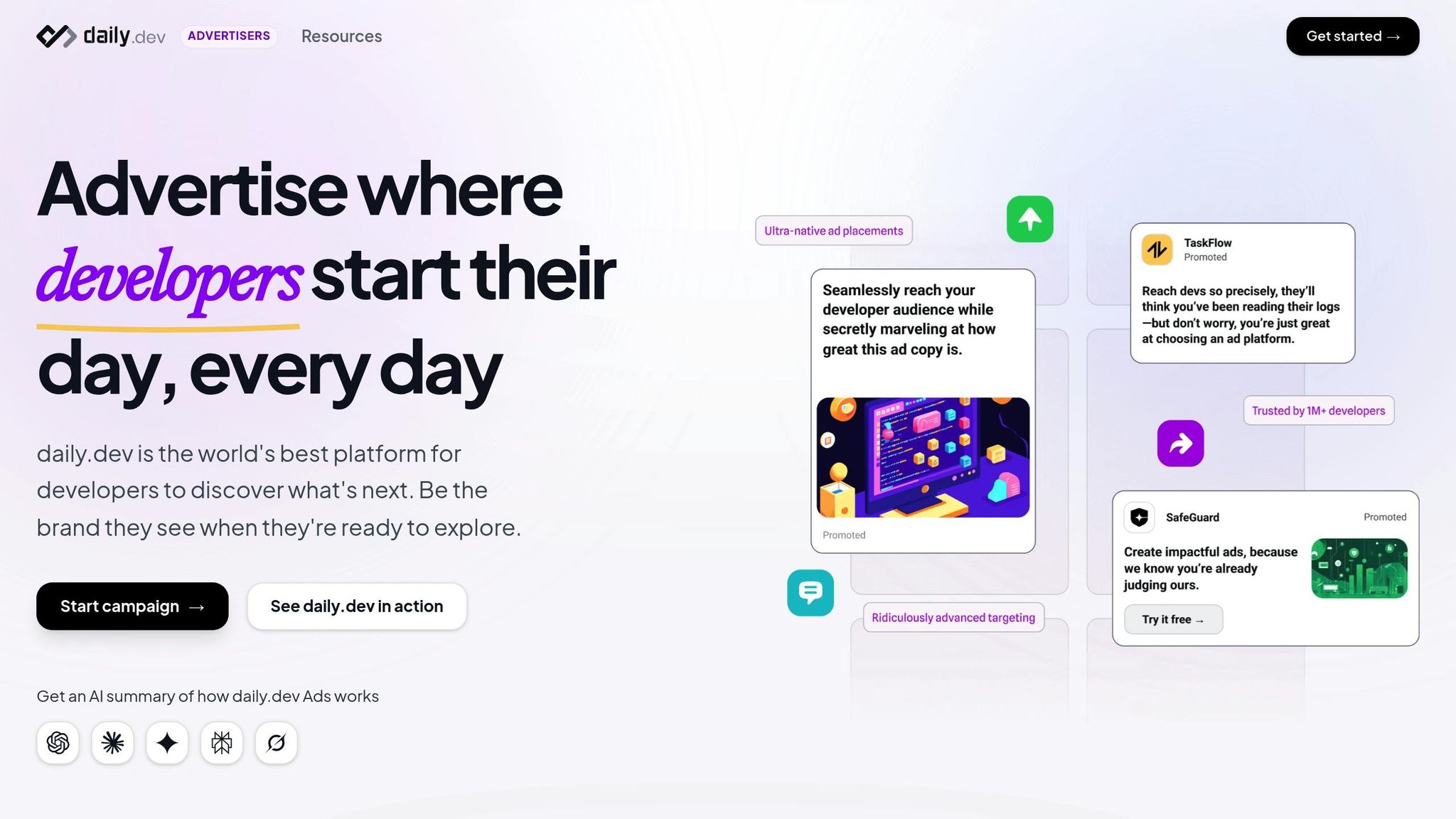
daily.dev Ads puts your message right where developers are actively searching for technical content. With a global audience exceeding 1 million developers , it offers a chance to connect with this highly focused group in their natural environment - without interrupting their flow.
What sets daily.dev apart is its ability to target developers based on their real behavior. Instead of relying on vague demographics or job titles, the platform hones in on the programming languages they use, the tools they prefer, and the content they interact with . As Nimrod Kramer from daily.dev explains:
"Discover why daily.dev is the ideal ads platform for reaching developers: high-intent direct traffic, desktop-first sessions, and unmatched targeting based on real developer behavior."
This desktop-first traffic is particularly advantageous for developer tool companies. Developers often visit daily.dev during work hours, whether they’re coding, researching, or evaluating tools . This means your ads are seen when developers are most likely to be looking for solutions to improve their workflows. Let’s dive into how native ad placements, precise targeting, and performance tracking make this platform an effective choice.
Native Ad Placements and Visibility
daily.dev uses native ad formats that blend seamlessly with its content feed, sitting naturally alongside articles, tutorials, and technical discussions . Ad placement options include in-feed ads, post-page ads, and soon, personalized digest ads. This approach respects developer expectations by integrating your message into their experience rather than disrupting it.
Developers are more likely to engage with ads that feel relevant and useful. Ads linking directly to documentation, GitHub repositories, or technical tutorials tend to perform better than those leading to generic landing pages .
Targeting by Programming Languages and Tools
The platform’s precise targeting capabilities go hand-in-hand with its native placements. You can tailor your ads to reach developers based on the programming languages they use (like Python, JavaScript, Go, or Rust), the frameworks and tools they rely on, and even their experience levels, from junior developers to senior engineers .
For instance, if you’re promoting a Kubernetes monitoring tool, you can target developers who are actively engaging with Kubernetes-related content and working with container orchestration. This privacy-conscious targeting approach is particularly appealing to developers who value their data security.
When creating your ads, focus on technical, solution-driven messaging. Developers respond best to clear problem statements, detailed explanations of how your tool solves specific issues, and links to documentation or code examples.
Global Reach and Performance Tracking
daily.dev’s global audience allows you to run campaigns that connect with developers worldwide while maintaining a sharp focus on relevance. This balance means you can test and fine-tune your campaigns without losing the precision of your targeting.
The platform also offers real-time performance tracking, letting you monitor campaign outcomes as they unfold. Beyond standard metrics like click-through rates, you can measure developer-specific actions such as sign-ups from technical pages, API calls, and SDK downloads - indicators of genuine interest in your product.
Tracking deeper metrics like conversion rates from free to paid plans, retention, and product usage helps you focus on long-term value. By analyzing lifetime value (LTV) and customer acquisition cost (CAC) by traffic source, you can refine your strategy and allocate your budget more effectively. This approach is a key part of the campaign optimization strategies discussed in the next section.
Campaign Optimization and ROI Measurement
Running paid campaigns for developer tools requires a strategy that accounts for the unique decision-making process of developers. Their journey often involves testing, evaluating, and seeking advice from peers before making a commitment. This means your attribution models need to accommodate purchases that might occur weeks or even months after initial engagement .
To measure success, calculate Customer Acquisition Cost (CAC) by dividing your total ad spend by the number of new paying users. A strong trial-to-paid conversion rate - ideally over 15% - can be achieved through effective onboarding . Additionally, tracking Lifetime Value (LTV) is crucial. Developers who see real value in your tool often become loyal advocates, making it essential to craft a precise budget strategy that maximizes returns across various channels.
Budget Allocation Across Platforms
Allocating your budget effectively starts with understanding where developers spend their time and how they discover tools. For developers actively searching for solutions, Google Ads is a top choice - invest more in high-intent keywords here. If you're targeting decision-makers like engineering managers, LinkedIn Ads can be a great fit. For reaching developers based on their technical interests and habits, consider dedicating a portion of your budget to daily.dev Ads.
Begin with a test budget distributed roughly equally across platforms. As you gather data, shift spending toward the channels that deliver the lowest CAC and the highest trial-to-paid conversions. Experiment with A/B testing for ad creatives, focusing on elements like free tools, interactive demos, or documentation instead of direct sales pitches . Keep a close eye on which platforms drive meaningful engagement with your product - not just clicks.
Key Metrics for Developer Tool Campaigns
Tracking the right metrics is essential to gauge whether your campaigns are resonating with developers. Look beyond surface-level data and focus on engagement metrics that reveal genuine interest in your product. For example, monitor how many developers who click on your ads explore your documentation, run code samples, or integrate your API. Tools like GitBook analytics can help track documentation engagement, while YouTube metrics provide insights into video completion rates. Platforms like Common Room are valuable for monitoring community activity .
Community signals are just as important as paid metrics. Organic mentions, user-generated content, GitHub contributions, and referrals often align with successful paid campaigns . When developers discover your tool through ads and then share it organically, it’s a strong indicator that you’ve achieved product-market fit within that segment.
Combining Paid and Organic Marketing
To maximize engagement, combine your paid campaigns with organic efforts. For example, retarget developers who have interacted with your open-source projects, documentation, or community discussions using paid ads to nudge them toward trial sign-ups . You can also amplify user-generated content - such as tutorials or case studies created by your community - through paid promotion to enhance credibility and boost LTV.
In developer marketing, free tools, comprehensive documentation, and active community engagement are key drivers of success. Paid campaigns should complement these efforts by directing traffic to valuable resources rather than generic landing pages . When a developer discovers your tool through an ad but ultimately converts after exploring community discussions and testing your API, you’ve successfully executed a multi-touch attribution strategy. This approach not only strengthens engagement but also builds trust and long-term loyalty.
Conclusion
Promoting developer tools through paid acquisition requires a carefully tailored approach. Platforms like Google Ads excel at capturing high-intent searches, while LinkedIn Ads is ideal for reaching decision-makers like engineering managers who influence team-wide tool adoption. Meanwhile, daily.dev Ads offers a direct connection to over 1 million developers during their daily workflow, with targeting options based on programming languages, seniority, and technical interests.
Each platform plays a distinct role, but the real key lies in precise targeting that aligns with how developers evaluate tools. Developers value thorough technical documentation, meaningful content, and opportunities to test tools before committing. Ads should focus on offering free tools, interactive demos, or educational resources, steering clear of overly aggressive sales tactics.
To refine your strategy, track developer-specific engagement metrics like documentation views, API calls, SDK downloads, and community mentions. For example, one case study highlighted a 57% drop in unqualified leads and a 60% boost in lead quality by optimizing landing pages . Another company cut acquisition costs by 65% while increasing qualified leads through improved targeting .
Paid campaigns work best when integrated with organic efforts. Developers often discover tools through ads but convert only after engaging with documentation, testing APIs, and participating in community discussions. This multi-touch journey underscores the importance of aligning your paid strategy with the free tools, detailed documentation, and active community engagement that developers expect.
FAQs
How do I choose between Google Ads, LinkedIn Ads, and daily.dev Ads?
Choosing the right platform depends on who you’re trying to reach, how much you’re willing to spend, and what you want to achieve:
- Google Ads: Offers a massive reach and captures intent-driven traffic. However, it comes with higher costs and less refined niche targeting.
- LinkedIn Ads: Perfect for connecting with tech decision-makers, thanks to detailed professional targeting options.
- daily.dev Ads: Tailored for reaching niche developer audiences. It provides precise targeting (like by programming language or seniority), with better engagement and often lower costs.
Align your platform choice with your specific campaign goals.
What should I send ad clicks to: a landing page, docs, or GitHub?
When running ads, it's crucial to direct clicks to a dedicated landing page that aligns with the ad's message and offers relevant, technical content or valuable resources. This could include detailed product pages, whitepapers, or tailored documentation.
Steer clear of sending traffic to broad destinations like GitHub repositories or general documentation pages. Why? Focused landing pages are far better at keeping visitors engaged and encouraging them to take action - whether that's signing up, downloading, or exploring further.
How do I track ROI when devs convert weeks later?
To measure ROI when developers take weeks to convert, it's crucial to shift your attention to long-term engagement and usage metrics rather than just immediate conversions. Some key indicators to track include:
- API call frequency: How often developers are using your API.
- GitHub activity: Engagement with your repositories, such as stars, forks, and contributions.
- Documentation views: Usage of your guides and resources.
- SDK implementation rates: How many developers are integrating your SDK into their projects.
- Feature activation: Adoption of specific features within your platform.
At the same time, keep an eye on real-time ad performance. This allows you to fine-tune campaigns and accurately link them to eventual conversions. By setting clear goals tied to developer behavior, you’ll get a more complete picture of ROI over the longer term.