

Developers are a unique audience - they ignore generic marketing and focus on content that’s technical, relevant, and useful. Personalization helps you stand out by tailoring campaigns to their tech stacks, experience levels, and behaviors. Here’s how you can make it work:
- Why Personalization Matters: Personalized emails see 70.5% higher open rates and 152% higher click-through rates. Developers prefer content that aligns with their tools and challenges.
- How to Collect Data: Track developer interests, seniority, and tools using short forms and behavioral data. Tools like daily.dev Ads simplify this process by targeting over 1M developers based on real engagement.
- Segmentation: Group developers by behavior (e.g., active learners, tool evaluators) and tech preferences (e.g., Python, Kubernetes). This ensures your campaigns address their specific needs.
- Content Personalization: Use real-time data to create emails, ads, and landing pages that reflect a developer’s tools and goals. Dynamic Text Replacement (DTR) can adjust content instantly based on user actions.
- Measure Success: Focus on metrics like open rates, click-through rates, and cost per acquisition. A/B test to refine messaging and improve ROI.
Personalization transforms marketing from noise into a helpful resource. Developers value relevance, and when your campaigns align with their work, engagement follows.
Collecting Developer Data for Targeted Campaigns
Creating personalized marketing for developers starts with gathering the right kind of data. Unlike general consumers, developers require a more tailored approach. To connect with them effectively, you need to understand their tech stacks, seniority levels, and specific interests. This means moving beyond generic demographics and focusing on the technical details that shape their daily work.
Identifying Developer Interests, Seniority Levels, and Tech Stacks
Start by collecting essential data through short sign-up forms, then build on this information using behavioral tracking. This lets you create detailed profiles without overwhelming developers with lengthy forms.
Behavioral tracking is key to understanding developer interests. For example, analyzing how they interact with your content can reveal whether they’re looking for beginner-friendly guides or exploring advanced technical topics. Tools like cookies and analytics can track these behaviors, and integrating this data into your CRM ensures everything is managed centrally.
To pinpoint developers' tech stacks, monitor their repeated engagement with specific technologies like React, AWS, or Docker. This insight is invaluable when promoting tools or resources. For instance, if you’re launching a new CI/CD platform, you can target developers already working with related tools.
Seniority is another critical factor. Combine self-reported data with behavioral signals to determine experience levels. Junior developers often consume beginner guides and tutorials, while senior developers and architects prefer in-depth materials like scalability discussions or technical whitepapers. This distinction helps you tailor your messaging - offering educational content to juniors and ROI-driven materials to seniors.
Once you’ve built these detailed profiles, you can use daily.dev Ads to turn your data into highly targeted campaigns.
Using daily.dev Ads for Precision Targeting
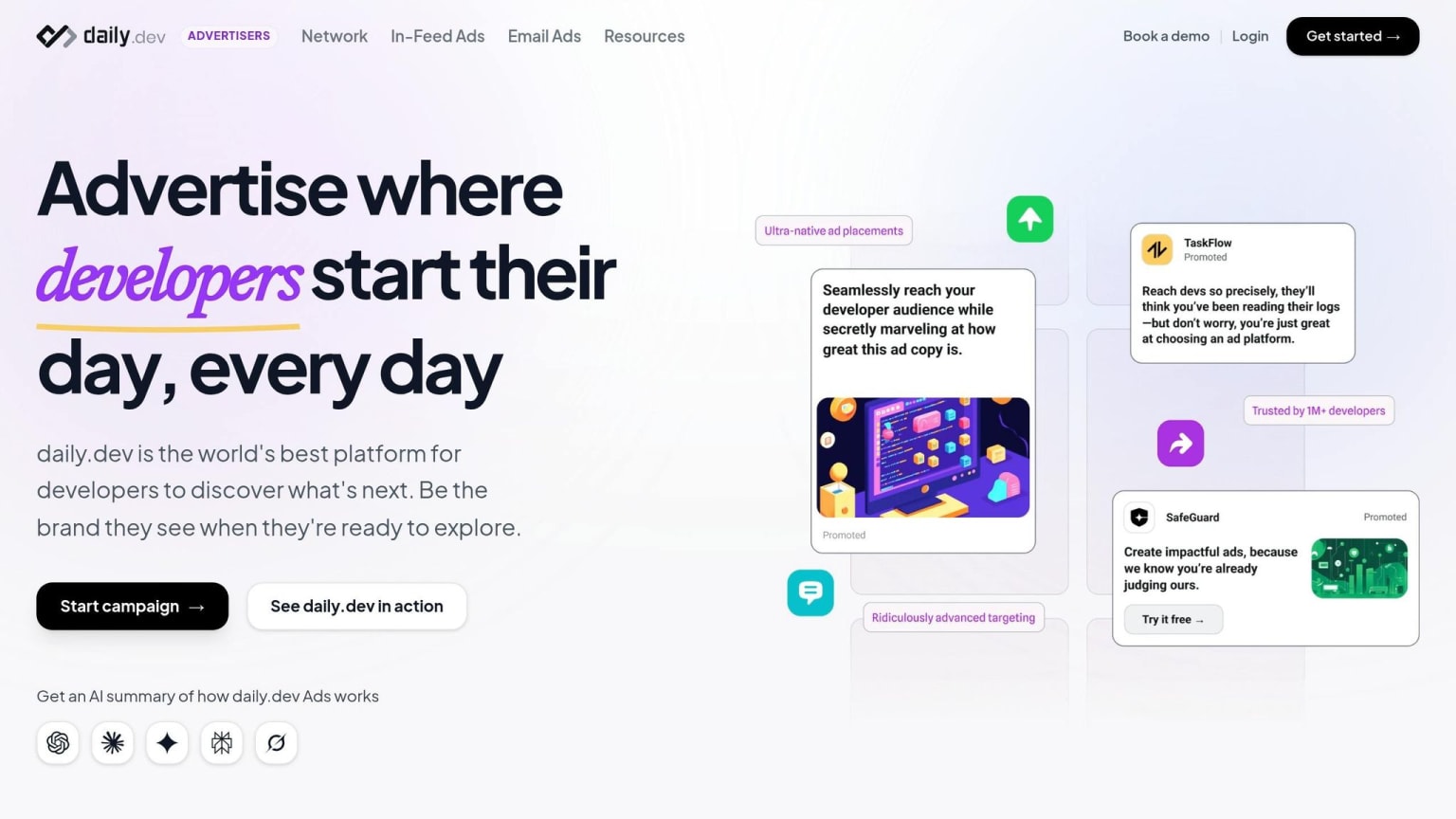
daily.dev Ads simplifies data collection by leveraging first-party behavioral data from over 1,000,000 developers in its ecosystem. The platform provides advanced targeting filters based on actual developer engagement.
With daily.dev Ads, you can segment developers by seniority - from junior-level coders to C-suite executives - and craft campaigns that align with their real interests. It also allows targeting by programming languages (e.g., JavaScript, Python, Rust, or Go) and tools like Terraform, Kubernetes, or GraphQL. For example, if you’re promoting a Python-based API testing tool, you can directly target mid-level and senior Python developers who are already exploring testing frameworks.
What sets daily.dev Ads apart is its native ad placements within developers’ personalized feeds. Ads appear alongside content developers choose to engage with, ensuring your promotions align with their professional interests and current tech stack. This creates a win-win: developers get relevant recommendations, and you reach an audience that’s already interested in your offering. Plus, real-time performance tracking lets you identify the most responsive segments and fine-tune your targeting as needed.
Segmenting Developer Audiences for Better Results
To connect with developers effectively, segmentation is key. By organizing developer data into meaningful groups, you can deliver content that aligns with their technical needs. This goes beyond basic demographics - it's about understanding their behaviors and the technologies they rely on. When done right, segmentation ensures your messaging fits seamlessly into their workflows, addressing their specific challenges. These tailored segments become the foundation for crafting personalized campaigns that truly resonate.
Behavioral and Engagement-Based Segmentation
Behavioral segmentation focuses on how developers engage with your resources. By identifying clear patterns, you can group developers into actionable categories. For example:
- Active learners: Regularly access tutorials and documentation.
- Tool evaluators: Download multiple SDKs and compare solutions.
- Production users: Actively use your tools in real-world projects.
- Inactive developers: Show limited or no recent engagement.
To segment effectively, track interactions like visits to documentation pages, code sample downloads, GitHub contributions, and webinar participation. Centralizing this data in your CRM helps identify trends automatically. For instance, if a developer frequently reviews API documentation but hasn't started integrating, they might benefit from a campaign offering a getting-started guide or implementation assistance.
This approach ensures your outreach aligns with their current level of engagement and technical needs.
Targeting by Programming Languages and Tools
Precision is crucial when segmenting developers by their technical preferences. Developers expect communication that speaks directly to their expertise. Segment by primary programming languages (e.g., Python, JavaScript, Go, Rust), frameworks (e.g., React, Django, Spring), cloud platforms (e.g., AWS, Azure, Google Cloud), and DevOps tools (e.g., Docker, Kubernetes, CI/CD systems).
Tailor your messaging to match their tech stack. For instance:
- When targeting TypeScript developers, highlight features like type safety and compatibility with tools like Vite or Next.js.
- For Go or Rust developers, focus on concurrency and performance to build credibility.
Don't stop at individual languages - consider the broader ecosystem. A Python developer working on data pipelines might use tools like Pandas, Apache Airflow, and PostgreSQL. By addressing the full scope of their workflow, your campaigns become far more relevant. Platforms like daily.dev Ads simplify this process by enabling you to target developers based on the programming languages and tools they engage with. This ensures your ads appear alongside content they already find valuable in their personalized feeds.
Adding Personalized Content to Developer Campaigns
Once you've segmented developers into specific groups, the next step is to create content that feels tailored to their technical needs. Personalization here isn't just about adding a name to an email; it's about showing that you get their tech stack, workflow, and challenges. Developers can tell right away if you're being generic or if you've put in the effort to understand their world.
Customizing Emails and Ads for Developer Preferences
When reaching out through emails or ads, make sure your content speaks their language - literally. Reference the tools, libraries, or challenges they care about. Keep the tone professional but conversational, like you're talking to a fellow developer rather than delivering a sales pitch.
For emails, craft subject lines that focus on specific technical topics, like “Optimizing React rendering performance” or “Reducing PostgreSQL query latency in production.” If possible, mention something personal, like a GitHub project or a blog post they've worked on. This shows you’ve done your homework and aren’t just sending out a mass email.
For ads, avoid anything that feels like clickbait. Developers value authenticity, so your ad copy should deliver exactly what it promises. Use visuals that feel familiar - dark mode UIs, real code snippets, or technical diagrams work far better than generic stock photos. Even your calls to action should reflect what developers actually want, such as “View the Docs” or “Check the Repo,” rather than generic options like “Contact Sales.”
A tool like daily.dev Ads can help you get this level of precision. It places your content directly into developers’ personalized feeds, right next to the technical articles they’ve chosen to read. This kind of native placement naturally boosts engagement by aligning with what they’re already interested in.
This approach also lays the groundwork for dynamic content personalization on landing pages.
Real-Time Personalization on Landing Pages and Feeds
Real-time personalization takes things a step further by reacting to what developers are doing right now. Instead of relying solely on past data, it adjusts content based on their immediate actions. For example, if a developer clicks on an ad about a Python tutorial, your landing page should instantly display Python code examples - no dropdown menus or extra clicks required.
Dynamic Text Replacement (DTR) is a great way to make this happen. It allows you to update headlines and subheaders based on the keywords that brought the developer to your page. So, if they clicked an ad about Kubernetes monitoring, your landing page should acknowledge that context right away. Even the code snippets on the page can adjust dynamically to reflect the programming language they’re currently exploring.
This kind of personalization isn’t about knowing who the developer is - it’s about understanding their intent. By focusing on what they’re trying to achieve in the moment, you can provide highly relevant resources, like tailored documentation or specific implementation examples. For instance, if they’re researching API authentication, your page could immediately offer step-by-step guides or code samples to help them out.
In short, real-time personalization creates a smooth, helpful experience from the moment they click on your ad to the time they land on your page. It’s about meeting developers where they are, with exactly what they need.
Measuring and Optimizing Personalized Campaign Performance
Once your personalized campaigns are live, tracking their performance is the next crucial step. The right metrics can reveal what’s working and what needs improvement. For campaigns targeting developers with precision targeting, key metrics include open rates, click-through rates (CTR), and conversion rates .
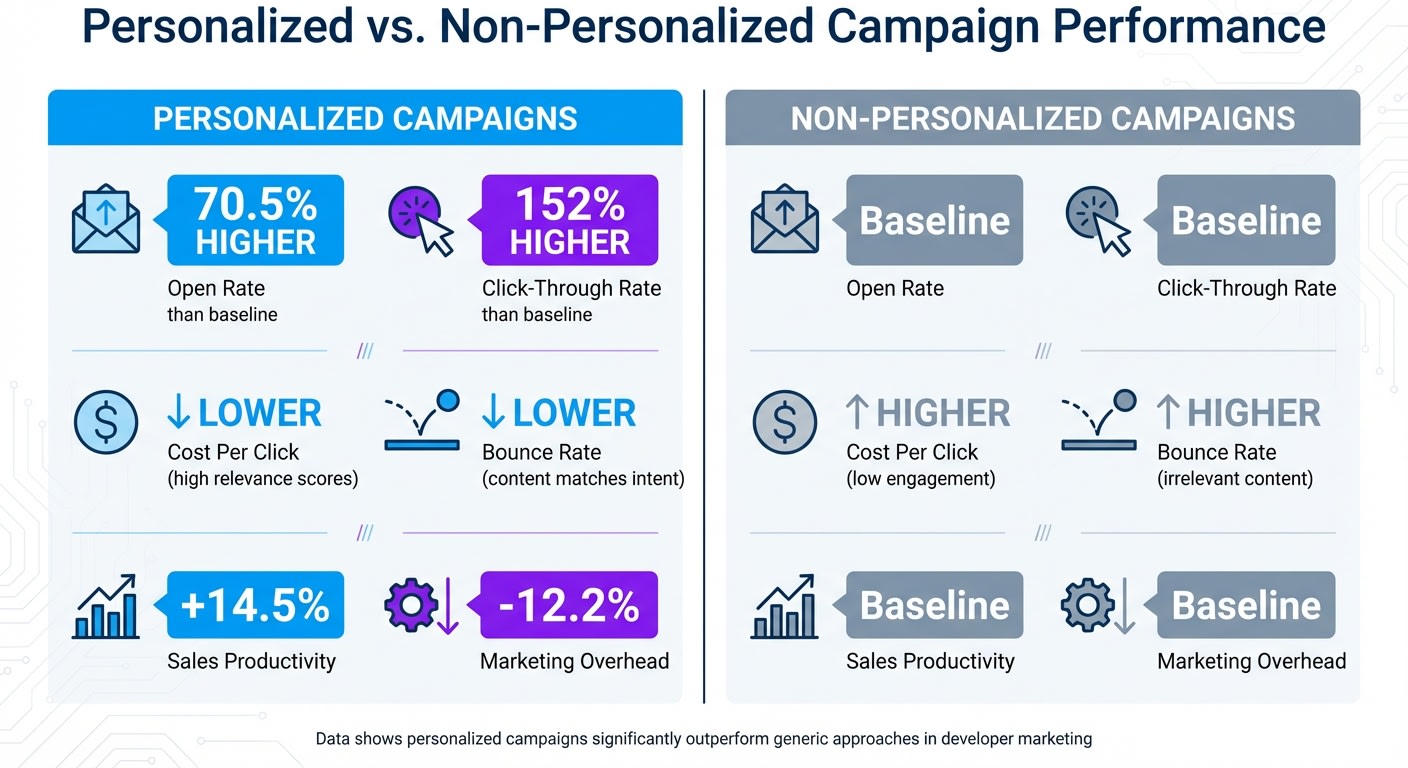
Triggered emails - sent based on specific developer actions or preferences - perform exceptionally well, with a 70.5% higher open rate and 152% higher click-through rate compared to standard newsletters . Beyond email, personalized marketing automation increases sales productivity by 14.5% while cutting marketing overhead by 12.2% . For developer audiences, it’s especially important to track engagement patterns like content downloads, demo requests, and form submissions. These actions highlight which technical content resonates most.
Key Metrics to Track Developer Campaign ROI
Setting measurable goals is essential. For example, you might aim for a 25% increase in email open rates or a 30% boost in demo requests from senior developers . These specific targets help you stay focused and provide a clear baseline for evaluating success.
Another critical metric is cost per acquisition (CPA). While personalized campaigns may have higher setup costs, they often deliver a lower CPA because they convert more efficiently. By tailoring content to a developer’s specific tech stack, you reduce banner blindness and improve relevance scores, which directly lowers your cost per click .
It’s also helpful to break down engagement by factors like programming language, seniority, and tool preferences. If Python-related campaigns consistently outperform those targeting Java developers, that insight can guide future budget allocation. Similarly, watch for bounce rates on landing pages. Developers are quick to leave if the content feels generic, so high bounce rates might signal a need to refine your personalization strategy.
With these metrics in mind, A/B testing becomes a powerful tool for fine-tuning your campaigns.
A/B Testing for Developer Campaign Optimization
A/B testing allows you to uncover what resonates most with developers. Using multi-branch testing, you can compare different messaging across specific segments . For instance, junior developers might prefer educational content, while senior architects may gravitate toward advanced technical solutions.
You can also test the technical depth of your messaging. For example, compare subject lines like "Optimize React rendering performance" with "Build faster React apps" to see which generates more interest.
Beyond messaging, test various aspects of the developer experience, such as the ease of your sign-up flow, the clarity of quick start guides, or the accessibility of API documentation. Automation tools can further refine personalization over time by identifying the technical triggers - like specific libraries or frameworks - that work best for each audience segment .
Comparison Table: Personalized vs. Non-Personalized Campaign Metrics
To summarize, here’s how personalized campaigns stack up against non-personalized ones:
| Metric | Personalized Campaigns | Non-Personalized Campaigns | Improvement |
|---|---|---|---|
| Open Rate | 70.5% higher | Baseline | +70.5% |
| Click-Through Rate | 152% higher | Baseline | +152% |
| Cost Per Click | Lower (high relevance scores) | Higher (low engagement) | Varies by segment |
| Bounce Rate | Lower (content matches intent) | Higher (irrelevant content) | Varies by segment |
| Sales Productivity | +14.5% | Baseline | +14.5% |
| Marketing Overhead | -12.2% | Baseline | -12.2% |
These numbers show how personalization can significantly improve developer engagement. When your content aligns with their tech stack and seniority, developers are more likely to trust your brand and interact meaningfully. On the other hand, generic campaigns often lead to ad fatigue or outright dismissal.
The key is to continuously measure and refine. Use centralized analytics to monitor ROI across all channels - email, ads, and landing pages - and segment your results by developer persona. This approach helps identify which groups provide the highest value and where to focus your optimization efforts .
Conclusion and Key Takeaways
Personalization plays a critical role in developer marketing automation - it’s what separates campaigns that drive results from those that fall flat. Consider this: triggered, personalized emails see a 70.5% higher open rate and a 152% higher click-through rate, while also improving sales productivity by 14.5% and cutting marketing overhead by 12.2% .
With personalized automation, you can turn generic outreach into meaningful, tailored interactions. Focus on crafting messages that align with developers' specific tech stacks and experience levels. Segment your audience based on engagement habits and preferred programming languages, and incorporate real-time dynamic content across emails, ads, and landing pages.
Tools like daily.dev Ads take this a step further by enabling precise targeting at scale. Whether it’s matching campaigns to tags like Kubernetes or React, targeting by seniority level, or placing ads directly within developers' curated feeds, this approach helps you connect with over 1,000,000 developers exactly where they’re already exploring new tools and solutions.
To succeed, measurement and constant refinement are non-negotiable. Monitor key metrics like open rates, click-through rates, conversion rates, and cost per acquisition. Use A/B testing to pit personalized approaches against generic ones, and let the data shape your strategy. When your content speaks directly to a developer’s tech stack and challenges, you stop being just another email in their inbox - you become a trusted ally.
Start small, test thoroughly, and scale what works. Developers value relevance, and when your content respects their time and addresses their needs, they’ll respond with engagement.
FAQs
What developer data should I collect first?
To effectively connect with developers, begin by gathering data on their technical expertise - this includes the programming languages they use, preferred frameworks, tools, and development environments. Understanding these details allows you to craft messages that resonate with their specific skills and interests.
It’s also essential to assess their professional level, such as their career stage or the amount of experience they bring to the table. This helps in tailoring communication that's appropriate for where they are in their professional journey.
Lastly, monitor their engagement patterns - look at metrics like how much time they spend on tutorials or how they interact with your content. These insights enable you to design campaigns that feel more relevant and personalized, ultimately increasing their interest and involvement.
How do I personalize without creeping developers out?
To connect with developers in a meaningful way without crossing boundaries, focus on relevance, respect, and transparency. Skip shallow gestures like casually dropping their name without context - it can come off as insincere. Instead, craft messages that genuinely align with their work, skills, or technical challenges.
Maintain a professional tone and steer clear of being overly familiar. Developers appreciate straightforward communication, so make it easy for them to opt out if they’re not interested. By aligning your outreach with their specific interests and career goals, you can earn trust and provide value without overstepping.
Which metrics prove personalization is working?
Metrics such as developer engagement (e.g., how often APIs are called or documentation is viewed), product usage (e.g., SDK implementation rates and feature activation), and long-term value indicators like lead progression and conversion rates help measure the impact of personalization. These insights reveal how effectively campaigns connect with developers and encourage meaningful interactions.