

Software developers are a discerning audience, often influencing major purchasing decisions in tech-driven organizations. To reach them effectively with paid ads, focus on platforms they frequent - like Reddit, Stack Overflow, and technical forums - and prioritize problem-solving over flashy marketing. Here’s a quick breakdown:
- What works: Ads that address specific pain points, use precise language, and offer clear, measurable benefits (e.g., “Reduce API latency by 40%”).
- What doesn’t: Disruptive formats like pop-ups or vague, overly promotional messaging.
- Best platforms: daily.dev Ads, Reddit, and other developer-centric spaces.
- Key strategies: Combine paid and organic efforts, test messaging with A/B campaigns, and target based on developer roles, languages (e.g., Python, JavaScript), and tools (e.g., Docker, Kubernetes).
Paid ads are especially useful for building awareness and testing ideas before committing to long-term strategies. Use metrics like click-through rates (CTR), cost per acquisition (CPA), and return on ad spend (ROAS) to track and refine campaigns. To succeed, tailor your ads to developers’ technical needs, focus on clarity, and ensure your product delivers real value.
::: @figure 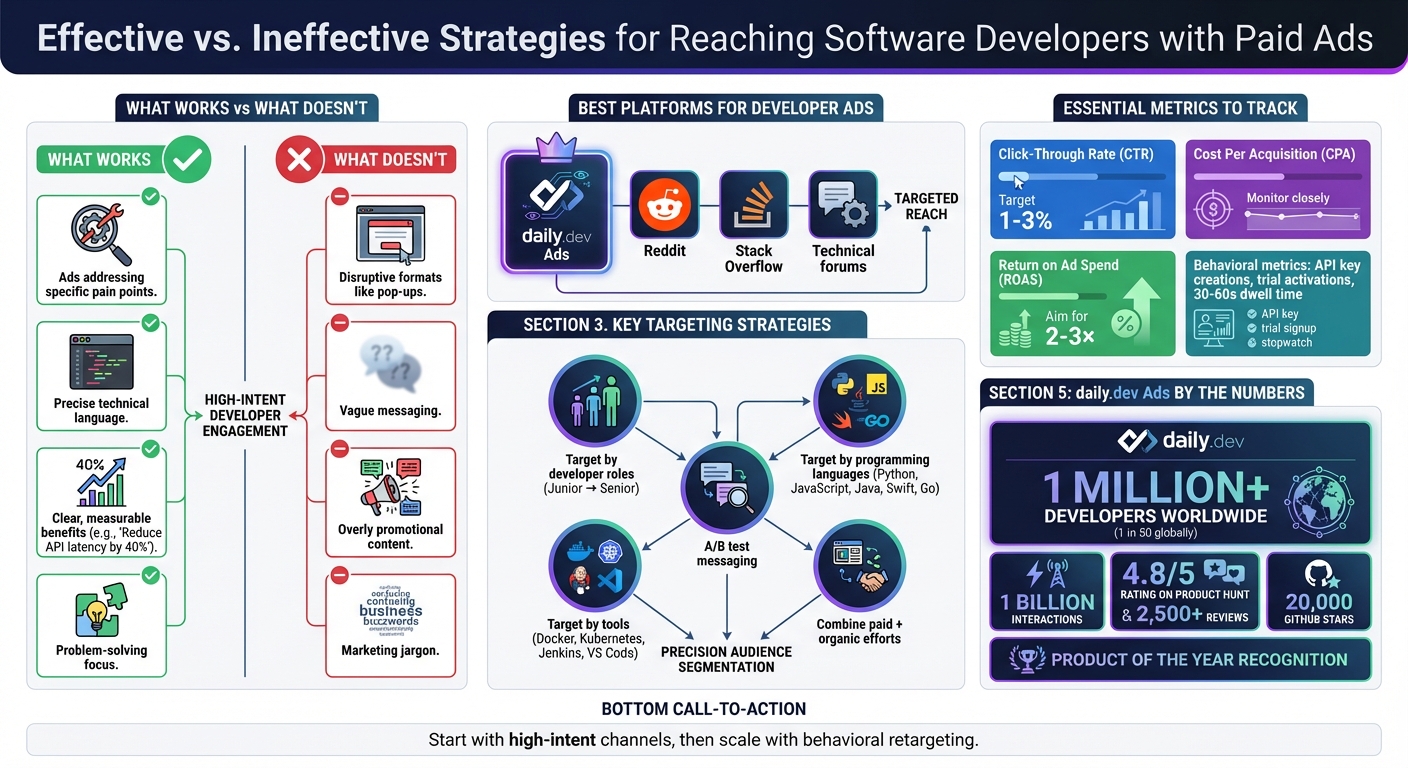 {Effective vs Ineffective Paid Ads for Software Developers: Key Strategies and Platforms}
Platforms for Reaching Developers
daily.dev Ads integrates seamlessly into the everyday routines of developers, connecting with them right where they work. Here’s a closer look at how this platform uses targeted strategies and contextual placements to engage developers effectively.
Using daily.dev Ads to Target Developers
With daily.dev Ads, you can reach over 1 million developers worldwide - that’s about 1 in 50 developers globally. Backed by 1 billion interactions, the platform offers extensive behavioral data to fine-tune your campaigns for maximum impact . Ads are displayed in personalized content feeds, post pages, and email digests, ensuring your message appears alongside trusted developer-focused content.
What sets daily.dev Ads apart is its ability to target specific developer segments with precision. You can narrow down your audience based on seniority levels, from aspiring developers to seasoned engineers. Additionally, you can target by popular programming languages like JavaScript, Python, Java, Swift, and Go, or by tools developers rely on, such as Docker, Kubernetes, Jenkins, and VS Code. This level of detail ensures your campaigns resonate with the developers most relevant to your business.
The platform’s credibility is reinforced by its stellar reputation: a 4.8/5 rating on Product Hunt from over 2,500 reviews, recognition as "Product of the Year", and 20,000 GitHub stars . These accolades make daily.dev Ads a trusted space to connect with developers in an authentic and impactful way.
sbb-itb-e54ba74
Building Ad Campaigns That Work for Developers
To create ads that resonate with developers, focus on technical accuracy rather than traditional marketing fluff. Developers value authenticity and measurable results, so your campaigns should reflect that. Start by choosing ad formats that naturally fit into the platforms and tools developers already trust.
Selecting the Best Ad Format
Native ad formats tend to work best because they blend seamlessly into developers' content streams. For example, in-feed ads can appear within technical articles or forums, making them feel less intrusive and more aligned with the developer's workflow. To maximize impact, ensure your ad placement matches the context. A good example would be pairing content about containerization with ads for Docker-related tools or placing API management solutions alongside backend development articles. Once you've nailed the format, the next step is to craft ad copy that speaks directly to developers' priorities.
Writing Ad Copy for Developers
When writing ad copy, clarity and tangible benefits should be your main focus. Skip the vague promises and instead highlight specific outcomes. For instance, say, "Reduce API latency by 40%" or "Deploy in under 5 minutes." Testing different messaging styles can also pay off. Compare technical benefit-driven messages with problem-solving ones, such as "Stop debugging slow API calls" - you may find one approach resonates more with your audience .
Avoid marketing jargon that might confuse or alienate developers. They prefer straightforward language that clearly explains what your product does and why it’s useful.
“Developer marketing only works when the product delivers immediate, obvious value. No landing page, brand campaign, or 'community strategy' can cover for a bad product experience” .
Targeting Based on Skills and Tools
Precision targeting is critical when marketing to developers. Tailor your campaigns to specific roles, programming languages, and tools that align with your product. For example, if you're promoting a billing API, focus on senior backend engineers who work with Python and payment systems. For DevOps tools, target engineers using Kubernetes and Docker, especially in mid-sized companies. This approach not only sharpens your audience focus but also makes your campaign more cost-efficient .
Combining targeting criteria can further refine your audience. As of early 2026, Python remains the dominant programming language driving innovation in North America, making it a smart choice for campaigns aimed at cutting-edge tech professionals . By aligning your targeting with developers' skills and tools, you can ensure your ads are both relevant and impactful.
Tracking and Improving Campaign Results
To measure how well your campaigns are performing, start by focusing on the right metrics. For developer-focused campaigns, key metrics include click-through rate (CTR) - aim for a range of 1–3% - and behavioral metrics like API key creations, free trial activations, or dwell times of 30–60 seconds. These metrics give you a solid foundation for setting clear and actionable KPIs .
Setting Up Key Performance Indicators
When defining KPIs, look beyond basic engagement numbers. For instance, track cost per acquisition (CPA) to understand how much you're spending to acquire a qualified lead. The acceptable CPA range will depend on your specific campaign goals and audience. Similarly, aim for a return on ad spend (ROAS) of at least 2–3× to ensure your investment pays off.
For accurate conversion tracking, implement pixel-based systems that monitor actions like GitHub repo stars or demo bookings. This approach ensures clear attribution, linking exposure to meaningful conversions .
With your KPIs in place, real-time data becomes your best tool for monitoring and improving performance.
Using Data to Refine Your Campaigns
Real-time analytics allow you to make immediate adjustments to your campaigns. Platforms like daily.dev provide dashboards that track metrics such as CTR, impressions, and engagement, broken down by developer expertise (e.g., React or Python). By monitoring these metrics hourly, you can quickly spot and address any performance issues.
A/B testing is another powerful tool for campaign refinement. For example, tests have shown that problem-focused ad creatives can double CTR, while personalized messaging can lower CPA by as much as 30–50% . With daily.dev's integrated dashboard, making these adjustments is straightforward, helping you stay aligned with your goals.
Steer clear of vanity metrics like impressions alone. Developers may take weeks to explore tools after seeing an ad, so using multi-touch attribution models is crucial. These models credit interactions across the entire funnel, from initial awareness to final conversion. For example, one campaign reduced its sales cycle by 58% and achieved 2.3× growth by tying ad performance directly to pipeline outcomes. Tracking everything - from initial exposure to monthly recurring revenue - via UTM parameters allows for daily optimization, helping you cut underperforming ads while scaling up successful ones .
Conclusion
Running paid ads for software developers requires a specialized and technically informed strategy. Developers are drawn to authentic messaging, value precise technical details, and gravitate toward solutions that address real, tangible problems.
To meet these expectations, your campaign needs to target the right decision-makers. Whether it's a DevOps expert managing Docker tools or a product manager responsible for analytics infrastructure, tailoring your approach is key . Your ad creatives should highlight problem-solving capabilities through technical headlines, live coding examples, and clear, direct messaging. Start with high-intent channels like branded search, then refine your reach using behavioral retargeting based on API usage or engagement with technical content. Broader awareness campaigns can follow as you scale . Regular testing is crucial - ads that focus on solving specific pain points and use personalized messaging often yield better results .
Once your campaigns are up and running, shift your attention to tracking and improving performance. Focus on metrics that matter: behavioral indicators like API calls and trial activations, as well as cost per acquisition (CPA) and return on ad spend (ROAS). Employ multi-touch attribution to understand how your ads influence the entire conversion journey - from the first impression to the final outcome .
Ready to dive in? Start with daily.dev Ads by completing the advertiser onboarding form on their business platform. Use their targeting tools to tailor your audience by language and experience level . Keep in mind that developers often take time to fully evaluate a tool, so patience and consistent optimization are essential for building a reliable revenue stream.
FAQs
What budget should I start with for developer paid ads?
To reach developers effectively through paid ads, it's a good idea to begin with a budget of about $5,000. This amount gives you access to detailed targeting options, like narrowing down by specific programming languages or job seniority. It also provides enough room to test different strategies, analyze ROI, and fine-tune your campaigns to better connect with the developer audience.
How do I choose targeting (role, language, tools) without wasting spend?
To connect with developers effectively, start by understanding their needs and behaviors. Create detailed personas that reflect their roles, skill levels, and interests. This allows you to craft messaging that speaks directly to them. Focus on the tools, programming languages, or frameworks they rely on to ensure your content feels relevant.
Transparency is key - offer solutions that genuinely address their challenges to build trust. Finally, keep an eye on campaign performance. Regularly measure and tweak your efforts to improve targeting and reduce inefficiencies.
What conversion events should I track beyond clicks?
Tracking developer-specific actions goes far beyond just counting clicks. It’s about measuring deeper and more meaningful interactions with your product or service. Key events to monitor include API calls, documentation views, and sign-ups. These metrics offer a better understanding of how your campaigns are performing by focusing on actions that truly matter - like engaging with technical content or starting to use an API. These interactions paint a more accurate picture of engagement than simple click-through rates ever could.