

B2B marketers are shifting focus from Google Ads to developer networks like daily.dev Ads. Why? Developer networks offer better targeting, lower costs, and higher engagement for technical audiences.
Key Insights:
Developers avoid traditional ads: 61% prefer platforms like Stack Overflow for research.
Digital-first sales: 80% of B2B interactions are now online, making precise targeting critical.
Developer networks outperform Google Ads: They provide tailored, in-context ads with lower costs and better ROI.
Quick Overview:
daily.dev Ads: Targets developers by language, tools, and seniority. Ads are integrated into workflows and offer real-time performance metrics. Most importantly, when you advertise on daily.dev ads, you’re meeting developers in discovery mode, when they’re actively seeking new tools and solutions to test out.
Google Ads: Broad reach but struggles with developer-specific targeting. Higher costs and mixed engagement for niche audiences.
Quick Comparison:
| Metric | daily.dev Ads | Google Ads |
|---|---|---|
| Targeting Precision | Developer-specific attributes | Broad audience |
| Cost-per-click (CPC) | Lower | $4.66 (average) |
| Engagement Quality | High for technical audiences | Mixed |
| Setup Complexity | Streamlined | Complex |
| Conversion Quality | Higher for technical leads | Varied |
Developer networks excel by delivering relevant, cost-effective ads that resonate with technical professionals. For B2B marketers targeting developers, these platforms are becoming the go-to choice.
Choosing a paid advertising platform: a Google, Meta & TikTok ads overview | Digital Culture Network
::: @iframe https://www.youtube.com/embed/FkFR3dRW1Wg
1. daily.dev Ads Features
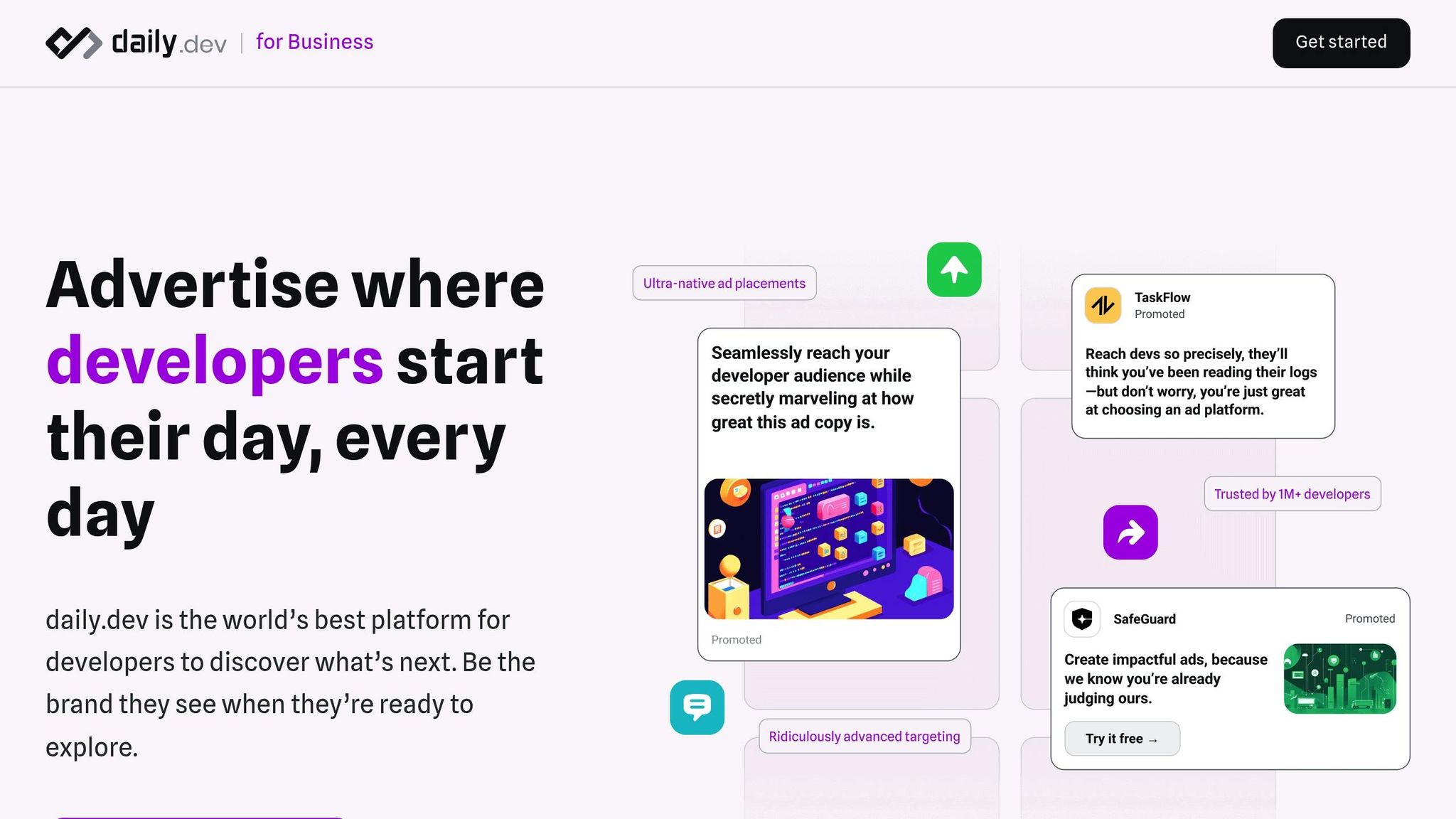
daily.dev Ads offers a focused way to connect with technical professionals, delivering campaigns tailored specifically for developers.
Precision Targeting
With daily.dev Ads, advertisers can fine-tune their campaigns by targeting developers based on specific attributes like:
Programming languages they use
Tools and frameworks they work with
Their seniority level within the industry
Geographic location
This level of specificity ensures that ads reach the right audience with precision.
Native Ad Integration
The platform integrates ads directly into developers' daily workflows, offering placements such as:
In-feed ads
Displays on post pages
Spots in personalized digests
These placements are designed to blend seamlessly into the user experience, reflecting the growing trend in B2B marketing where 95% of marketers now leverage social media . This approach not only feels natural but also provides data-driven insights to optimize performance.
Performance Metrics
daily.dev Ads provides reporting to evaluate campaign performance.
| Metric Type | What It Measures | Why It Matters |
|---|---|---|
| Engagement | Interaction with content | Indicates how well the content resonates with users |
| Session Analytics | Time spent and navigation | Highlights user interest and behavior patterns |
| Conversion Tracking | Completion of key actions | Measures the effectiveness of the campaign |
This detailed tracking ensures advertisers can adjust their strategies based on actionable insights.
Cost Structure
Instead of the traditional cost-per-click model (which averages $2.32 on search networks ), daily.dev Ads uses a CPM-based pricing model. This aligns with the shift in B2B digital marketing, where 49% of spending has moved online . By focusing on value and developer engagement, the platform ensures advertisers get the most out of their investment.
2. Google Ads Features
Google Ads is a powerhouse in the digital advertising world, controlling a staggering 90% of global search traffic and 58% of the search ad market share . However, its broad, generalist approach often struggles to resonate with developer audiences. This sets the stage for looking at how developer-focused networks compare to Google Ads when targeting B2B technical audiences.
Audience Targeting Capabilities
Over time, Google Ads has developed robust tools for audience targeting . It offers several targeting options, each with its own strengths and limitations for B2B marketing:
| Targeting Type | Features | B2B Value |
|---|---|---|
| In-Market | Focuses on active buyers | High intent but broad reach |
| Affinity | Based on user interests | Limited focus on developers |
| Demographic | Industry-based filters | Basic segmentation for B2B |
| Custom Intent | Keyword/URL targeting | Precise but can be complex |
Response Rates and Engagement
The platform delivers an average click-through rate (CTR) of 6.42% . While this might seem impressive, it often falls short with developers, who tend to favor ads that are less intrusive and more contextually relevant .
Cost Structure
In the United States, Google Ads campaigns come with the following average costs:
Cost-per-click (CPC): $4.66
Cost-per-thousand impressions (CPM): $78.64
Cost-per-conversion: $32.21
Monthly ad spends typically range between $100 and $10,000 . These numbers highlight the platform's flexibility but also its potential to become expensive, especially for niche audiences.
Platform Integration
Google Ads' Display Network boasts a massive reach, covering 90% of internet users . While this broad scope is impressive, it can dilute relevance for highly specific audiences like developers. Research has shown that ads placed within developer-centric platforms perform better than those in less relevant contexts .
"Google Ads provides a wealth of data to track and measure your campaign performance. You can see exactly what's working and make real-time adjustments to optimize your spend."
- Max Shak, Founder and CEO of Nerdigital
sbb-itb-e54ba74
Platform Comparison
Let's break down the key factors that influence platform effectiveness when reaching B2B technical audiences.
Targeting Precision and Audience Quality
| Metric | Google Ads | Developer Networks |
|---|---|---|
| Average CPC | $2.69 | Typically lower due to a focused audience |
| B2B Cost Per Acquisition | $116.13 | More cost-efficient for technical audiences |
| Audience Relevance | Broad reach with varied intent | Pre-qualified technical professionals |
| Intent Signals | Search-based intent | Active engagement with development content |
The difference in audience relevance between the two platforms highlights how they cater to varying marketing needs, setting the stage for further comparisons in cost and engagement.
Cost Structure and ROI
The cost dynamics between these platforms show distinct advantages depending on your goals:
| Cost Factor | Google Ads | Developer Networks |
|---|---|---|
| CPM (Display) | $3.12 | More competitive for technical audiences |
| Average CPL | $66.69 | Lower for qualified developer leads |
| Campaign Minimum | Higher entry point | Flexible budgeting options |
| Optimization Costs | Requires significant management | Simpler campaign management |
Engagement Quality
Developer networks excel in fostering meaningful, context-driven engagement with technical audiences. On the other hand, Google Ads relies heavily on search-driven intent, often requiring additional strategies like remarketing to maintain audience interest and retention.
Campaign Performance Metrics
When it comes to technical audiences, performance metrics reveal some key differences:
| Performance Indicator | Google Ads | Developer Networks |
|---|---|---|
| Click-Through Rate | Varies by industry | Higher for relevant technical content |
| Conversion Quality | Mixed intent levels | Higher technical qualification |
| Sales Cycle Impact | Average 2–6 months | Shorter for technical decision-making |
| Audience Retention | Requires remarketing | Natural community engagement |
Interestingly, SalesHive's 2025 campaign data revealed that AI-driven audience targeting reduced cost-per-lead by 34% across more than 300 Google Ads campaigns .
Implementation Complexity
The effort required to set up and manage campaigns also varies significantly:
| Aspect | Google Ads | Developer Networks |
|---|---|---|
| Setup Time | Complex, with multiple steps | Streamlined process |
| Targeting Setup | Extensive keyword research | Built-in technical audience segments |
| Creative Requirements | Multiple format variations | Developer-focused formats |
| Optimization Effort | Requires continuous adjustments | More stable performance |
These comparisons highlight that developer networks offer a more tailored, efficient approach for reaching technical B2B audiences, making them a strong contender for businesses targeting this niche.
Key Findings
Our analysis highlights the standout advantages of leveraging developer networks for B2B technical marketing. Here’s what the data reveals:
Cost and ROI Benefits
When it comes to cost efficiency, developer networks outperform. For example, Google Ads average $3.33 CPC for B2B campaigns . However, targeting focused technical audiences often leads to a higher ROI, making it a smarter choice for marketing technical products.
Trust and Engagement Impact
A comparison of campaign approaches shows striking results :
| Campaign Approach | Engagement Metric | Brand Credibility |
|---|---|---|
| Traditional B2B | 15% increase in IT spending | Base improvement |
| Developer-focused | 200-fold increase in credibility | Significant boost |
| Community-driven | 35% higher video completion rates | Sustained engagement |
By reducing costs and targeting the right audience, brands build stronger trust and engagement with technical buyers.
Strategic Implementation Success
Microsoft Teams provides a powerful example of success through developer-focused marketing. The results speak for themselves:
38% increase in social media followers
28% growth in year-over-year engagement
Achieved a three-month follower goal in just six weeks
"You have to give them (developers) all the tools they need to make things easy and simple to do, otherwise they're gonna spend a lot of time trying to figure it out. That's a wasted time."
– Ryan Paul Gibson, Founder of Content Lift
Market Influence Factors
Developers hold significant sway over company tech decisions:
57% influence company tech purchases
60% directly impact tool approvals
Enterprise software spending is expected to hit $755 billion in 2023
Effectiveness in Technical Markets
Adobe’s “Creativity for All” campaign highlights the power of developer-focused marketing:
14% increase in brand favorability among tech buyers
180% year-over-year growth in product searches
33% rise in B2B sales inquiries within 90 days
These findings underscore the strategic importance of developer networks in modern B2B marketing, proving their ability to drive engagement, trust, and measurable results.
FAQs
Why are B2B marketers choosing developer networks like daily.dev Ads over Google Ads for better targeting and engagement?
Developer-focused networks like daily.dev Ads provide a sharper, more direct way to reach technical audiences compared to broader platforms like Google Ads. These platforms are designed specifically for developers, allowing marketers to craft ads that resonate with their unique interests, expertise, and preferences.
With access to detailed demographic and psychographic insights, daily.dev Ads enable businesses to target developers based on factors such as their experience level, favorite tools, or preferred programming languages. This tailored approach not only drives better engagement but also establishes trust within the developer community - something that broader platforms often struggle to achieve.
What makes developer networks a cost-effective choice for B2B marketing?
Developer networks stand out as a budget-friendly option for B2B marketing, especially when compared to traditional advertising methods. They allow businesses to lower customer acquisition costs by focusing on highly targeted outreach, ensuring your efforts reach the right audience without wasting money on broad, less relevant campaigns.
These networks excel at engaging niche, technical audiences, leading to improved ROI through deeper engagement and more impactful interactions. This means businesses can stretch their marketing budgets further while gaining better visibility and building direct relationships with potential customers in their specific industry.
What are the best ways for B2B marketers to measure the success of campaigns on developer networks?
Measuring Campaign Success on Developer Networks
To gauge how well your B2B campaigns are performing on developer networks, it’s essential to keep an eye on specific key performance indicators (KPIs). Metrics like click-through rates (CTR), conversion rates, and engagement levels (e.g., time spent on content or interaction rates) can give you a clear picture of how your audience is responding.
Don’t stop there - dig deeper into the numbers that reflect financial efficiency and long-term impact. This includes tracking lead generation, customer acquisition cost (CAC), and customer lifetime value (CLV). These metrics help you understand not just immediate results but also how your efforts contribute to sustainable growth.
Using analytics tools can make this process smoother by providing data-driven insights to fine-tune your strategy. By focusing on the right metrics, you can ensure your campaigns deliver results while staying cost-efficient.