

Developers don’t fall for buzzwords anymore. By 2026, terms like "AI-powered" or "revolutionary" often do more harm than good. To market AI tools successfully, focus on practical integration, clear documentation, and real-world utility. This guide breaks down the best ways to connect with developers across organic, content, and paid channels.
Key Takeaways:
- Organic Channels: Platforms like GitHub, Hacker News, Reddit, and Product Hunt are perfect for building trust. Keep your messaging technical, transparent, and concise.
- Content Marketing: Tutorials, benchmarks, and migration guides are more effective than flashy ads. Developers value actionable insights over marketing jargon.
- Paid Ads: Use platforms like daily.dev and Twitter to target developers with technical content, not generic promotions.
- Metrics That Matter: Track active API calls, integration depth, and time-to-first-value (TTFV). Focus on adoption, not just signups.
The bottom line: Developers trust tools that solve problems fast, integrate easily into their workflows, and offer clear, transparent documentation. Forget the hype - show them how your tool works.
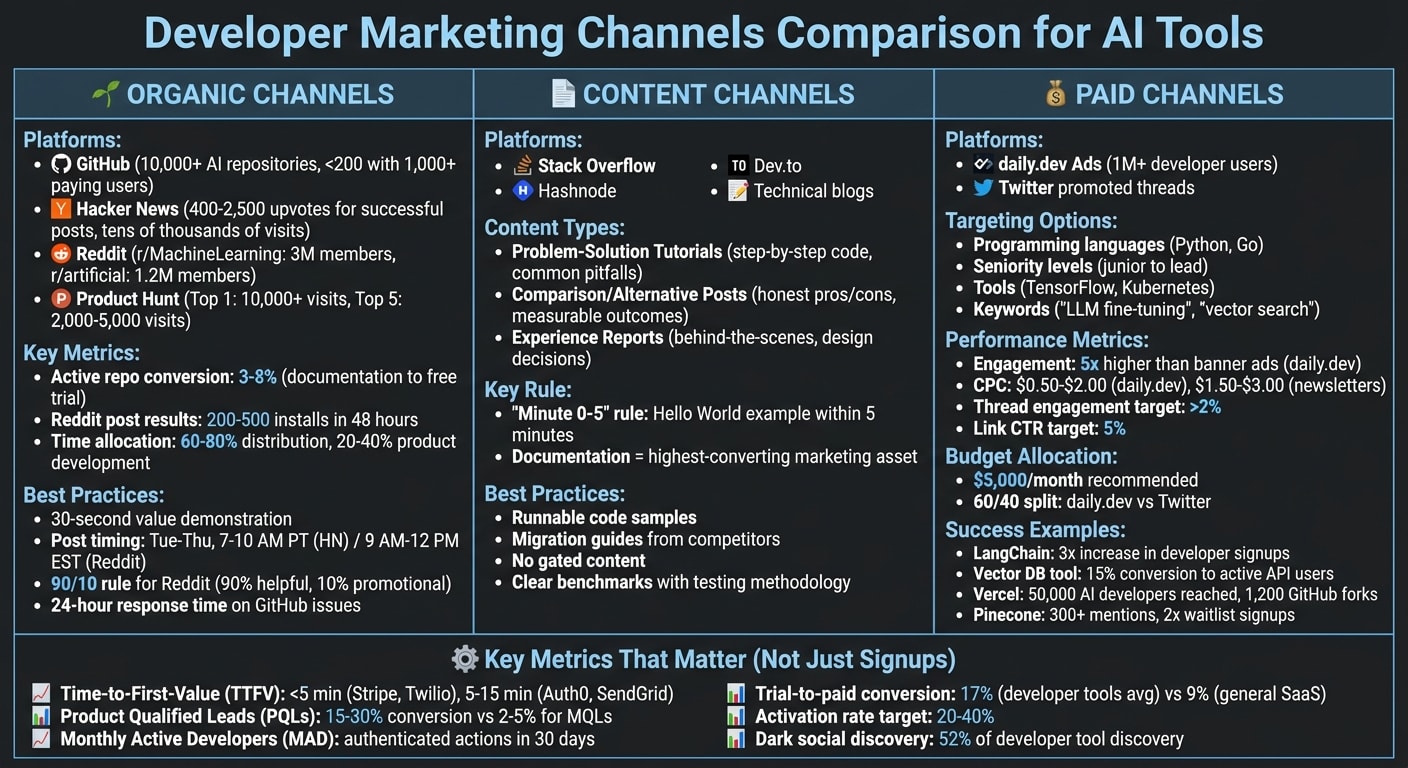
Organic Channels: Building Developer Trust
Developers care more about what your tool does than how you describe it. That’s why platforms like GitHub are essential for establishing credibility. Among over 10,000 AI tool repositories on GitHub, fewer than 200 have reached 1,000 paying users . The key difference? Tools that succeed are actively maintained, transparent about their technical details, and fit seamlessly into developer workflows.
The best organic channels let developers explore your tool on their own terms. Whether it’s a "Show HN" post on Hacker News, a technical post on Reddit, or a Product Hunt launch, the goal is to connect with developers as peers, not as potential customers.
Interestingly, builders who achieve $1,000 in monthly recurring revenue often spend 60–80% of their time on distribution activities, leaving only 20–40% for product development . Let’s explore four organic channels that consistently draw high-quality developer traffic: GitHub, Hacker News, Reddit, and Product Hunt.
Using GitHub to Build Trust
Your GitHub repository is often the first impression developers get of your project. A high star count acts as social proof, sometimes more influential than flashy logos on a landing page. But stars alone won’t convert users - you need to make it easy for developers to understand and use your tool.
Make your README count. Developers should grasp your tool’s value in under 30 seconds. Include:
- A clear one-sentence description of your tool.
- A 60-second demo GIF that shows how it solves a real problem.
- A direct link to a live demo or install script.
Jonathan Fishner, co-founder of ChartDB, learned this firsthand. After simplifying his tool’s setup process - removing the need for database credentials and local installation - his project skyrocketed to 21,000 GitHub stars and 250,000 users, generating over $9,000 in monthly recurring revenue .
"Minimize friction to retain developer engagement. If they can't see the value in 30 seconds, they are gone." – Jonathan Fishner, Co-founder, ChartDB
Be transparent about your tech. Developers want to understand how your tool works. Share insights into your custom pipelines, chunking methods, or retrieval strategies. This openness builds trust and establishes your authority.
The "open source trojan horse" approach works especially well for AI tools. Offer a free, useful library or utility that complements your paid product. This not only solves an immediate problem but also brings more developers into your ecosystem. Use GitHub’s "Topics" and "Related repositories" features to reach developers browsing similar projects.
Keep your repository active. Regular updates and prompt responses to issues (ideally within 24 hours) signal that your project is reliable. Active repositories convert technical documentation visitors into free trials at rates of 3–8% . Subtle in-tool prompts like “star us on GitHub” can also encourage engagement.
Once you’ve established trust on GitHub, you can amplify your reach by engaging with the Hacker News community.
Launching on Hacker News
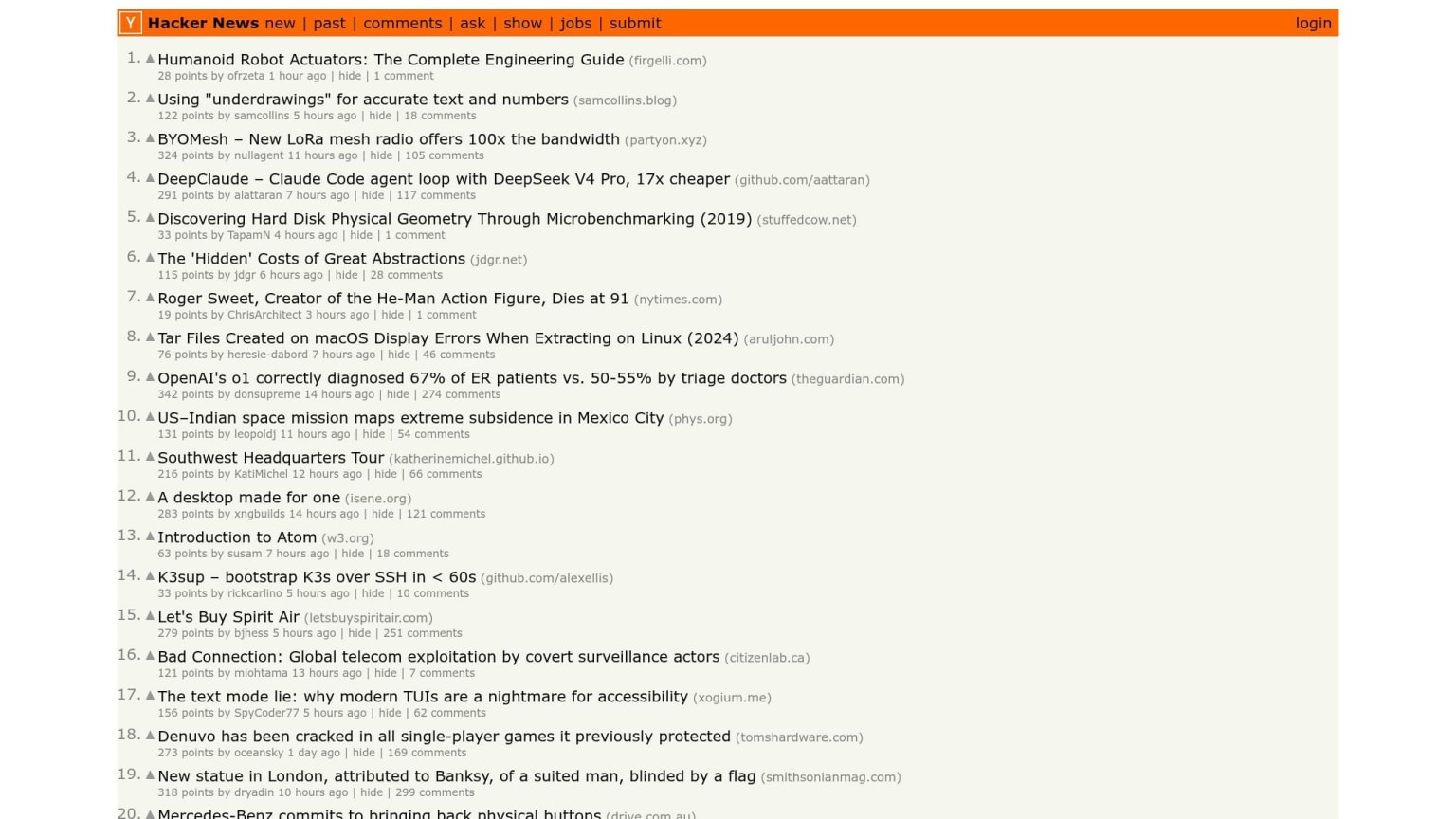
A successful post on Hacker News can drive tens of thousands of visits to your GitHub repository . But Hacker News has a unique culture, and missteps can sink your launch before it gains traction.
Stick to the "Show HN" format. If you’re sharing a project, use titles like "Show HN: [Product Name] – [Technical description]." Avoid marketing buzzwords like "fastest" or "best" and instead use straightforward, technical language .
Fly.io (YC W20) nailed this in March 2020 with their post: "Launch HN: Fly.io (YC W20) – Deploy app servers close to your users." The post avoided hype, focused on technical value, and co-founder Kurt Mackey personally responded to 53 comments, building credibility and engagement .
"Talk to HN as fellow builders and engineers. Imagine you're having a drink with a friend you used to work with." – Hacker News Admins
Timing and interaction matter. Post between Tuesday and Thursday, 7:00 AM to 10:00 AM PT . Respond to every comment within the first 24–48 hours. When addressing criticism, acknowledge positive feedback first. Avoid hard-sell tactics - this audience values genuine technical discussions over marketing.
Successful posts typically earn between 400 and 2,500 upvotes . While the traffic surge is brief, your goal is to convert skeptical engineers into GitHub stargazers and early adopters who can champion your tool.
Next, let’s look at how Reddit can help you build grassroots trust among developers.
Participating in Reddit Communities
Reddit is a place where developers openly discuss tools, share experiences, and make buying decisions. A single well-crafted post in the right subreddit can lead to 200–500 unique installs within 48 hours .
Target the right communities. For AI tools, subreddits like r/MachineLearning (3M members) and r/artificial (1.2M members) are great for technical innovations, while r/LocalLLaMA is ideal for showcasing demos. Other valuable subreddits include:
- r/SaaS: Build stories and founder discussions.
- r/selfhosted: Technical deep dives and alternatives.
- r/SideProject: Indie projects and early demos.
To avoid being flagged as spam, follow the 90/10 rule: 90% of your contributions should offer general technical insights, with only 10% promoting your product. Start by observing the community for 1–2 weeks, then spend 3–6 weeks sharing non-promotional content before introducing your tool. Use a personal account rather than a brand account, which often raises suspicion .
"Developers make buying decisions in Reddit threads - not on your landing page." – Egidijus, Founder, Prowlo
Focus on solving problems. Frame your posts around challenges you faced and how your tool addresses them. For example, "I got tired of [Problem], so I built [Tool]." Include a short screen recording to demonstrate your tool in action. Stay active in the discussion for at least 4 hours after posting to answer questions and engage with the community.
Post between Tuesday and Thursday, 9:00 AM to 12:00 PM EST . While most posts generate 10–50 signups, a viral post can deliver 200–1,000+ signups . Plus, Reddit threads are indexed by Google, meaning they can continue to drive traffic long after the initial post.
| Subreddit | Focus Area | Intent Level | Promo Tolerance |
|---|---|---|---|
| r/SaaS | Build stories, founder discussions | High | Friendly |
| r/selfhosted | Technical deep dives, alternatives | High | Friendly (if self-hostable) |
| r/SideProject | Indie projects, early demos | High | Moderate |
| r/MachineLearning | Genuine ML innovation/research | Medium | Strict |
| r/LocalLLaMA | Local AI, LLM implementations | High | High (for demos) |
Finally, let’s explore how to make the most of a Product Hunt launch.
Launching on Product Hunt
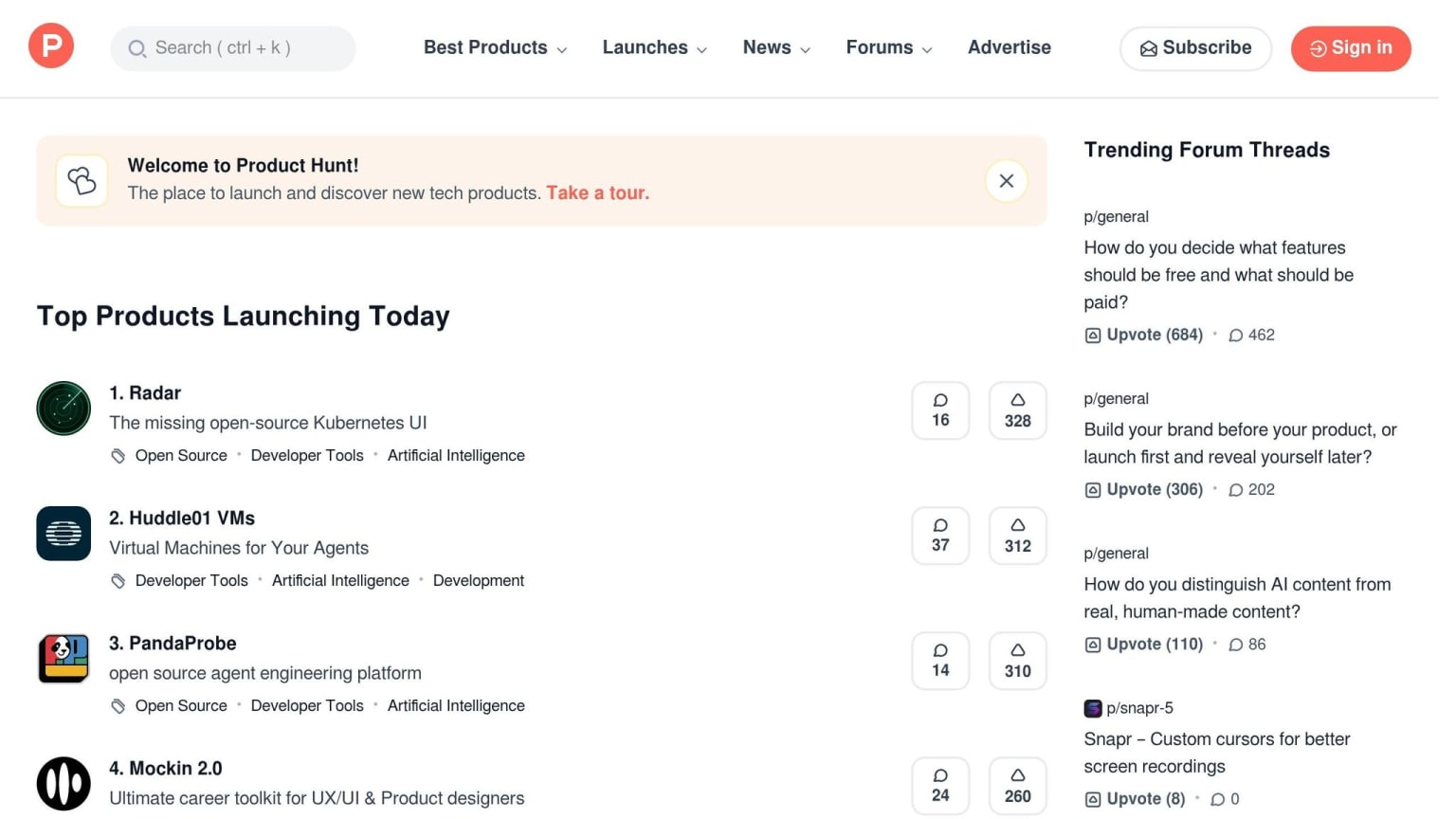
Product Hunt is where you make your tool’s official debut. A strong launch can bring in thousands of visitors - a top 1 finish can generate over 10,000 visits, while finishing in the top 5 typically brings 2,000–5,000 .
Timing is everything. Launch at 12:01 AM PST to maximize visibility during the 24-hour voting window . Prepare your assets well in advance, including:
- A concise tagline under 60 characters.
- 3–5 gallery images.
- A demo video.
Your "maker comment" should tell a personal story about the problem your tool solves and include a special offer for the Product Hunt community.
Engage actively with commenters. Respond to every comment within 15–30 minutes during the first 12 hours. This not only boosts your ranking but also demonstrates your commitment and technical expertise .
Content Channels: Demonstrating Value
Organic channels grab attention, but technical content builds trust. For developers, trust isn’t earned through flashy marketing - it comes from clear, actionable proof. A well-crafted tutorial or honest benchmark comparison can leave a lasting impression, showing that your product is as reliable as the content you create. When developers see a polished tutorial, they instinctively believe the product behind it is built with the same level of care.
The best content addresses real-world problems. Developers can spot an ad a mile away. Instead of selling, focus on solving: identify a specific challenge, walk through the solution step-by-step, and explain how your AI tool fits into the process.
"Documentation is the highest-converting marketing asset. Clear docs with runnable examples produce more signups than any ad." – Louis Corneloup, Founder at Dupple
If you’re looking for effective content channels, two stand out for AI tools: answering technical questions on Stack Overflow and publishing detailed tutorials on platforms like Dev.to. These approaches allow you to engage with developers where they already spend their time.
Answering Questions on Stack Overflow
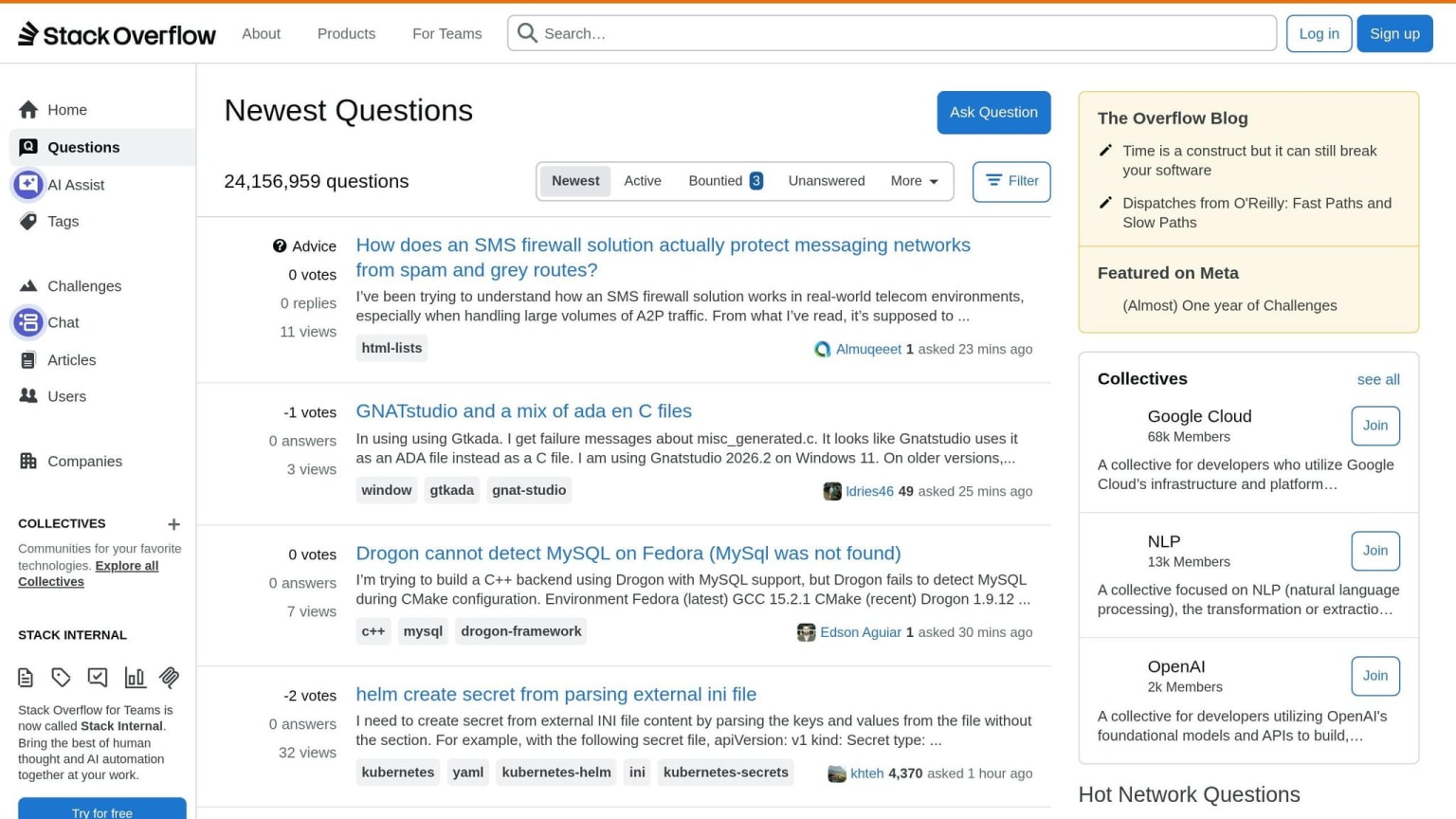
Stack Overflow is where developers turn when they’re stuck. By providing helpful, thoughtful answers, you can build credibility without sounding like a sales pitch.
Focus on questions naturally tied to your tool. For instance, if your product is a code generation API, look for questions about automating repetitive coding tasks. If your tool specializes in embeddings, target topics like semantic search or vector databases. Start by explaining the core concepts, then clearly show how your tool solves the problem.
Use comparison benchmarks. Developers trust data over promises. If your tool outperforms others, share the numbers and explain your testing process so they can verify the results themselves.
Always include runnable code samples. Your answers should feature copy-paste-ready snippets that solve the exact problem at hand. Make sure the code is complete, functional, and free of marketing language like "seamless" or "enterprise-grade", which can come across as insincere.
Be genuine. Offer help even when your tool isn’t the perfect solution. This builds trust and shows that you’re more interested in solving problems than pushing a product.
Pair these answers with in-depth tutorials on platforms where developers actively search for guidance.
Publishing on Dev.to and Technical Blogs
Platforms like Dev.to and Hashnode give you access to large developer audiences. Posting your tutorials here can amplify your reach without extra cost.
Create migration guides and integration tutorials. Developers switching from a competitor’s tool need clear, detailed instructions. A guide like "Moving from [Competitor] to [Your Tool]" can attract high-intent users by breaking down the differences, explaining API design choices, and pointing out common pitfalls. Be upfront about trade-offs - if your tool requires more setup but delivers better performance, say so.
Write "how we built it" posts. Developers love to learn about the tech behind successful tools. Share the reasoning behind your architectural decisions, how you optimized performance, or lessons learned along the way. These posts not only provide valuable insights but also reinforce your credibility.
| Content Type | Purpose | Key Elements |
|---|---|---|
| Problem-Solution Tutorial | Solves a specific need | Step-by-step code, common pitfalls, clear results |
| Comparison/Alternative Post | Attracts bottom-of-funnel users | Honest pros/cons, measurable outcomes |
| Experience Report | Builds trust and technical credibility | Behind-the-scenes details, design decisions, lessons learned |
Follow the "Minute 0-5" rule. Every technical post should include a "Hello World" example or one-click demo that lets developers test your tool within five minutes . Once they’ve seen it in action, guide them through a more complex task using their own data.
Finally, avoid gating content behind forms or sign-ups. Developers expect open, self-serve resources. A single, well-written tutorial can continue driving traffic and signups long after it’s published.
Paid Channels: Reaching Developers with Ads
Paid channels let you connect with developers quickly, complementing the trust built through organic and content efforts. The key? Focus on platforms where developers are already active and tailor your ads to address their specific challenges.
Developers tend to ignore generic ads. Instead, they gravitate toward technical content that solves real problems - think benchmarks, integration guides, or detailed architecture breakdowns. Ads that offer genuine value, rather than just a sales pitch, are far more effective.
For marketing AI tools, two standout options are daily.dev Ads and Twitter promoted threads. These platforms allow you to target developers who are actively looking for tools to integrate into their workflows, not just casual users.
Targeting Developers with daily.dev Ads
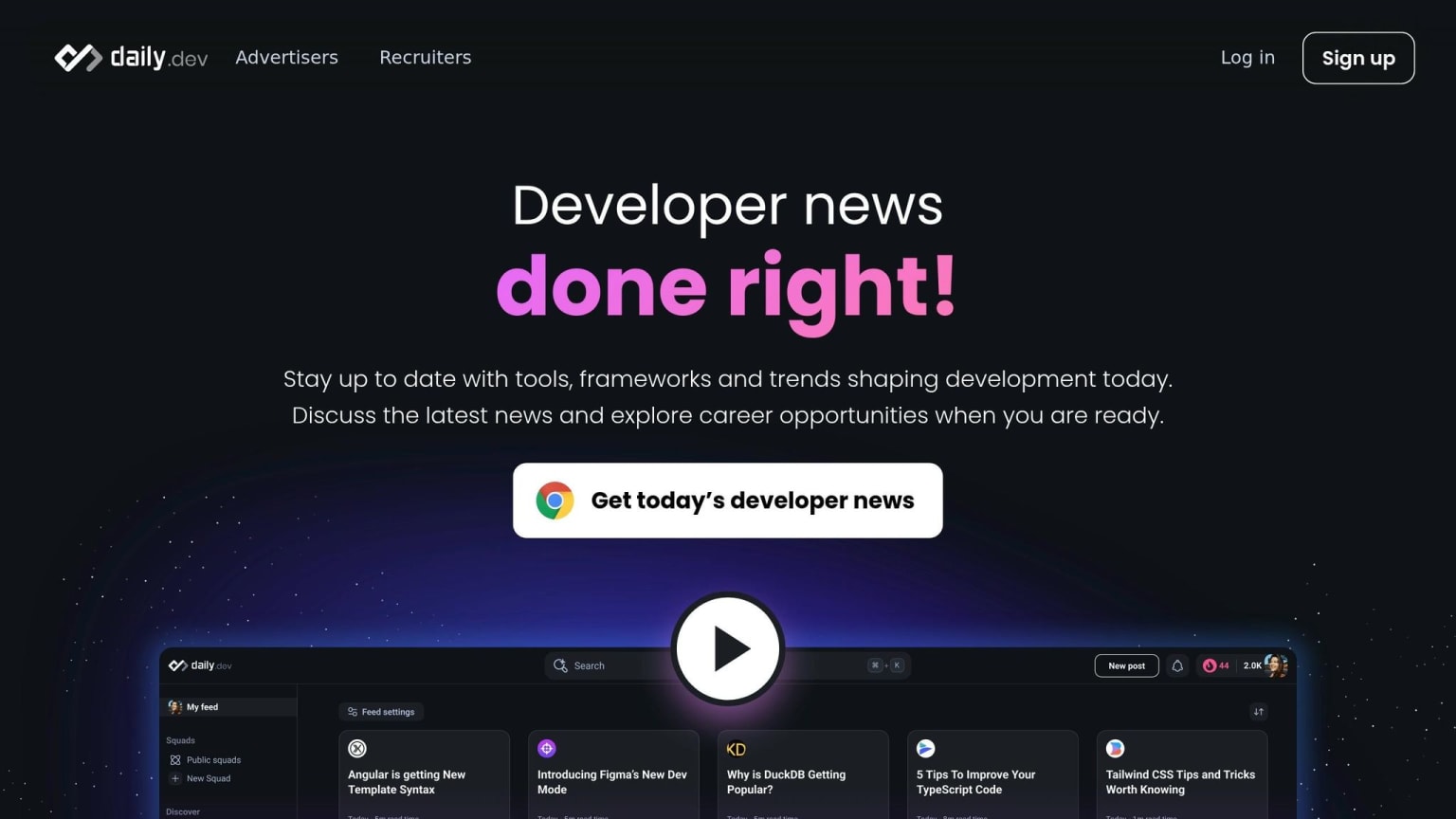
daily.dev is a news aggregator specifically for developers, drawing over a million users who consume technical content daily. Unlike broader platforms, it allows highly specific targeting based on programming languages (like Python or Go), seniority levels (from junior to lead developers), and tools (such as TensorFlow or Kubernetes) .
This level of precision is a game-changer for AI tool makers. For instance, if you're promoting a code generation API, you can zero in on senior Python developers who use Docker. If your product involves embeddings, you can target developers working with AI/ML and vector databases.
Ads on daily.dev feel native to the platform. In-feed ads blend seamlessly with other content, while post-page ads appear alongside articles. These formats engage developers without disrupting their reading experience, resulting in engagement rates up to five times higher than standard banner ads . A well-designed ad showcasing benchmarks or integration demos feels more like helpful content than an interruption.
Here’s an example of success: LangChain ran daily.dev campaigns targeting Python developers and LLM enthusiasts, using integration guides as their hook. The result? A 3x increase in developer signups. Similarly, a vector database tool achieved a 15% conversion rate to active API users by featuring migration benchmarks in their ads . Both campaigns prioritized data and code samples over flashy marketing claims.
To get started, define your audience (e.g., AI/ML tags or senior developers using PyTorch), design native creatives with clear CTAs like "how to integrate", and set a budget of $0.50–$2.00 per click. Begin with a 7-day test campaign focused on API key activations rather than just clicks . Use the results to refine your targeting and scale what works.
Once you’ve tapped into daily.dev, expand your efforts to Twitter’s active AI developer community.
Promoting on Twitter AI Communities
Twitter is a hub for AI developers who are both engaged and vocal. Promoted threads on Twitter let you share technical narratives, such as benchmark comparisons, integration tutorials, or "how we built it" stories. These threads feel more like valuable content than traditional ads.
Reach developers where they already are. Use keyword targeting for terms like "LLM fine-tuning" or "vector search." Build lookalike audiences based on followers of AI influencers like Andrej Karpathy or accounts like @fastdotai. Combine this with interest targeting for machine learning or hashtags like #HackerNews and #MachineLearning .
Vercel’s promoted threads on AI model deployment benchmarks reached 50,000 AI developers, leading to 1,200 GitHub forks and a 15% signup-to-integration rate. Similarly, Pinecone’s thread on vector search integrations generated 300+ mentions and doubled their waitlist signups . Both campaigns succeeded by focusing on real performance data and runnable code.
How to structure your threads: Start with a compelling benchmark like, "Our AI tool vs. OpenAI: 2x faster inference." Follow this with a detailed explanation of your methodology, and link to a GitHub repo with reproducible results. End with a clear, developer-friendly CTA such as "explore our repo" or "activate the API", avoiding generic phrases like "learn more."
Measure your success by tracking metrics like thread engagement (aim for >2%), link clicks to GitHub or documentation (target 5% CTR), and downstream actions like GitHub stars or API activations. For example, Replicate achieved 10,000 impressions and 200+ integrations in just one week by focusing on these metrics .
Budget carefully and keep it real. Experts suggest allocating $5,000 per month, dividing it 60/40 between daily.dev and Twitter. Retarget users who engage with your ads. Always lead with hard data - benchmarks and code speak louder than buzzwords like "enterprise-grade." Developers value substance over hype.
Measuring Developer Adoption
Signups might look impressive on paper, but they only scratch the surface. They reflect interest, not actual adoption. The real question is: Are developers actively using your AI tool in their workflow? As Adam DuVander from Built for Devs puts it:
"A million signups with 2% activation is a marketing problem, not a success story" .
Shifting the focus from signups to active usage changes the game. Instead of celebrating thousands of new accounts, pay attention to actions that demonstrate trust and utility - like developers making their first API call, integrating your tool into production, or inviting teammates. These are the steps that truly measure adoption.
Tracking Developer Engagement Metrics
Adoption is about more than just signups - it’s about active use and integration. A key metric here is Time-to-First-Value (TTFV), which measures how quickly a developer achieves their first success. This could be completing a "Hello World" example or making their first API call. Companies like Stripe and Twilio have nailed this in under 5 minutes, while Auth0 and SendGrid achieve it in 5–15 minutes. If your TTFV stretches beyond 30 minutes, expect higher abandonment rates .
Another critical metric is Product Qualified Leads (PQLs), which focus on developers who’ve reached meaningful milestones - like running code samples, completing a quickstart guide, or inviting a teammate. These users convert to paying customers at rates of 15–30%, compared to just 2–5% for traditional Marketing Qualified Leads (MQLs) . For AI tools, a strong signal of adoption is how many developers successfully reproduce your Jupyter notebooks or Colab examples - this says far more than just tracking documentation views .
When measuring engagement, prioritize Monthly Active Developers (MAD) over Monthly Active Users. MAD focuses on developers performing authenticated actions, such as API calls or code commits, within a 30-day window. This metric filters out casual users and highlights those actively building. Combine this with team invite rate, which is a strong predictor of conversion from free to paid plans .
For AI tools, it’s also essential to track integration depth. Are developers using just one feature or multiple modules? Are they deploying to production or simply experimenting? Monitor error rates during onboarding - high error rates can block conversion before developers see value. Additionally, track GitHub fork velocity, as forks often signal intent to build .
Using Analytics to Track Channel Performance
Once you’ve defined your engagement metrics, it’s time to connect the dots with analytics. Integrate your analytics stack to capture the entire developer journey. Tools like PostHog or Amplitude can centralize data from platforms like GitBook, GitHub, and package managers (e.g., NPM, Docker) . Track technical signals like how far developers progress through your documentation or how often they copy code snippets - these are better predictors of conversion than page views.
Leverage hybrid attribution to evaluate channel performance. Combine UTM tracking with a simple "How did you hear about us?" question during signup. Use an open-text field instead of a dropdown to capture specific sources like "r/MachineLearning thread" or "colleague’s recommendation." This approach helps uncover "dark social" channels such as Slack and Discord, which account for 52% of developer tool discovery .
Track leading metrics daily to optimize your channels - engagement with documentation, code snippets, GitHub stars, and API usage patterns. Pair these with lagging metrics like qualified signups and revenue to guide budget allocation . For each channel - whether it’s daily.dev ads, Hacker News posts, or Twitter threads - don’t just measure clicks. Look deeper into downstream actions like API activations, integration deployments, and production usage.
A great example of this approach is PostHog. They shifted their focus from tracking demo requests to analyzing GitHub interactions and API usage patterns. This allowed them to predict conversions within six months based on technical engagement, not just sales signals . That’s the power of developer-focused analytics: you can spot adoption trends long before they show up in revenue.
Finally, set clear benchmarks for each stage. Aim for activation rates of 20–40% during onboarding. Track trial-to-paid conversion rates - developer tools average 17%, nearly double the 9% seen in general SaaS . Monitor retention by cohort, focusing on API call volume growth over time instead of just subscription renewals. And don’t underestimate the impact of documentation - its quality correlates 0.6+ with trial-to-paid conversions for AI tools .
Conclusion
Marketing an AI tool to developers requires a well-planned strategy that builds trust, highlights value, and broadens your reach. Start with organic channels like Product Hunt and Hacker News to drive between 80,000 and 300,000 visits while gaining validation from the developer community . Follow this with technical content - such as benchmarks and migration guides - that transforms initial interest into genuine confidence. This approach sets the stage for real engagement. To scale further, tools like daily.dev Ads can expand your audience and strengthen your account-based marketing (ABM) efforts .
Generic claims like "AI-powered" no longer resonate and can even reduce click-through rates . Instead, focus on transparency by publishing benchmarks, naming competitors, and ensuring that your documentation allows developers to get started in under five minutes. Louis Corneloup, Founder of Dupple, emphasizes this point:
"Technical honesty wins AI buyers. Name competitors, publish your losses alongside wins, link to real benchmarks" .
Tracking meaningful metrics is just as critical. Look beyond signups to indicators of real adoption, such as GitHub stars, referral traffic from Hacker News, and documentation page views - metrics that are closely tied to your pipeline . For paid campaigns, don’t just monitor cost-per-click (CPC), which should range between $1.50 and $3.00 for newsletter sponsorships . Instead, focus on downstream actions like API activations and team invites, as these are stronger predictors of paid conversions .
Developers gravitate toward channels they trust. With over 60% using ad blockers , traditional display ads are often ineffective. Instead, they discover tools through peer-driven platforms like Reddit and Discord, hands-on documentation, and curated newsletters that respect their time. To connect with developers, speak their language, meet them in the spaces they frequent, and demonstrate your tool’s value with functional, accessible code - not flashy, empty promises.
Success hinges on precision and patience. Use paid ads sparingly, targeting AI-focused communities only when the content links directly to actionable resources like documentation or interactive sandboxes - not gated forms. Engage authentically in niche forums such as r/LocalLLaMA by contributing as a technical expert rather than a brand . And always measure what matters: metrics like time-to-first API call and team invites reveal whether developers are adopting your tool or simply signing up without further engagement.
FAQs
What should my AI tool’s positioning focus on for developers?
When presenting your AI tool to developers, the focus should be on earning trust through technical depth, ease of use, and active community involvement. Developers are naturally drawn to tools that integrate smoothly into their workflows and come with transparent, detailed documentation.
To stand out, emphasize the following:
- Seamless integration: Show how your tool fits into existing workflows without unnecessary friction.
- Clear and accessible documentation: Provide step-by-step guides, API references, and FAQs that make adoption straightforward.
- Performance benchmarks: Share data that demonstrates the tool’s capabilities in measurable terms.
- Real-world examples: Highlight specific use cases that showcase practical applications of your tool.
Developers also appreciate self-serve access - offering free trials, open-source components, or sandbox environments can make a big difference. Comprehensive tutorials, sample projects, and code snippets further enhance usability and reduce barriers to entry.
Finally, avoid overloading your messaging with buzzwords or vague promises. Instead, rely on technical proof and peer validation to build credibility. A strong, engaged developer community can amplify trust and encourage adoption through shared experiences and feedback.
What’s the best launch sequence for an AI developer tool?
The best way to launch an AI developer tool is to follow a phased strategy that builds trust and gains traction. Start with a private beta to collect feedback and fine-tune the product. After that, roll out on platforms like Hacker News (HN) and Product Hunt (PH), using a 30-second demo video to draw in early adopters. To keep the momentum going, stay active in developer forums and focus on targeted promotions in AI-specific communities.
What adoption metrics are more important than signups?
Tracking developer adoption goes far beyond just counting signups. Metrics like active API calls, integrations built, feature activation rates, onboarding completion, and technical engagement (e.g., GitHub activity or documentation views) offer a deeper understanding of how developers are actually interacting with your AI tool. These indicators reveal not just interest, but real usage and engagement.