

Want developers to pick your API over others? Make it easy for them. Developers value clear documentation, fast onboarding, and tools that simplify their work. Here's how to win them over:
- Documentation is your sales tool: Offer clear, actionable guides and ready-to-use code snippets. Help developers make their first API call in under 5 minutes.
- Focus on developer experience (DX): Simplify onboarding, provide SDKs in popular languages, and ensure smooth integrations.
- Interactive tools matter: Use API explorers and auto-filled test credentials to eliminate setup hurdles.
- Transparent pricing wins trust: Show clear, usage-based pricing. Offer a free tier - no credit card required.
- Advertise smartly: Target developers where they are, like on platforms such as daily.dev Ads, with technical, detail-rich messaging.
Documentation as Marketing: The Stripe Approach
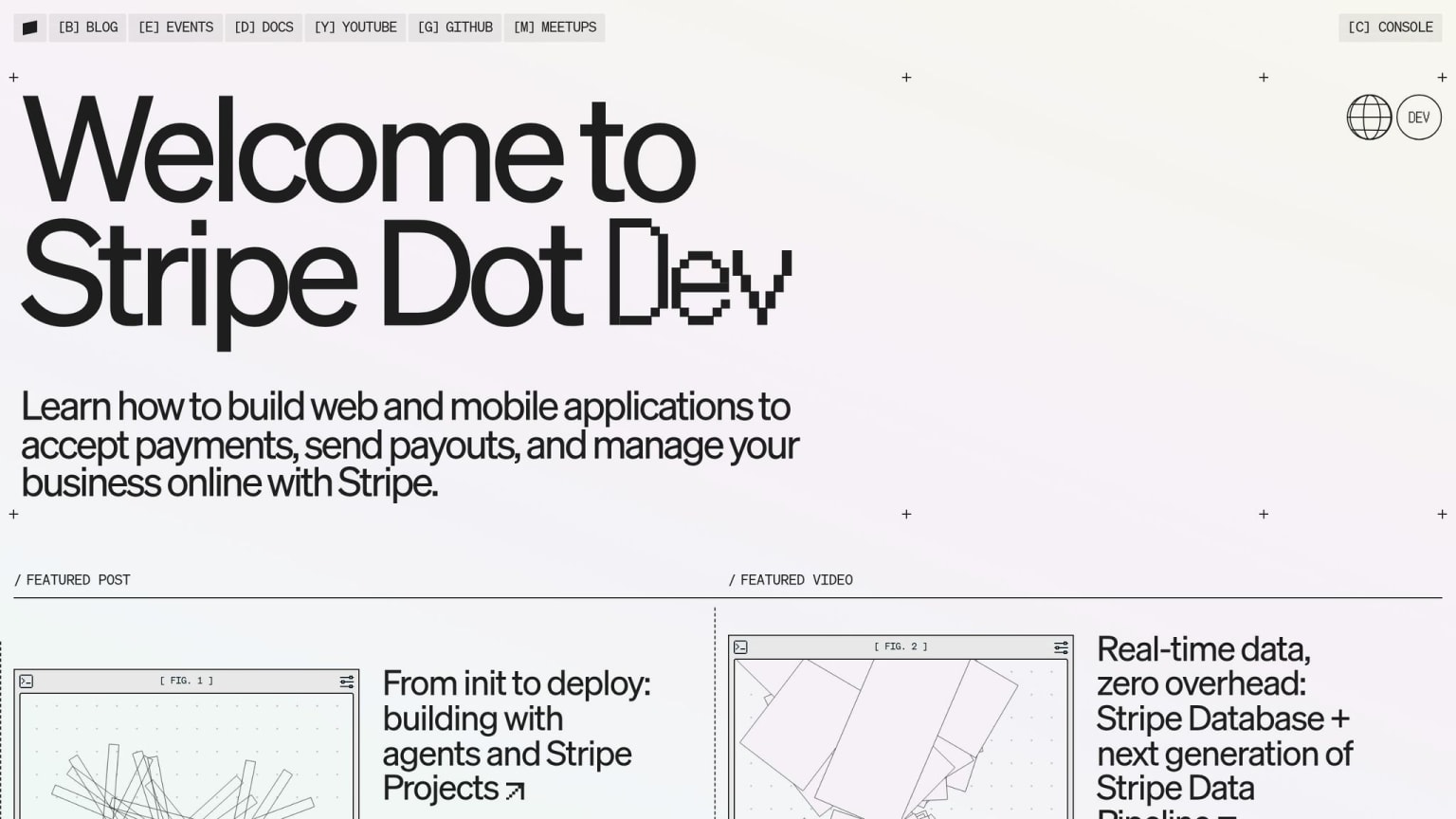
Your documentation isn't just a resource - it's your best sales tool. For API platforms, it often drives more leads than the marketing site itself . Developers want immediate access to code snippets that highlight your API's potential. Stripe demonstrates how well-crafted documentation can completely transform the onboarding process.
"For developer products, documentation IS the demo." – Kris Carter, Founder, Segment8
Stripe has turned this principle into a competitive edge. In 2023, they reported a 68% integration rate after developers successfully ran their first code snippet . Their documentation minimizes friction with features like pre-filled test API keys, code examples in multiple programming languages, and automatic tab switching based on the developer's preferred language.
How Documentation Affects Developer Onboarding
When a developer lands on your documentation, the clock starts ticking. The goal? Help them execute a successful API call in under 15 minutes - ideally in five . Any unnecessary hurdles, like unclear instructions, missing error-handling examples, or requiring extra steps to find test credentials, can discourage potential users. Stripe’s approach focuses on removing these barriers to make API adoption as seamless as possible.
Internally, Stripe aims for 80% of new integrations to succeed without requiring support . If developers frequently reach out for help, it’s a sign your documentation isn’t meeting their needs. The best documentation anticipates questions and provides complete, ready-to-run examples that developers can copy, paste, and test immediately.
What Makes Documentation Best-in-Class
Outstanding documentation strikes the right balance between Reference (quick lookups for API endpoints and SDK methods) and Guides (step-by-step tutorials for achieving specific tasks) . While many platforms excel at references, they often neglect actionable guides. The best documentation combines both, helping developers move smoothly from understanding concepts to implementing them.
Here are some features that make documentation stand out and build trust:
- Embedded test API keys: Include functional keys in code snippets, along with examples in multiple languages (JavaScript, Python, Ruby, cURL) to make testing easy.
- Interactive API explorers: Allow developers to make real API requests directly in their browser.
- Error responses with direct links: Twilio, for example, includes a
more_infofield in their JSON error responses. This field links to a detailed page explaining the error, its common causes, and how to fix it . This approach turns errors into opportunities for learning instead of roadblocks.
"If developers need to ask for help, your docs failed." – Kris Carter, Founder, Segment8
To ensure your documentation is effective, try a "Black Box Test": ask a developer unfamiliar with your API to go from signup to their first successful API call. Use their feedback to refine your docs . Even better, integrate your documentation's code snippets into your CI/CD pipeline. If an example breaks, the deployment should fail . Broken documentation erodes trust faster than having no documentation at all.
Developer Experience: Your Competitive Advantage
Developers evaluate your API based on how quickly they can achieve meaningful results. A top-notch developer experience (DX) becomes a powerful advantage - one that’s hard for competitors to match through traditional marketing alone . Technical quality and ease of use speak for themselves; they can’t be artificially created.
Why Developer Experience Drives API Adoption
Here’s the deal: developers who succeed during their first interaction are far more likely to stick around, while those who encounter obstacles will look elsewhere . GitHub found that developers who successfully push code during their first session are 10 times more likely to become loyal users and 3 times more likely to recommend the platform to others .
Investing in DX isn’t just about making things easier - it’s about securing long-term customers. As Ankur Tiwari, Founder at Thoughtlytics, puts it:
"If a developer tells their boss, 'This will be a nightmare to integrate,' your deal is dead. Conversely, if a developer says, 'I love their API, this will be easy,' you've just gained an unstoppable internal champion."
Exceptional DX fuels word-of-mouth recommendations, which carry far more weight than a long list of features .
Let’s dive into the key components that make a developer experience seamless.
Core Elements of Strong Developer Experience
The cornerstone of great DX is simplicity, especially during onboarding. Developers gravitate toward tools that solve specific problems rather than bloated solutions with unnecessary features . Take Stripe, for instance - it replaced weeks of compliance paperwork with just seven lines of code on its homepage . Similarly, Twilio’s success stems from its straightforward promise: send an SMS in five lines of code .
Another critical element is offering SDKs that feel natural in the developer’s language of choice, whether it’s Python, Node.js, or Go. This reduces friction and speeds up adoption . Pair these libraries with self-serve onboarding, enabling developers to generate API keys and test endpoints immediately - no sales calls or lengthy forms required .
Running a "friction log" exercise is another game-changer. By tracking the journey from a Google search to the first successful API call and fixing every snag along the way, you can dramatically improve DX .
Make it a habit to conduct five weekly research calls with trial users to uncover integration challenges . For your first 20 paying customers, provide hands-on support to identify pain points you can later automate for smoother scaling.
Interactive API Explorers and Multi-Language SDKs
Interactive API Explorers: Test Before You Commit
Interactive API explorers let developers test endpoints right in their browser - no complicated setup, no hunting for API keys, and no need to create accounts. This convenience matters because requiring extra steps can lead to frustration, with 68% of developers abandoning APIs when faced with such hurdles .
The most effective explorers take care of test credentials automatically. For instance, if a developer is logged in, their test API keys can be injected directly into code examples. This way, they can simply click "Run" and see instant results. This streamlined process has been shown to convert twice as many trial users compared to static code examples .
Another key feature? Display the full request and response side-by-side. Developers need to see the actual JSON structure your API returns - not just a vague description. This transparency builds trust. As Afolabi Abigeal, a Software Engineer, puts it:
"Developers don't want to learn your authentication system. They want to solve their customer's problem." – Afolabi Abigeal, Software Engineer
The difference this can make is huge. In 2026, Moneris reported a 10x reduction in time-to-first-API-call after launching their interactive developer portal . The ultimate goal is to enable developers to make a successful API call in under 5 minutes - ideally, under 2 . These tools aren’t just helpful; they set your API apart in a competitive market.
Once developers can test endpoints with ease, the next step is providing SDKs that fit seamlessly into their workflow.
SDKs for Every Language: Expand Your Reach
Interactive testing is just the beginning. To keep developers engaged, offer SDKs that feel like they’re built specifically for their preferred programming language. For example, a Python SDK should use keyword arguments, while a Go SDK should handle errors in a way that aligns with Go’s conventions . If your SDKs feel like an afterthought, developers may end up writing their own wrappers - something you definitely want to avoid.
Start with popular languages like JavaScript/TypeScript and Python, then branch out to Go, Java, Ruby, PHP, and C# depending on your audience . Make installation as easy as possible with one-command package manager options like npm install or pip install .
Companies like Stripe set a great example. By April 2026, Stripe offered seven official client libraries with a language switcher that remembered each developer's preference across their documentation site . Similarly, in 2024, fintech company Codat delivered three production-ready SDKs by automating generation .
Every code example should include the expected output - whether it’s a JSON response or a console log - so developers can immediately verify their success and understand what to expect . This level of clarity is crucial since 73% of developers rank documentation quality as the top factor when evaluating an API .
Quickstart Guides: Build X in 5 Minutes
The Value of Practical Use Cases
Quickstart guides are all about making developers' lives easier by focusing on real-world solutions. Developers want quick, actionable results, and these guides deliver just that. Instead of overwhelming users with abstract concepts, they zero in on specific tasks like "Send your first SMS" or "Process your first payment." These titles speak directly to what developers need to accomplish, giving them a sense of direction and purpose right from the start .
The goal? Keep the Time to First Call (TTFC) under 5 minutes - ideally under 2 minutes. This is crucial because even a small amount of friction during the initial setup can result in losing 20–40% of potential users .
Quickstart guides also shine when they align with high-intent search queries. If a developer searches for "how to accept payments via Node" or "how to set up webhooks", your guide should offer a direct and immediate solution. Include ready-to-use code that works without additional troubleshooting, ensuring developers can hit the ground running .
How to Create Effective Quickstart Guides
The key to an effective quickstart guide? Start simple. Focus on the most basic API call before introducing more complex elements like SDK installations or authentication flows . Dom Harrington, Open Source Engineer at ReadMe, captures it perfectly:
"The point is to show the user how to do the simplest thing possible in the least possible number of steps."
Provide clear and concise code snippets in languages like cURL, JavaScript, and Python. Each snippet should include the expected output so developers can confirm they’re on the right track. For logged-in users, consider auto-filling API keys to eliminate unnecessary steps and streamline the process.
Reference implementations and starter kits can also make a big difference. For example:
- Clerk offers Next.js starter kits that developers can clone to quickly integrate authentication services.
- Twilio provides "Send your first SMS" guides and sample apps, helping developers get to that first successful call as fast as possible.
As Louis Corneloup, Founder at Dupple, puts it:
"The better the reference, the faster the 'from signup to working' time."
The ultimate aim is to create a seamless workflow where signup and API key generation are completed within 5 minutes of landing on the page, and the first successful API call happens within 15 minutes . Regularly analyze the user journey to identify and fix any points of friction, ensuring a smooth and rewarding experience for developers.
Pricing Page Optimization for API Products
Once you’ve streamlined onboarding with quickstart guides, your pricing page becomes the next critical step. Clear, transparent pricing builds trust with developers and encourages adoption. Think of it this way: your pricing page acts as a technical litmus test. When developers visit, they’re not just looking for numbers - they’re gauging whether they can rely on you to handle their infrastructure. Hiding costs behind "Contact Sales" buttons (especially for non-enterprise tiers) is one of the quickest ways to lose their confidence.
Keep Pricing Structures Simple
Developers approach pricing with a resource-focused mindset. They want straightforward, measurable metrics like the cost per 1,000 API calls, per token, or per compute second. Vague tier names like "Standard" or "Professional" don’t provide enough clarity without specific resource details . Stripe sets a strong example here: their pricing headline - 2.9% + 30¢ per successful transaction - is simple, direct, and transparent .
"Transparency is a feature. In many cases, it's the feature that wins the deal." - Scaledrone
Structure your pricing to align with developer success. A great example is Intercom, which switched to an outcome-based pricing model for its Fin AI agent. By charging $0.99 per AI-resolved conversation, they saw a 40% boost in adoption while maintaining healthy profit margins .
Adding a pricing calculator directly to your page can also make a big difference. Let developers input their expected usage to see instant cost estimates. Pair this with clear links to rate limits and overage policies to build trust and allow developers to assess if your API fits their needs . Once you’ve nailed transparency, offering free tiers becomes a powerful way to onboard developers.
Offer Free Tiers and Pay-As-You-Go Options
Free tiers are a cornerstone of API adoption. In fact, 82% of commercial APIs offer some form of free tier, recognizing that developers need to experiment with an API before they can advocate for it within their teams . However, asking for a credit card during the free tier signup process can discourage adoption .
A well-structured free tier - like a median offering of 10,000 monthly API calls - gives developers the freedom to prototype and validate your API without immediately running into usage limits .
Instead of a time-limited trial, consider a perpetual freemium model. A 14-day trial often isn’t enough for developers to move an integration from testing to production. A usage-based free tier, on the other hand, allows developers to work at their own pace and only upgrade when their usage naturally grows .
Pay-as-you-go pricing is also highly favored. In fact, 42% of API-first unicorns rely on this model because it aligns revenue with customer success . Developers appreciate the flexibility of paying only for what they use, especially when they’re just starting. To avoid surprises, include hard caps and budget alerts to protect developers from unexpected charges caused by bugs or bot activity .
"The companies winning the API game understand that the real competition happens at the free tier. Win the developer's first project, win their company's budget later." - Zuplo
Advertising on daily.dev Ads: Reach Developers at Scale
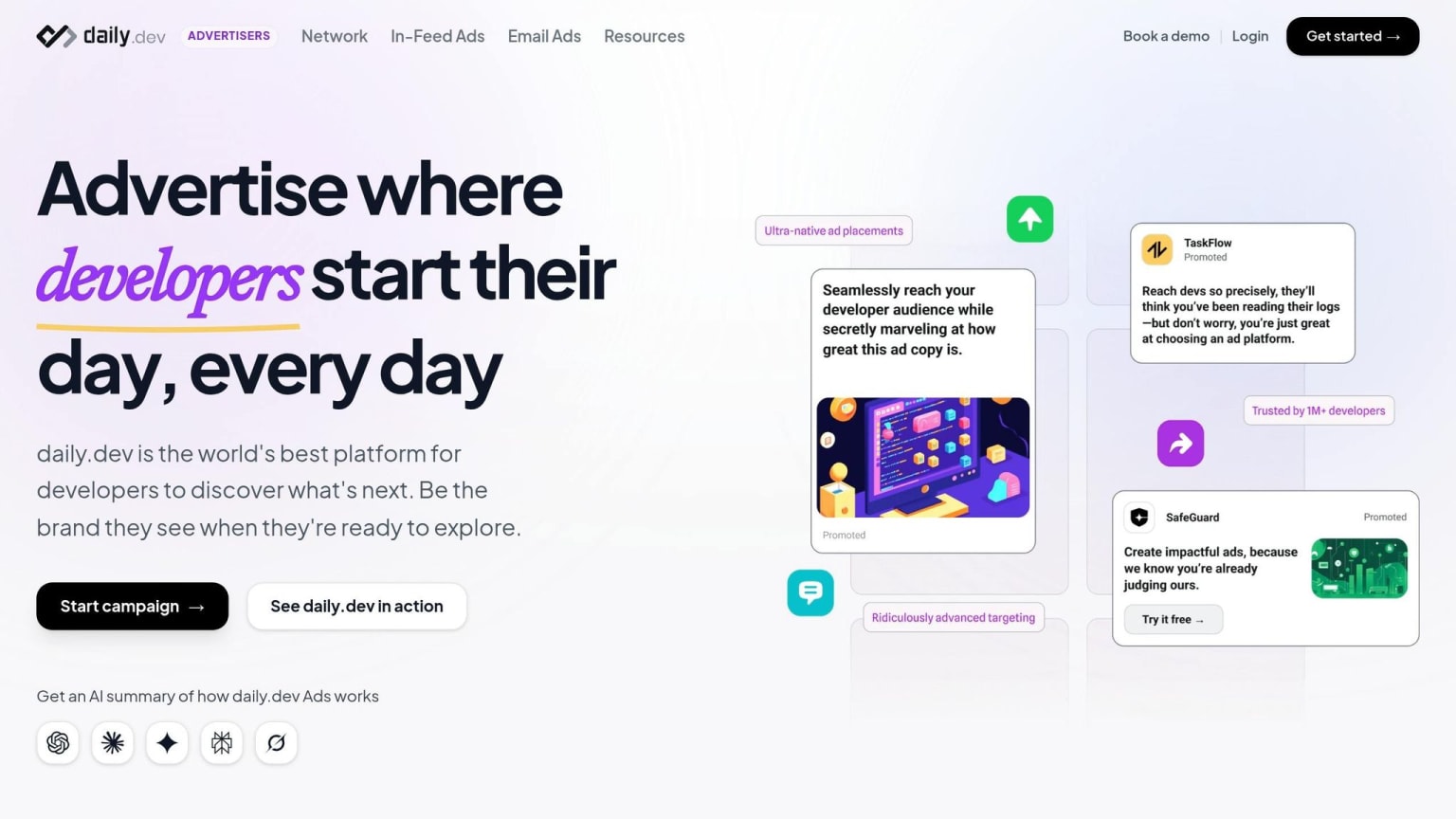
Once you've fine-tuned your pricing page and launched a free tier, the next step is getting your API in front of the right audience. Even the best APIs need visibility, and targeted advertising is a great way to bridge that gap. By placing your API where developers already engage with technical content, you make it easier for them to discover and adopt your solution.
Why daily.dev Ads Works for API Marketing
With daily.dev Ads, you gain access to a massive audience of over 1,000,000 developers actively looking for technical tools and solutions. Unlike broader ad platforms, this one lets you target developers based on programming language and seniority level. Whether you're aiming to reach seasoned backend engineers or entry-level frontend developers, daily.dev Ads allows you to tailor your approach.
What makes this platform stand out is its use of native ad placements. These ads seamlessly integrate into developers' feeds, posts, and personalized digests. This matters because developers typically ignore traditional banner ads. By embedding your API promotion alongside the technical articles and tools they already trust, your ad feels more like a natural discovery than a hard sell.
Before launching a campaign, ensure your billing and onboarding systems are ready to handle an influx of sign-ups. Developers who see your ad and click through are often eager to dive in immediately. Your billing system should make it easy to experiment with different tiers, and your onboarding process should be simple enough to get developers started right away. A well-executed campaign can generate thousands of sign-ups in just a few days - as long as your systems are ready to handle the demand .
How to Create Effective Campaigns on daily.dev Ads
The key to success is crafting ad creatives that focus on technical specifics rather than vague marketing language. For instance, instead of saying, "Revolutionize your business with our API", go for something like, "Handle 10,000 webhooks/second with 99.99% uptime." Developers value concrete details such as performance benchmarks, supported programming languages, and clear use cases.
Once your campaign is live, track key metrics to measure its performance. Metrics like click-through rate (CTR) reveal whether your technical messaging grabs attention, while sign-ups from documentation or quickstart pages indicate genuine interest. Pay close attention to API calls and SDK downloads, as these show developers are actively integrating your API. Additionally, keep an eye on community mentions - organic discussions often signal trust and enthusiasm for your product.
Align your campaign messaging with your pricing model to make adoption seamless. If your pricing is usage-based, highlight how developers can start for free and scale as needed. For pay-as-you-go models, emphasize the flexibility and cost control they offer . The goal is to make the journey from ad click to first API call as smooth as possible.
API Marketing Tactics: Impact vs. Effort
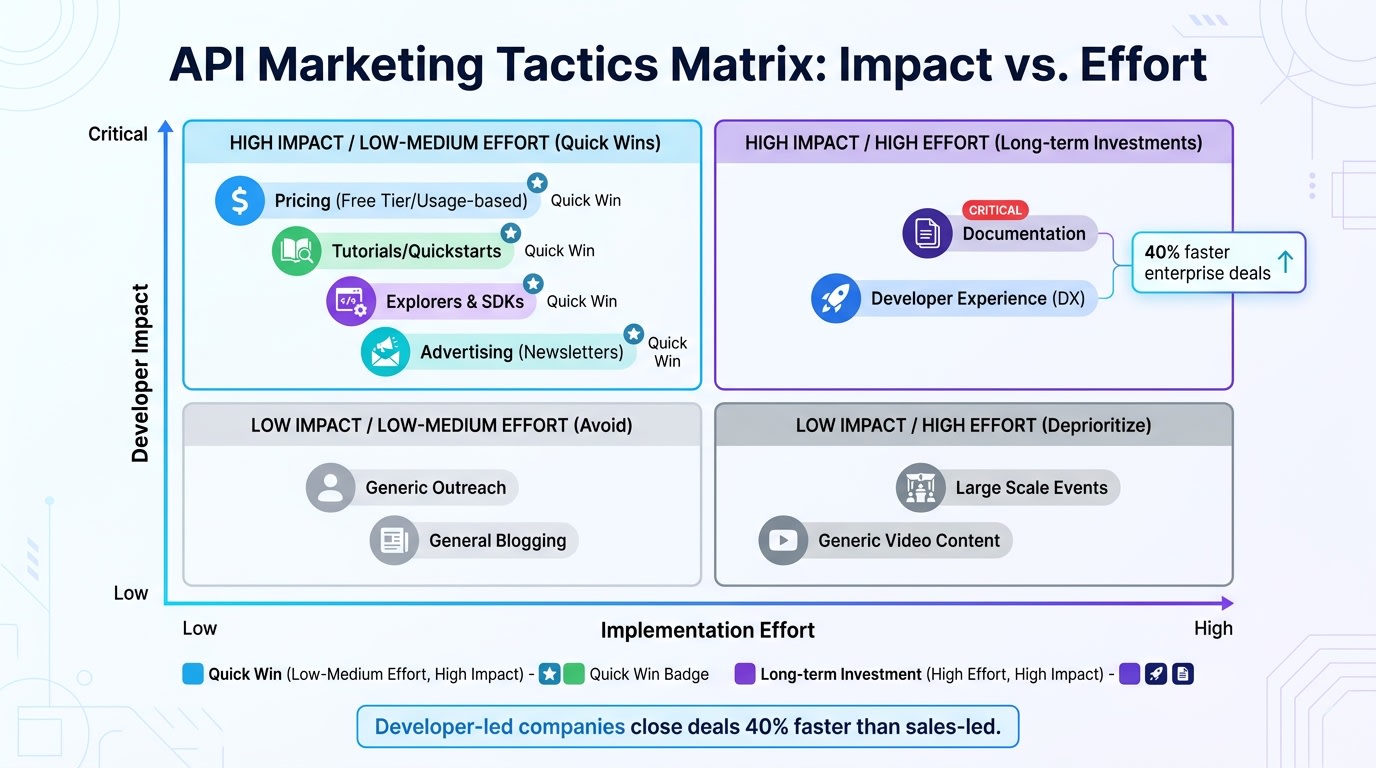
When it comes to API marketing, knowing where to focus your energy is half the battle. Some strategies require significant time and resources but yield substantial results, while others offer quicker payoffs with less effort. The trick is to strike a balance between high-impact tactics and what your team can realistically deliver.
Developer-led companies, for instance, close enterprise deals 40% faster than sales-led companies because technical validation happens early in the process . This underscores the importance of getting the basics right - like documentation, developer experience, and pricing. These foundational elements don’t just streamline the developer journey; they also support your entire sales funnel.
Comparison Table: Developer Impact vs. Effort
When deciding where to focus, it helps to compare tactics based on their developer impact and the effort required to implement them.
| Tactic | Developer Impact | Implementation Effort | Quick Win? |
|---|---|---|---|
| Documentation | Critical | High | No |
| Developer Experience (DX) | High | High | No |
| Explorers & SDKs | High | Medium | Yes |
| Tutorials/Quickstarts | High | Medium | Yes |
| Pricing (Free Tier/Usage) | High | Low/Medium | Yes |
| Advertising (Newsletters) | Medium | Low | Yes |
Where to Start: Quick Wins and Long-Term Investments
If you’re looking for quick results, focus on low-effort, high-impact tactics like introducing a transparent free tier, creating a standout quickstart guide for your most common use case, or running targeted ads in developer newsletters. These can often be executed quickly and still deliver meaningful results.
For more enduring success, prioritize ongoing investments like improving documentation and enhancing developer experience. These efforts compound over time, building trust and loyalty within the developer community. Modern tools like Stainless or Speakeasy can simplify traditionally labor-intensive tasks, such as generating SDKs from OpenAPI specs . This makes it easier to achieve high developer impact without overburdening your team.
Conclusion
API marketing in 2026 is all about creating a seamless experience for developers. It’s not about flashy campaigns or aggressive sales tactics - it’s about making developers think, “This API is going to make my life easier.” When you achieve that, you’ve gained a powerful advocate within their organization.
The strategies outlined earlier come together to build a strong foundation for API marketing. Key elements like clear documentation, exceptional developer experience, interactive tools, multi-language SDKs, quickstart guides, transparent pricing, and targeted advertising all work toward earning trust. In fact, great documentation can drive more leads than your main marketing site, speed up that crucial first API call, and support pricing models that reflect actual value.
"The best marketing investment you can make is often not marketing at all. It's improving the experience developers have when they try your product."
- Prashant Sridharan, Author of Picks and Shovels
Start with the basics: roll out a transparent free tier, craft an outstanding quickstart guide, and run ads in developer-focused newsletters. Once those foundations are in place, double down on long-term investments like documentation and improving the developer journey. These efforts pay off - developer-led companies close enterprise deals 40% faster than traditional sales-led approaches because the technical validation happens early.
The bottom line? Developers will choose your API if it makes their work easier. Simplify their decision, and success will follow.
FAQs
What should my “time to first API call” target be?
Your goal should be to ensure the "time to first API call" is as short as possible - ideally just a few minutes after onboarding. To make this happen, provide developers with clear, easy-to-follow documentation, quickstart tutorials, and reference implementations. These resources should guide them step-by-step, making it simple to get up and running with their first API call.
How do I prove my docs and SDK examples never break?
Keeping your documentation and SDK examples reliable requires a proactive approach. Start by syncing your code examples with your API reference to ensure consistency. Regular updates are crucial - automated testing can help you spot breaking changes quickly. Make sure to test your SDKs across all supported programming languages to avoid compatibility issues. Additionally, keep an eye out for outdated code and address it promptly. Engaging with developer feedback is another great way to maintain accuracy and build trust in your examples.
What’s the best free-tier setup for an API?
An effective free-tier setup makes it easy for developers to test and embrace your API without hurdles. Pairing a generous free tier with usage-based pricing lowers the entry barriers while fostering trust. Make sure to provide clear and detailed documentation, along with quick-start tutorials and starter kits available in multiple programming languages. A well-designed developer portal and transparent pricing can further boost adoption and encourage long-term commitment.