

Sponsoring developer communities can help you connect with the people who shape tech trends, adopt tools, and influence decisions. But to succeed, you need a clear plan, the right platforms, and a focus on genuine engagement. Here's how:
- Set clear goals: Define what you want - API adoption, talent recruitment, or brand recognition.
- Know your audience: Understand developers' roles, tools, and needs. Tailor your approach to their priorities.
- Choose active communities: Prioritize groups with high engagement and relevant technical focus.
- Offer value: Provide tools, resources, and hands-on opportunities like workshops or hackathons.
- Track results: Use metrics like API usage, engagement rates, and ROI to measure success.
For example, Atlassian saw a 40% jump in API usage after sponsoring hackathons with live support and clear documentation. Platforms like daily.dev Ads also provide precise targeting and real-time analytics to optimize sponsorship efforts.
The key is to focus on helping developers solve problems while aligning your sponsorship with their workflows and goals.
::: @figure 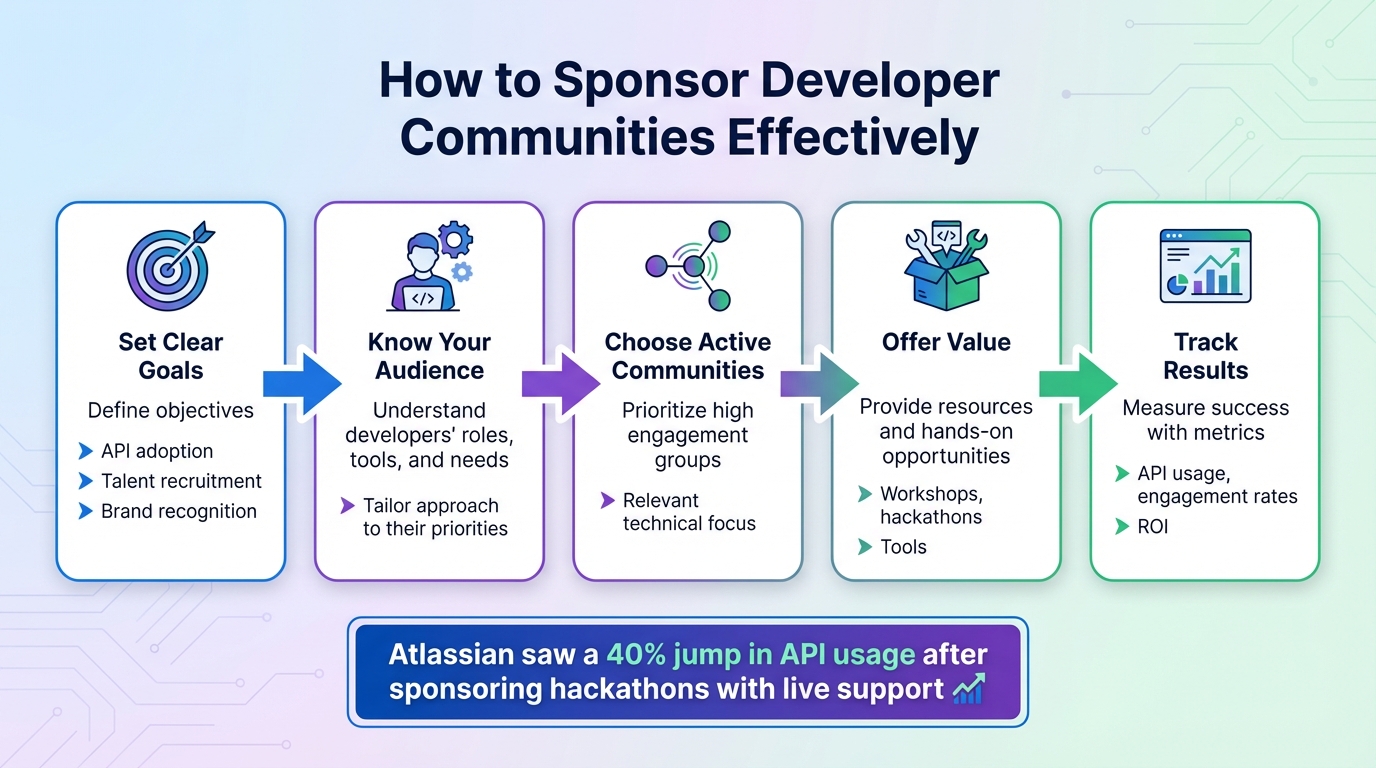 {5-Step Framework for Effective Developer Community Sponsorship}
Set Your Sponsorship Goals and Identify Your Target Developers
Before diving into sponsorships, it’s crucial to have a clear game plan. Developers appreciate precision and sincerity, so start by outlining specific, measurable goals. Are you aiming to boost API adoption? Generate qualified leads from a niche tech community? Or perhaps establish your company as a trusted voice in a specialized technical field? Once your objectives are defined, focus on understanding exactly who your target developers are.
Set Clear Sponsorship Objectives
Your sponsorship goals should sync seamlessly with your broader business strategy. For instance, if you’re rolling out a new developer tool and want early adopters, target communities known for experimenting with cutting-edge tech. If your aim is to foster deeper, long-term relationships, consider consistent sponsorships of open-source initiatives or recurring tech events. Want to attract top talent? Sponsor hackathons or hands-on workshops. Each objective should align with a specific sponsorship format, tailored messaging, and well-defined success metrics.
Identify Your Developer Audience
Not all developers are the same - they vary widely in their roles, expertise, and needs. Start by segmenting your audience based on what they do most: building products, integrating APIs, automating workflows, or securing infrastructure. For example, a junior developer exploring a modern framework will have different priorities than a senior architect managing enterprise-level systems. Dive into the tools and technologies they rely on daily, from languages like Python and JavaScript to the frameworks and platforms they use to solve problems. This level of specificity ensures your sponsorship efforts resonate with the right people.
"Developers often discover, evaluate, and adopt tools before decision-makers even step in." – DevNetwork
Don’t forget to factor in their work environment. Developers at startups might move quickly, while those in large enterprises often face longer decision-making cycles and demand more comprehensive resources. Create detailed personas to guide your approach. For instance, imagine "API Integrator Alex", a developer at a mid-sized fintech company who depends on Node.js for seamless integrations. Instead of relying on vague categories, focus on actionable personas backed by real-world insights. Gather qualitative data from GitHub threads, developer Slack groups, and technical forums, and combine it with analytics to paint a full picture. Keep these personas updated to reflect shifts in technologies and developer preferences.
sbb-itb-e54ba74
Choose the Right Developer Communities and Platforms
After defining your sponsorship goals and identifying your target audience, the next step is selecting the right developer communities and platforms. Not all communities are created equal - it's about quality and engagement, not just size.
Assess Community Engagement and Fit
Focus on activity levels and participation rates. A smaller, highly engaged community of 5,000 members can deliver far better results than a larger but less active group of 50,000. Look for frequent, meaningful discussions where members actively solve real-world problems. It's also crucial to ensure the community's technical focus aligns with your product. For example, sponsoring a hackathon works best if your solution directly relates to the event's theme.
Transparency is another key factor. Research how the community manages sponsorships - do they openly share terms and past success metrics? Communities that prioritize developer needs and share clear sponsorship outcomes, like leads or product adoption rates, often drive better results. Don’t hesitate to ask for data on previous sponsorships to evaluate whether your investment will deliver the returns you’re looking for.
Geography matters too. If you’re targeting specific markets, regional tech hubs like San Francisco, Austin, or Seattle can help you establish a stronger local presence. Shopify, for example, combined regional hackathon sponsorships with localized swag and in-person events to deepen connections in key markets.
Once you’ve identified the right community, the next step is using targeted platforms to amplify your reach.
Use Platforms Like daily.dev Ads
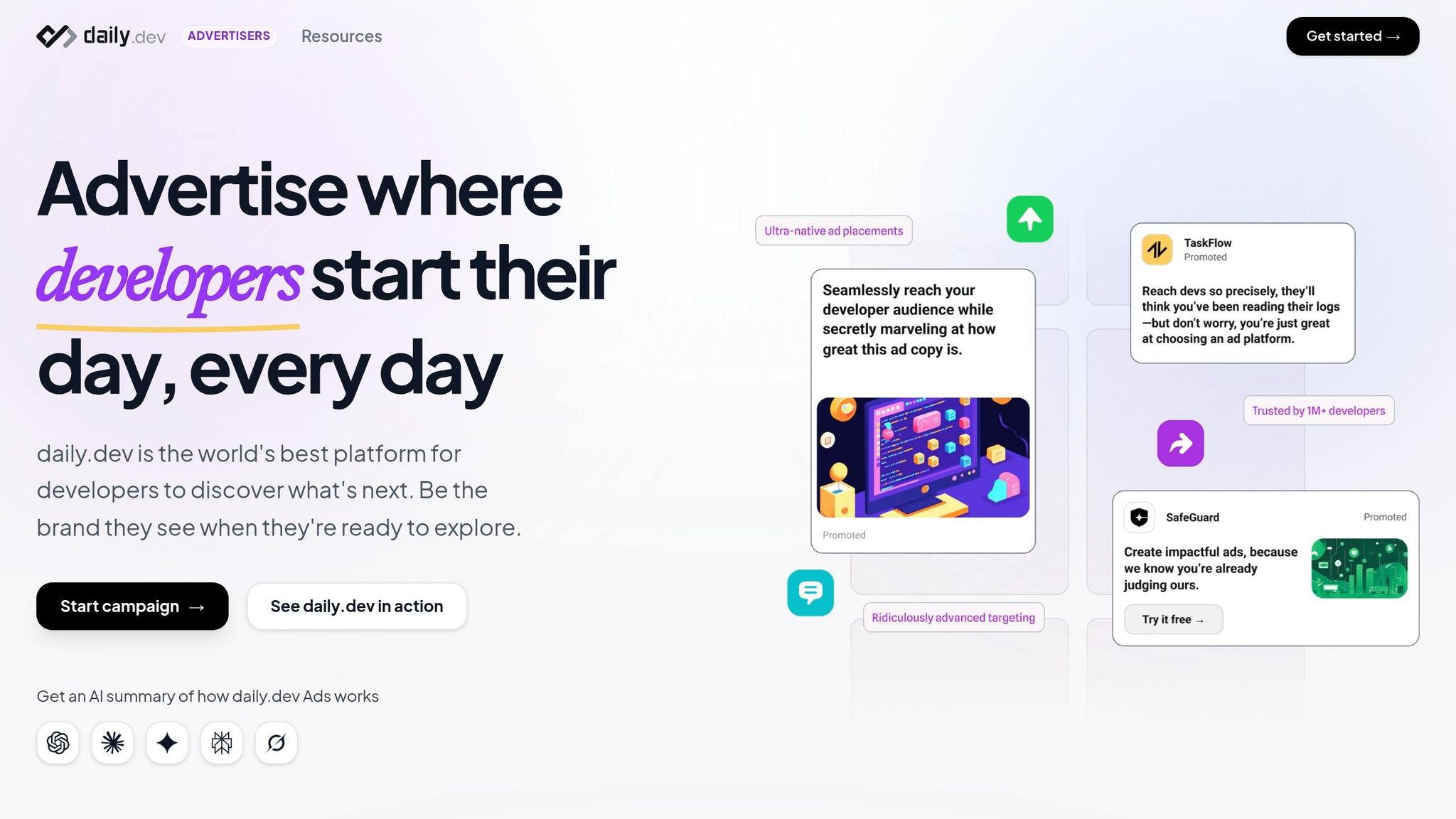
Platforms like daily.dev Ads offer precise targeting to active developers, making them a powerful tool for sponsorships. With daily.dev Ads, you can share resources and educational content through native placements such as in-feed posts, post pages, or personalized digests. This approach delivers engagement rates that are 2.5 times higher than other channels.
What makes daily.dev Ads stand out is its ability to target developers based on specific criteria: interests, seniority, programming languages, and the tools they use. This ensures your content reaches the right audience - developers already interacting with material relevant to your product. On top of that, the platform provides real-time performance tracking, allowing you to monitor engagement, click-through rates, and community growth. This transparency makes it easier to justify sponsorship costs to stakeholders while also delivering measurable value to the developer audience.
Create Sponsorship Packages and Formats
Once you've chosen your platform, the next step is to design sponsorship packages that not only provide measurable benefits for sponsors but also genuinely support developer communities.
Build Tiered Sponsorship Packages
Tiered packages are a smart way to appeal to a range of sponsors by offering clear value at different price points. Each level should feel like a meaningful step up, not just a repetition of what's already included. Here's a breakdown of common tiers:
- Bronze or Community tiers ($1,000–$5,000): Basic perks like logo placement on websites and mentions on social media.
- Silver tiers ($5,000–$15,000): Added opportunities for interaction, such as booth space and inclusion in email marketing.
- Gold tiers ($15,000–$50,000): High-touch engagement options like speaking slots and premium booth placement.
- Platinum or Premier tiers ($50,000–$250,000): Exclusive benefits such as naming rights and multiple event activations.
To make the highest tiers more appealing, limit them to one or two sponsors. This scarcity creates a sense of prestige and exclusivity. As Anton Kovalchuk, Founder of QliqQliq, puts it:
"Pricing should correspond to either the quality or exclusivity of the audience you are actually presenting for the sponsors."
You can also offer add-ons alongside these tiers, allowing sponsors to customize their involvement. For example, branded coffee bars, newsletter spotlights, or mobile app ads can be appealing extras without requiring a full tier upgrade.
Be transparent about the Fair Market Value (FMV) of each tier. This not only helps sponsors with tax reporting but also highlights the tangible benefits they’re getting. For example, if a Gold package includes a $10,000 speaking slot and $8,000 worth of booth space, make those values clear. This approach builds trust and reinforces the value of your sponsorship opportunities.
Use Developer-Focused Formats
While tiered packages provide structure, the real magic happens when sponsors actively engage with developers. Generic perks like logo placements don’t leave much of an impression. Instead, focus on hands-on, technical formats that resonate with the developer audience.
Here are a few ideas:
- Workshops: Host sessions where developers can integrate your API or tools into real-world projects.
- Live coding sessions: Encourage developers to build projects using your platform, creating product familiarity in the process.
- Mentorship programs: Help junior developers grow while showcasing your brand’s expertise.
- Architecture deep dives: Solve specific technical challenges that developers face.
In-kind sponsorships can also be a game-changer. Offering cloud credits, bandwidth, or hardware can be just as impactful as cash sponsorships, especially for hackathons or open-source initiatives. The key is to embed your brand into the developer's workflow rather than interrupt it.
Apply Engagement Strategies for Better Results
Once you’ve crafted a sponsorship package, the real work begins - actively engaging with the developer community. A sponsorship package is just the foundation; the real value comes from how you interact with developers after committing to their community. Developer audiences, as Daniel Cranney from WeAreDevelopers points out, prioritize expertise over blatant promotion . This means your engagement should center on empowering developers, not just marketing to them.
The key is to meet developers where they already are. Instead of directing them to external platforms or yet another webinar, integrate your tools directly into their existing workflows. This approach creates natural, helpful touchpoints that feel seamless and non-intrusive.
Integrate with Developer Tools and Workflows
The most effective sponsorships blend into a developer's daily routine. Embedding your product or service into the tools they already use ensures accessibility without disrupting their workflow. For example:
- Offer in-app assistance, such as AI-powered suggestions, code snippets, or troubleshooting tips.
- Integrate sponsored support into platforms like Slack or Discord, where developers collaborate daily.
- Provide centralized access to sponsored APIs, SDKs, and documentation through developer portals.
- Give early access to beta features exclusively to community members, fostering a sense of inclusion and encouraging hands-on testing.
These strategies make your sponsorship feel like a natural part of their work environment, rather than an external interruption. But integration isn’t the only way to connect - events can also create meaningful engagement.
Host Events and Workshops
Events offer a unique chance to connect with developers in ways traditional advertising can’t match. Hands-on experiences, like product testing, leave lasting impressions. Even smaller events can deliver impressive results. For example, the WeAreDevelopers World Congress draws over 10,000 developers and 500+ speakers from fields like AI, cloud, and DevOps . Companies such as GitHub and Stack Overflow have used events like this to introduce initiatives like GitHub Copilot and OverflowAI, showcasing their value through direct integration with developer workflows.
Smaller-scale events can also make a big impact. One cloud infrastructure company hosted a 200-person hackathon, resulting in 65% of participants signing up for long-term accounts . Similarly, another company’s Discord community doubled in size within 90 days after hosting a hackathon .
The success of these events doesn’t hinge on their size but on the technical presence. Having engineers who deeply understand your product on-site is crucial. As Dan Zhao from Lob’s engineering team notes:
"The large majority of hackers at these events won't even know you are there if you stay at your table all weekend" .
Instead, walk the floor. Engage with developers about their projects, offer constructive feedback, and provide immediate support. As Hackathon.com puts it:
"A hackathon isn't about selling - it's about empowering. If you provide the tools and resources for developers to create something meaningful, the awareness and growth will come naturally."
Make it easy for developers to get started by offering clear documentation, SDKs, APIs, and sandbox accounts so they can dive in within minutes. Sponsor-led challenges tied to your product’s strategic goals or new features can inspire innovation, while small gestures like providing snacks, drinks, and caffeine - especially during late-night coding sessions - help build goodwill.
Track Sponsorship Performance and Improve
Once you've started engaging with developers through sponsorships, tracking the results becomes essential. Without measurable data, you're essentially guessing whether your investment is paying off. Thankfully, modern platforms make it easier to gather the insights you need to refine your strategies and maximize your outcomes.
Set Key Performance Indicators (KPIs)
Start by defining KPIs that match your sponsorship goals. For instance, focus on engagement rates - developer platforms like GitHub and Stack Overflow report click-through rates that are 2.5x higher for sponsored content compared to other formats . Another crucial metric is API usage, which can reveal whether developers are incorporating your tools into their workflows. Atlassian, for example, tracked API calls after hackathons and found a direct link between sponsorships and tool adoption .
ROI is another critical measure. To calculate it, use the formula: (Net Profit – Sponsorship Cost) / Sponsorship Cost × 100. For example, if you spend $10,000 on sponsorships and generate $25,000 in API-driven revenue, your ROI would be 150% . Hybrid conference sponsorships, in particular, have been shown to deliver ROI between 2.2x and 3.5x . Beyond these financial metrics, keep an eye on developer sign-ups, code contributions to open-source projects, and community growth - these indicators reflect trust and adoption within the developer community.
GitLab is a standout example, sharing its sponsorship evaluation criteria and results openly. This transparency not only builds credibility but also enables them to fine-tune future sponsorship activities .
Use these KPIs to make real-time decisions and continuously improve your campaigns.
Monitor Performance in Real-Time
Real-time analytics are a game-changer, allowing you to adapt your campaigns as they unfold rather than waiting until everything is over. Platforms like daily.dev Ads provide dashboards that track metrics like impressions, click-through rates, conversions, and engagement . If click-through rates drop, you can adjust your creative or targeting immediately. Similarly, a spike in API usage after an event signals that the format resonated with developers.
To go deeper, pair analytics with embedded surveys, such as those offered by Zigpoll, to gather actionable feedback from developers . Set up alerts for sudden changes in engagement or API activity so you can respond quickly. Regularly review your dashboards and adjust your budget or messaging to keep performance on track.
It's important to avoid focusing too much on vanity metrics like impressions. Metrics like API usage and code contributions provide a much clearer picture of how developers are adopting your tools. Establish baseline metrics before launching campaigns to measure real progress. JetBrains, for instance, uses GitHub's sponsor program to offer IDE licenses and monitors metrics like brand loyalty and value delivery . This approach gives them solid data on how sponsorships foster long-term relationships with developers.
Conclusion
Effectively sponsoring developer communities boils down to three main principles: alignment, engagement, and measurement. Start by defining your objectives and pinpointing the developers you want to connect with. Select communities and platforms - like daily.dev Ads - that align with your goals, and design sponsorship packages that provide meaningful value. Think beyond just logo placements; offer things like API access, workshops, or mentorship opportunities. These efforts lay the groundwork for lasting relationships with developers.
The real test of success lies in engagement. To make an impact, integrate your tools into developer workflows, offer real-time support, and host interactive events. For example, Google Cloud’s hackathon sponsorships included mentorship and API integration, resulting in a 25% increase in platform adoption . Similarly, Atlassian saw a 40% jump in API usage after web hackathons where they provided well-documented APIs and tiered perks . These examples highlight the importance of understanding and addressing developer needs.
Measurement is the final piece of the puzzle. Use real-time dashboards to track KPIs like engagement rates, API usage, and code contributions. This approach has helped hybrid conference sponsorships achieve ROIs ranging from 2.2x to 3.5x . Embedded surveys can also gather feedback to fine-tune future campaigns. Transparency plays a big role here too - GitLab, for instance, publicly shares its sponsorship evaluation criteria, reinforcing trust and credibility with developers .
FAQs
How much should I budget for sponsoring a developer community?
The suggested starting budget for running sponsorship campaigns with daily.dev Ads is $5,000. This amount helps guarantee enough reach and influence to make your sponsorship efforts worthwhile.
What should I sponsor if my product isn’t an API?
If your product isn't an API, there are still plenty of ways to connect with developer communities effectively. For instance, sponsoring developer newsletters can be a smart move since they cater to niche, highly targeted audiences. Events like conferences and meetups also provide excellent opportunities to showcase your product - whether through a booth, a presentation, or even a hands-on workshop.
Another great approach is supporting online forums or discussion groups where developers actively engage. By contributing to these spaces or even sponsoring them, you can align your brand with the community's interests. Similarly, getting involved in open-source projects - whether through sponsorships or direct contributions - can help you build credibility and foster trust among developers.
How long does it take to see results from sponsorships?
The time it takes to see results from sponsorships can differ quite a bit. Short-term effects, like increased engagement or generating leads, might show up within weeks or a few months. However, bigger-picture outcomes - think ROI, revenue growth, or boosting brand recognition - usually take longer, potentially several months to a year. Staying patient and regularly assessing your efforts are crucial for grasping the overall impact of your sponsorship strategy.