



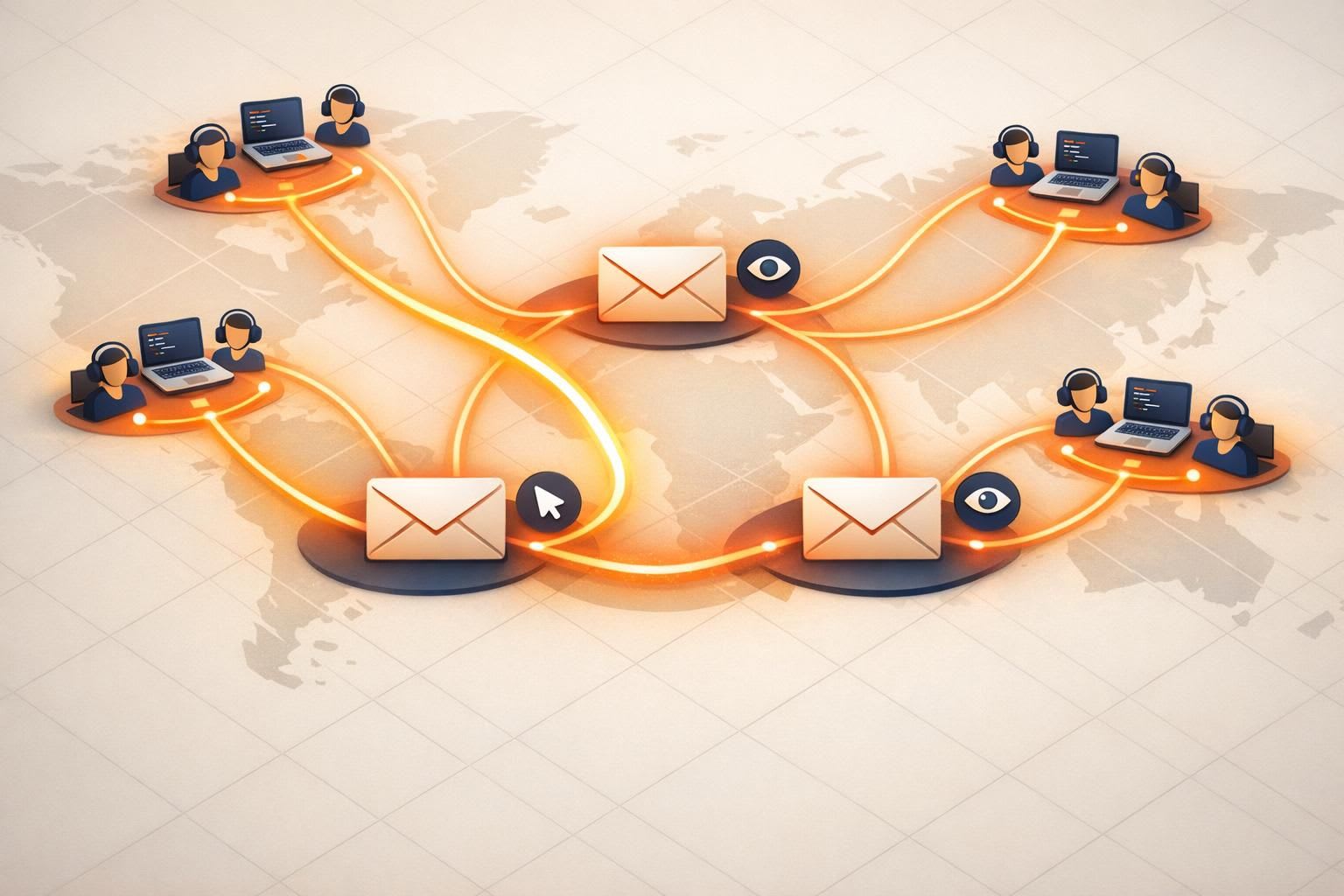
The developer newsletters worth sponsoring in 2026 split into three tiers: the high-reach dailies and generalists (TLDR, Pointer, Console, Changelog), the language and framework weeklies that developers in one stack actually read (JavaScript Weekly, Node Weekly, Golang Weekly, Ruby Weekly, Frontend Focus, React Status, This Week in React, Bytes, Python Weekly, PyCoder's Weekly), and the niche lists where a small audience is exactly the right one (Web Tools Weekly, Next.js Weekly, React Digest, Vue.js Developers, Ember Weekly, Perl Weekly, JavaScript Kicks, codewithmukesh, The Blueprint). The daily.dev Digest, sold by topical track, is the feed-native alternative. Every rate card and link below was checked in October 2026; prices are deliberately not quoted because only the publisher's page is current.
What changed in 2026
- Rate cards moved behind forms. Most larger newsletters now share pricing on request rather than on a public page; expect a sponsor page that collects your email and a media kit by reply. Quote numbers from third-party roundups are stale by design.
- Slots sell by track, not just by list. Publishers with several newsletters (Cooperpress, TLDR, daily.dev's Digest) sell by topic track so a buyer can pick the stack rather than the brand.
- Proof moved to the advertiser. Click counts from the publisher are a leading indicator; a pixel with view-through attribution and a holdout decide the renewal. See incrementality for developer campaigns.
- AI assistants cite newsletter archives. Issues published on the web are part of what ChatGPT and Perplexity read, so a sponsorship in a newsletter with a public archive has a small second life as a citation.
High-reach dailies and generalists
- TLDR: the largest daily tech newsletter family, with separate editions for web dev, AI, DevOps, infosec and more; sponsorship is sold per edition through its advertising page. Best for reach across many stacks at once.
- Pointer: engineering leadership reading, twice weekly; suits tools bought by senior engineers and managers.
- Console: a weekly review of developer tools with an interview; the audience is tool-curious by definition.
- Changelog: newsletter plus podcasts, with a public sponsor page; strong in open source.
Language and framework weeklies
- The Cooperpress family (JavaScript Weekly, Node Weekly, Golang Weekly, Ruby Weekly, Frontend Focus, React Status): the standard weeklies for their stacks, sponsored through Cooperpress. One buy per stack, predictable, long-running.
- Bytes: JavaScript with a humorous voice and high engagement; sponsorship through the publisher.
- This Week in React: React and React Native, with a public sponsor page.
- Python Weekly and PyCoder's Weekly: the two Python standards, for data, ML and backend audiences.
Niche lists
- Web Tools Weekly: front-end tools and libraries, a natural fit for anything a web developer installs.
- Next.js Weekly and React Digest: framework-specific React audiences.
- Vue.js Developers and Ember Weekly: smaller framework communities with loyal readers.
- Perl Weekly: a small, long-running community list; the right place for the few products that serve it.
- JavaScript Kicks, codewithmukesh (.NET and Azure) and The Blueprint: creator-run lists where the author's recommendation carries the sponsorship.
Marketplaces such as Paved and BuySellAds broker slots across many of these in one buy, at the cost of some negotiating leverage.
The daily.dev Digest
daily.dev's Digest is the feed-native option: Newsletter Ads are sold by topical track (Web Development, AI and Machine Learning, DevOps and Cloud, Security and AppSec, Data and Databases), reach developers who already read daily.dev by stack and seniority, and can be combined with In-Feed Native Ads and Sponsored Content in one campaign, all measured by the conversion pixel including view-through. See newsletter ads vs in-feed ads for when to use which.
How to vet a newsletter before you sponsor it
- Read four issues. Is the content what your users read, and are the existing sponsors your peers?
- Ask for the numbers that matter: subscribers, open rate, click rate on sponsor slots, and how many sponsor slots run per issue.
- Ask for the archive. A public archive means the sponsorship is findable later; no archive means a one-day placement.
- Check the terms: slot position, exclusivity, make-goods if an issue underdelivers, cancellation windows. See how to negotiate developer media sponsorships.
- Buy one slot first, with a tracked link and the pixel on the landing page, and judge on signups rather than clicks.
- Write the slot like the newsletter: one specific claim, the product's own words, a link to docs or a sandbox. See how to sponsor developer newsletters.
Newsletter sponsorship comparison
| Tier | Examples | Reach | Precision | Pricing model | Best for |
|---|---|---|---|---|---|
| Dailies and generalists | TLDR, Pointer, Console, Changelog | Highest | By edition or audience | Per slot, media kit on request | Awareness across stacks |
| Language weeklies | Cooperpress family, Bytes, This Week in React, Python Weekly, PyCoder's | High within a stack | The stack | Per slot | Reaching one stack reliably |
| Niche lists | Web Tools Weekly, Next.js Weekly, React Digest, Vue.js Developers, Ember Weekly, Perl Weekly, creator lists | Small | Exact | Per slot, often direct | Precise fits, early-stage budgets |
| Feed-native digest | daily.dev Digest | High | Track, stack, seniority | Campaign, with pixel | Combining newsletter and feed in one measured buy |
Where daily.dev Ads fits
Newsletters give predictable reach to a subscribed audience at a fixed price; daily.dev gives the same developers in their feed and Digest with targeting by stack and seniority and attribution through one pixel. Mature programs run both: the weekly for the stack, the Digest and feed for reach and measurement. The alternatives hub compares the other options honestly, and the onboarding form is where a campaign gets scoped.
FAQs
Which developer newsletters are best to sponsor?
For reach across stacks, TLDR and the generalists; for one stack, the Cooperpress weeklies, Bytes, This Week in React or the Python weeklies; for a precise niche, the framework and creator lists. The best one is the newsletter your current users say they read.
How much does it cost to sponsor a developer newsletter?
Slots are priced per issue and scale with list size and slot position; most publishers now share the rate card by email rather than on a public page. Ask for the card and the terms, and treat any price on a third-party page as out of date.
How do I know if a newsletter sponsorship worked?
Track the link, put the pixel on the landing page, and judge on signups and activations rather than clicks, ideally against a holdout. Publisher click counts are a leading indicator only.
Is a newsletter or a feed placement better for developers?
Newsletters give predictable reach at a fixed price; feed placements give targeting, optimization and native context. Most programs run both, and daily.dev sells the two together in one measured campaign.
Can I sponsor several developer newsletters in one buy?
Yes, through marketplaces such as Paved and BuySellAds, or publishers with several titles (Cooperpress, TLDR). Direct deals usually give better terms; marketplaces give convenience.