

Marketing developer tools on social media requires a unique approach. Developers dislike traditional ads and prefer genuine, technical, and transparent content. Instead of flashy promotions, focus on building trust through discussions, educational content, and sharing your journey ("building in public"). Here's a quick breakdown:
- Developers use social media purposefully: 65.7% look for tools, 62.9% seek to learn new skills.
- Top platforms include: Twitter/X, LinkedIn, Reddit, Hacker News, YouTube, and developer-focused sites like Dev.to.
- Platform-specific strategies:
- Twitter/X: Share threads, code snippets, and project updates. Post 3–5 times weekly.
- LinkedIn: Target decision-makers with personalized outreach and in-depth technical content.
- Reddit & Hacker News: Engage with communities by providing value before promoting your product.
- Dev.to & Hashnode: Publish detailed tutorials and technical guides.
Quick Tips:
- Content mix: 40% educational, 30% "building in public", 20% product updates, 10% personal insights.
- Timing: Post during peak engagement hours (e.g., weekday mornings for Twitter/X).
- Paid campaigns: Use platforms like daily.dev for precise targeting and better ROI.
Key takeaway: Success comes from understanding where developers spend time, sharing valuable content, and using the right platform-specific tactics to engage them effectively.
Where Developers Spend Time on Social Media
::: @figure 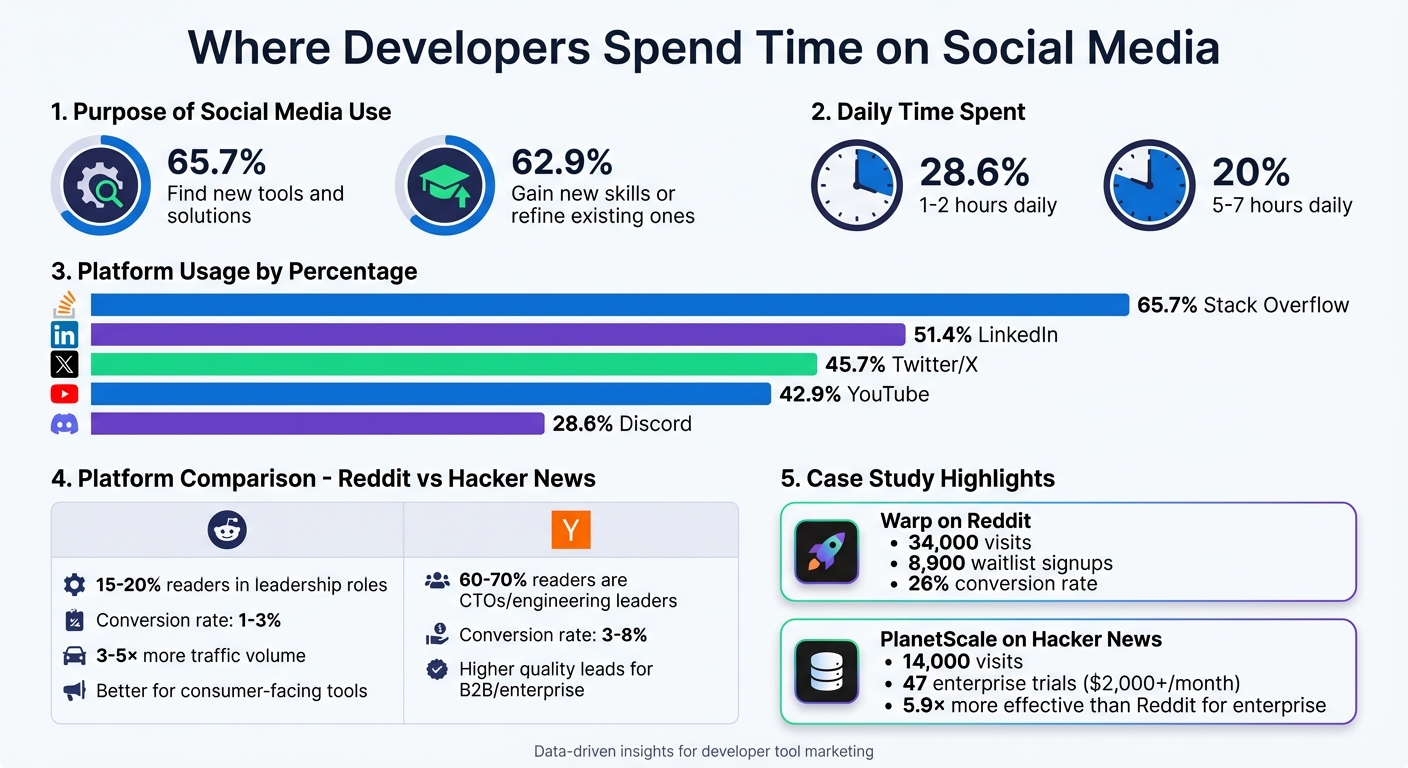 {Developer Social Media Usage Statistics and Platform Preferences}
Understanding where developers spend their time online can help you connect with them more effectively. Unlike casual users, developers approach social media with a purpose. A significant 65.7% use these platforms to find new tools and solutions, while 62.9% focus on gaining new skills or refining existing ones . They’re not there to kill time - they’re on a mission to solve problems, learn, and improve their craft.
The time they dedicate to social media is notable. Around 28.6% spend 1–2 hours daily, and 20% log between 5–7 hours . However, developers are generally wary of traditional marketing tactics. Many use ad blockers and prefer brands that contribute meaningfully to their communities rather than simply promoting products.
How Developers Use Each Platform
Developers interact with different platforms in distinct ways, reflecting their diverse workflows and needs. This means your approach should adapt to each platform’s strengths.
Stack Overflow is a cornerstone for developers, with 65.7% relying on it for learning, problem-solving, and knowledge sharing . It's where developers go to tackle immediate technical challenges while building their professional reputations.
LinkedIn (51.4%) and Twitter/X (45.7%) serve different purposes . LinkedIn acts as a professional networking platform, helping developers connect with employers and clients. Meanwhile, Twitter/X offers a space for real-time updates, technical discussions, and insights into the latest tech trends.
YouTube (42.9%) is a favorite for tutorials and tech talks, offering a visual medium for learning. Discord (28.6%) focuses on real-time community interaction, making it ideal for support and collaborative discussions .
When it comes to decision-makers like CTOs and engineering leaders, Hacker News is the go-to platform. Around 60–70% of its readers hold leadership roles, compared to just 15–20% on Reddit . This difference explains why Hacker News traffic has a higher conversion rate (3–8%) than Reddit’s (1–3%), even though Reddit generates 3–5 times more traffic volume .
"Reddit is about community fit, Hacker News is about technical depth." - Rade Joksimovic, Founder, Teract
These insights underscore the importance of tailoring your strategy to match each platform’s role and audience.
Top Platforms for Reaching Developers
Choosing the right platform is just as important as crafting the right message. Your choice should align with both your goals and the habits of your target audience.
For consumer-facing tools and open-source projects, Reddit can be highly effective. A front-page post on r/programming has the potential to reach over 50,000 developers . For instance, Warp’s terminal tool launch on Reddit brought in 34,000 visits and 8,900 waitlist signups, achieving a 26% conversion rate .
On the other hand, Hacker News is ideal for B2B and enterprise tools. While it generates less traffic than Reddit, its audience delivers higher-quality leads. PlanetScale, for example, saw 14,000 visits and 47 enterprise trials (priced above $2,000 per month) from Hacker News, compared to 31,000 visits but only 8 trials from Reddit. This made Hacker News 5.9 times more effective for enterprise conversions . Similarly, when Cloudflare published a technical deep-dive on its 1.1.1.1 DNS resolver, it topped Hacker News for 12 hours, generating 67,000 visits. The same post on Reddit, however, was downvoted for being "too technical" and received just 40 upvotes .
Specialized platforms like daily.dev, Dev.to, and Hashnode also play a key role. These sites are designed for developers, offering a mix of technical depth and community engagement. They’re perfect for fostering long-term relationships and building trust within the developer ecosystem.
sbb-itb-e54ba74
Platform-Specific Marketing Strategies
Every platform has its own rhythm and tone, especially when it comes to connecting with developers. What works seamlessly on Twitter/X might fall flat on LinkedIn, and engaging with Reddit users is completely different from navigating Hacker News. The trick lies in understanding how developers interact on each platform and tailoring your approach to fit.
Twitter/X for Developer Marketing
Twitter/X is where developers go for real-time updates, technical chats, and peer feedback. Think of your profile as a landing page - it needs to convert at first glance. Use a real photo instead of a logo, craft a bio that explains what you're building and who it's for, and pin a high-performing thread or direct product link to the top of your profile.
For content, aim for a balance:
- 40% educational: Share insights, tips, or code snippets.
- 30% building in public: Be transparent about your journey - share milestones, challenges, and decisions.
- 20% product updates: Highlight new features or announcements.
- 10% personal content: Add a human touch to your feed.
Transparency is key. Sharing details like revenue numbers, failed experiments, or technical choices can build trust quickly, especially within the indie hacker community, which values openness and specificity .
Threads are your secret weapon - they can get 3–5× the impressions of single tweets . Start with a tweet that identifies a specific audience or problem, and promise a clear benefit. Use line breaks to make the text easy to read, add a "TL;DR" summary, and wrap up with one call to action (e.g., a link to your product or newsletter).
Timing matters. Post 3–5 times a week, focusing on quality over quantity . The best windows for engagement are weekday mornings, 8:00–10:00 AM EST. Use hashtags sparingly (1–2 max), sticking to high-signal tags like #buildinpublic or #indiehacker.
Dos: Share technical insights and code snippets. Use your bio link to guide followers to a landing page with an email capture form. A good funnel can convert 10–30 subscribers for every 1,000 followers .
Don'ts: Avoid automated engagement tools like auto-likes or replies - they violate platform rules and could get your account suspended. Also, skip overusing hashtags or sounding overly robotic; authenticity goes a long way.
Now, let’s shift gears to LinkedIn, where the focus is more professional and B2B-driven.
LinkedIn for Developer Tools
LinkedIn is a powerhouse for reaching CTOs, engineering leads, and other decision-makers. While it may feel more polished and performative compared to Twitter’s raw conversations, it’s a prime spot for building professional networks and pitching developer tools .
The key here is coordination. A multi-channel approach - combining LinkedIn with email and phone outreach - can triple your response rates compared to LinkedIn alone . Personalization is also critical. Messages that reference a prospect’s profile, posts, or challenges see a 34% higher acceptance rate and 41% more responses . Instead of generic connection requests, mention something specific, like an article they shared or a challenge their company is tackling.
Timing can also make a difference. If you notice someone browsing your documentation or pricing page, reach out - they’re 4.7× more likely to respond than with cold outreach . Use LinkedIn’s search filters to zero in on titles like "CTO" or "VP of Engineering", and engage while your product is still fresh in their mind.
Design follow-up sequences that adapt based on behavior. For example, after sending a connection request, wait three days before following up with a personalized message. Use analytics to test and refine your approach .
Dos: Share in-depth technical content, such as architectural decisions or industry insights. Engage with your audience’s posts before sending connection requests, and sync your interactions with a CRM to keep track of leads.
Don'ts: Don’t jump straight into promotional messages after connecting - it’s a quick way to lose trust. Avoid automation tools that don’t mimic human behavior, as they can lead to account restrictions. And never pitch without understanding your prospect’s technical challenges.
From LinkedIn’s professional vibe, let’s move to the community-first world of Reddit and Hacker News.
Reddit and Hacker News: Community-First Approach
Both Reddit and Hacker News have tight-knit communities that are wary of traditional marketing tactics. To succeed here, you need to contribute value before promoting anything.
On Reddit, the "I built this" approach works well, but only if you’ve earned the community’s trust. Follow the 9:1 rule - share nine helpful, non-promotional posts for every one promotional post . Build up at least 500 karma in your target subreddits before posting anything promotional. Moderators monitor user activity closely, and overly promotional accounts can get banned. When you do post, engage actively - responding to comments within the first two hours can significantly boost visibility. A front-page post on a major subreddit can drive 10,000–100,000 visits .
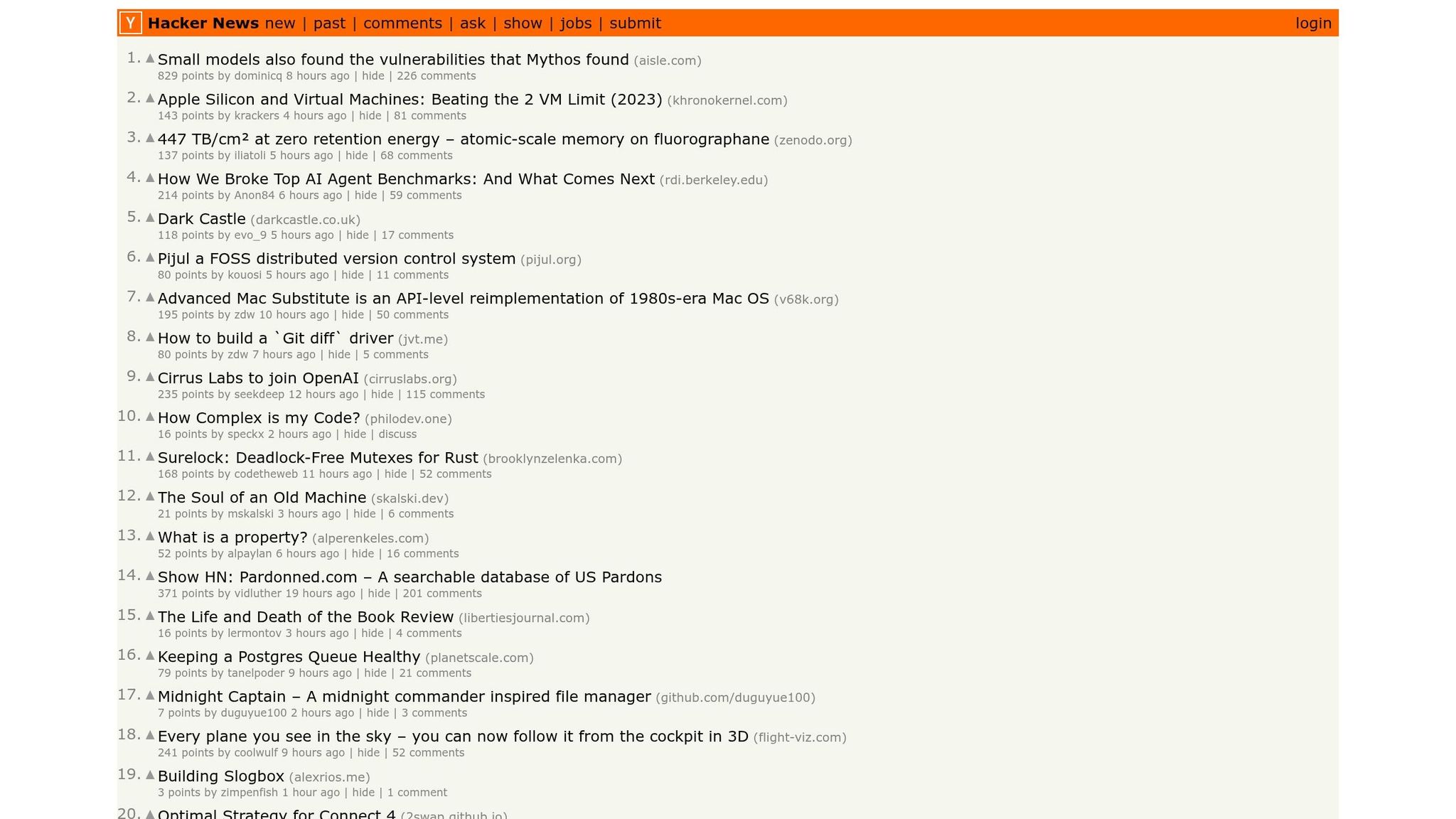
Hacker News, on the other hand, rewards technical depth. For example, when Cloudflare shared a deep-dive on its 1.1.1.1 DNS resolver, it topped Hacker News for 12 hours and brought in 67,000 visits. The same post on Reddit, however, was downvoted for being "too technical" . On Hacker News, focus on detailed content like architectural decisions, performance metrics, or lessons learned. Use the "Show HN" format with a clear, straightforward title like "[Product Name] – [What it does]."
Post on weekdays between 8:00–11:00 AM ET to reach both US and European audiences. Respond to comments quickly to keep your post visible.
Dos: Build karma by contributing helpful content before promoting anything. Use plain technical language and back your posts with data or insights. This builds credibility and trust.
Don'ts: Don’t delete and repost content - moderators watch for this. Avoid marketing buzzwords and don’t submit your domain more than once a month.
Finally, let’s look at developer-native platforms like Dev.to and Hashnode.
Dev.to, Hashnode, and daily.dev: Developer-Native Platforms
Platforms like Dev.to and Hashnode strike a balance between broad social media reach and the community focus of Reddit. Developers here actively seek out educational content, making these platforms ideal for sharing tutorials, technical deep-dives, and project showcases. The audience is particularly receptive to practical, actionable guidance from peers, making it a great space for specialized marketing efforts.
Content Formats That Work for Developers
Developers look for content that offers depth, clarity, and actionable takeaways. The format you choose is just as critical as the message itself. A format that performs well on one platform might completely miss the mark on another. Below, we’ll explore how different content formats align with specific platforms, setting the stage for platform-specific strategies discussed later.
Content Formats by Platform
Each platform has its own personality, and understanding how to adapt your content is key.
Twitter/X thrives on threads. A well-crafted thread can amplify your reach significantly - up to 50–100× your follower count through reshares . Start with a strong hook that addresses a problem or offers a promise. Follow this with numbered steps or insights, include a concise TL;DR summary (often the most shared part), and wrap it up with a clear call to action. Developers also engage with code snippets, technical tips, and updates about "building in public." But remember, if your opening tweet doesn’t grab attention, the thread won't gain traction .
LinkedIn leans toward longer posts and visuals. Infographics that simplify architectural decisions, detailed case studies, and thought leadership pieces resonate well with CTOs and engineering managers. Visuals are particularly effective for breaking down complex technical ideas.
Reddit and Hacker News require detailed, thoughtful content. On Hacker News, posts about architecture, performance, or postmortems often spark meaningful discussions. Reddit operates similarly but with a more conversational tone. Both platforms reward depth and expertise, so make sure your content provides genuine value.
Dev.to and Hashnode are ideal for long-form content like tutorials, how-to guides, and technical explainers. These platforms favor detailed, actionable content that developers can save and refer back to. Think step-by-step guides, real-world examples, and code snippets.
Balancing Educational and Promotional Content
Once you’ve nailed the format, the next challenge is striking the right balance between educational and promotional content.
The 40/30/20/10 content mix is a proven approach for engaging developer audiences. Here’s how it works:
- 40% Educational Content: Share tips, how-tos, and technical insights.
- 30% Building in Public: Be transparent about metrics, mistakes, and decisions.
- 20% Product Updates: Frame updates around user benefits, not just features.
- 10% Personal Opinions: Add a human touch with your unique perspective .
"Twitter marketing for developers isn't about amassing followers for vanity. It's about building a distribution channel, running continuous market research, and creating a direct line to people who will try, share, and buy what you build." - CodeToCash Team
Educational content helps you get discovered by offering developers real value they’ll want to save and share. Sharing your process ("building in public") builds trust by showing transparency, which helps turn followers into email subscribers. Product updates then convert that trust into action - just make sure to highlight how the update benefits users. For example, instead of saying, "We added feature X", explain how users can now "do X without Y."
This approach - using educational content for discovery, transparency for trust, and product updates for conversion - is how you turn a social media presence into an effective distribution channel . By aligning your formats with what developers expect, you can create a strategy that delivers meaningful results.
Amplifying Organic Social With Paid Campaigns on daily.dev Ads
Building on earlier organic engagement strategies, daily.dev Ads take your reach to the next level. While organic social media helps build trust and engagement, expanding beyond your current audience often requires an extra push. That’s where paid campaigns on daily.dev come in. These campaigns connect you with over 1 million active developers actively looking for tools and resources. Unlike broader advertising platforms where your message competes with unrelated content, daily.dev’s native placements blend right into personalized developer feeds. This natural integration creates the perfect environment for measurable success, as demonstrated by recent campaigns.
Paid campaigns can also amplify your efforts across platforms. For instance, you can boost a Twitter/X launch thread with daily.dev ads to retarget users who’ve already engaged, increasing engagement rates by 3-5× through native placements . Take the example of a CI/CD tool company: they targeted DevOps engineers with daily.dev campaigns, promoting a free migration guide linked to their Twitter launch thread. The result? A 15% click-through rate, 5× ROI, and over 2,000 engagements . Similarly, a monitoring tool company aimed at senior Node.js developers saw 300 demo sign-ups in just one week by running ads featuring benchmark data, which also amplified their LinkedIn posts by 4× .
Benefits of Advertising on daily.dev
daily.dev Ads offer native ad placements that look and feel like organic content, delivering click-through rates that are 2-3× higher than industry averages . These ads appear as in-feed posts, on post pages, and in personalized digests, ensuring they reach developers when they’re actively engaging with technical content. This approach minimizes ad fatigue because the ads feel like helpful recommendations rather than disruptive promotions.
Precision targeting is another standout feature. You can zero in on developers based on programming languages (like JavaScript, Python, or Rust), seniority levels (junior, mid-level, senior, staff), and specific interests (DevOps, AI/ML, cloud computing) . This level of detail allows you to target niche groups, such as senior React developers focused on performance tools, ensuring your ads reach the most relevant audience.
The platform also offers measurable ROI with developer-specific metrics such as tool sign-ups, demo requests, and traffic to organic posts. With daily.dev’s dashboard - integrated with Google Analytics - you can track clicks, conversions, and cost-per-acquisition in real time, enabling you to adjust campaigns based on actual developer behavior .
Best Practices for Running Paid Campaigns
To make the most of daily.dev Ads, follow these best practices for optimal performance.
Focus on concise, problem-solving copy: Developers respond to practical solutions. Keep headlines under 60 characters, such as “Cut React bundle sizes by 40% with our analyzer - free trial,” and pair them with visuals like code snippets or tool demos . Educational hooks consistently outperform flashy, hype-driven messaging.
Use authentic, developer-focused creatives: Stick to visuals that resonate, like terminal screenshots or architecture diagrams. Test 3-5 creative variations addressing specific pain points like debugging or scalability. Avoid generic claims like “Best tool ever!” - these can increase bounce rates by over 50% . Clear calls to action, such as “Try Now” or “See the Benchmark,” tend to perform best.
Track performance and optimize: Aim for click-through rates above 1% and keep a close eye on cost-per-acquisition . Set up custom events to monitor how paid campaigns drive traffic to your organic content, such as Twitter threads or Dev.to tutorials. Review campaign performance weekly, pausing underperforming ads and scaling successful ones. For example, focus on high-engagement segments like senior Python developers or DevOps leads. Linking your ads to organic content creates a seamless experience, building trust and turning paid reach into long-term organic growth.
Conclusion
Marketing developer tools on social media requires meeting developers where they naturally spend their time - and doing so in a way that feels genuine. Each platform has its own strengths: Twitter/X attracts early adopters, LinkedIn connects with decision-makers, and community hubs like Reddit and Hacker News foster deeper, discussion-driven engagement. The key is to tailor your approach for each space, focusing on delivering real value instead of pushing promotions.
Equally important is the content mix you share. Striking a balance - such as 40% educational content, 30% "building in public" updates, 20% product news, and 10% personal insights - helps your brand stay relatable while consistently offering something useful .
While organic reach builds trust and credibility, adding paid campaigns can amplify your efforts. Platforms like daily.dev allow for precise targeting by programming language, seniority, and interests, giving you access to over 1 million active developers. Their developer-specific metrics, such as tool sign-ups and demo requests, provide clear insights into what’s working. When you combine these paid strategies with a consistent content mix, your overall marketing becomes more cohesive and measurable.
Remember, social media is just the starting point. The real goal is to convert your social followers into an owned audience, like an email list. If executed well, you can expect 1% to 3% of your Twitter followers to eventually subscribe. This email list becomes a dependable resource, unaffected by shifting algorithms or platform changes.
Ultimately, success lies in understanding developers’ expectations for authenticity. By focusing on platform-specific tactics, creating educational content that addresses real challenges, and using targeted paid campaigns wisely, you can build a marketing strategy that earns trust and fosters long-term engagement.
FAQs
How do I choose the best social platform for my developer tool?
Identifying the right platform starts with understanding where your target audience spends their time and matching it with the type of content you want to share. Here’s a quick breakdown:
- Twitter/X: Perfect for sharing real-time updates and joining industry discussions. It’s a hub for quick interactions and trending topics.
- LinkedIn: Best suited for B2B outreach, especially if you’re targeting professionals like CTOs or engineering leads. It’s a go-to space for networking and professional content.
- Reddit and Hacker News: Great for engaging with niche communities. These platforms are ideal for sparking discussions and sharing insights with highly focused audiences.
- Developer Platforms (dev.to, daily.dev): Tailored for technical content and community building. If you’re looking to connect with developers, these platforms are excellent for sharing tutorials, code snippets, or thought leadership pieces.
Choosing the right platform ensures your content reaches the right people in the right way.
What should my first 30 days of posting look like?
To connect effectively with developer communities, prioritize building trust and sharing technical knowledge. Offer practical and accurate content, such as tutorials, insights, or updates, to showcase your expertise. Consistency is key - aim to post 3-4 times a week on platforms like Twitter/X and Reddit, tailoring your content to fit each platform's style, such as threads or discussion posts.
Engagement is equally important. Respond genuinely to comments and questions to foster connections. Regularly track how your posts perform and use that data to fine-tune your strategy for even better results.
How do I track ROI from social media marketing?
Tracking ROI for social media marketing in developer tools requires looking past surface metrics like likes and followers. Instead, zero in on developer engagement (such as API calls, GitHub contributions, and documentation views), product usage (like SDK integrations and feature activations), and revenue impact. These indicators provide a clearer picture of technical adoption and community growth, showing how well your social media strategies support your developer marketing objectives.