

Your blog alone reaches only about 10% of your potential developer audience. To expand your reach by 300–500%, syndicating content across platforms where developers are already active is key. Platforms like Dev.to, Hashnode, Medium, Reddit, and Hacker News allow you to republish content for free, while paid options like daily.dev feed ads and newsletter sponsorships help target specific audiences.
Here’s the quick takeaway:
- Free Platforms: Dev.to (1,500–5,000 views), Hashnode, Medium (100M+ readers), Reddit, Hacker News.
- Paid Options: daily.dev ads (targeting developers by skill), newsletters (e.g., TLDR, Bytes), sponsored posts.
- SEO Tip: Use canonical URLs to ensure your blog remains the original source.
- Metrics to Track: Referral traffic, backlinks, engagement (e.g., comments, reactions), and Cost Per Lead (CPL) for paid efforts.
Start by publishing on your blog, wait 2–10 days for indexing, and then cross-post strategically. This approach ensures your content gets discovered, sparks discussions, and drives measurable results.
Why Your Blog Reaches Only 10% of Your Potential Audience
Your blog might establish your brand’s authority, but it often struggles with content discovery. The main issue? Developers rarely go out of their way to visit individual company blogs. As developer Mohos Sad aptly explains:
Your blog is not where discovery happens. Discovery happens where developers are already reading, content is being surfaced, and discussions are happening .
The common strategy - publishing on your blog and sharing it once on social media - usually leaves your content buried within a day . Even well-crafted tutorials or in-depth articles often go unnoticed because they’re hosted on domains without the visibility of established developer-focused platforms. The issue isn’t the quality of your content; it’s where you’re placing it .
As of 2026, AI systems favor content from high-authority platforms over isolated company blogs. Developers now rely on community feeds, aggregators, and forums for content discovery rather than actively browsing individual blogs. This shift highlights the importance of distributing your content beyond your own site.
Free Syndication Channels for Technical Content
Free syndication platforms are a great way to expand your content's reach without spending money. The downside? You'll have less control over how your content looks or where it's placed. Plus, most platforms use rel="ugc" or rel="nofollow" tags for outbound links, which limits SEO link equity . That said, proper attribution can still boost traffic by up to 500% .
To maximize results, publish your content on your own site first and give Google 2–10 days to index it . This step ensures your blog is recognized as the original source, avoiding duplicate content issues. Below are some popular platforms for syndicating technical content, each offering unique advantages for reaching developers.
| Platform | Primary Role | Typical Reach | Key Feature |
|---|---|---|---|
| Dev.to | Engagement & Feedback | 1,500–5,000 views for tagged tutorials | RSS-to-Draft automation |
| Hashnode | Ownership & Community | Medium (Dev-specific) | Custom domain mapping |
| Medium | Broad Exposure | Very High (100M+ monthly readers) | "Import Story" SEO tool |
| Link Promotion | Varies by subreddit | Open Graph tag optimization | |
| Hacker News/Lobste.rs | Thought Leadership | High (quality-focused) | Community-driven curation |
Dev.to: Developer Blogging Community
Dev.to is all about community engagement and quick feedback. Its REST API and RSS automation make it easy to create draft posts from your blog feed . For example, you can set up a GitHub Action to automatically push new articles to Dev.to while keeping your canonical URLs intact.
When cross-posting, use the canonical_url field to link back to your original article . Stick to 4 tags (lowercase, no special characters) for better discoverability. Well-tagged tutorials typically see 1,500–5,000 views . Be sure to respond to comments quickly - active engagement helps boost visibility in the community feed.
If your blog uses MDX or custom components, you’ll need to clean up your content before posting. Remove React components, convert them to Markdown, or add a "see original" link .
Hashnode: Custom Domain Options
Hashnode is ideal for developers looking to maintain control over their personal brand. A standout feature is the ability to map your custom domain (e.g., blog.yourname.com) to Hashnode, giving you ownership while tapping into its built-in audience .
Use Hashnode's GraphQL-based API to manage your content. When syndicating, set the originalArticleURL field to point back to your primary source . This approach keeps your branding intact while benefiting from Hashnode’s hosting and community reach.
Hashnode works best for personal branding. For companies, it’s less suited, as the platform is tailored to individual voices rather than corporate content.
Medium: Programming Tags
Medium offers an opportunity to reach a massive audience - over 100 million monthly readers . Its "Import a story" tool makes it simple to preserve SEO value by setting canonical URLs automatically .
To syndicate on Medium, go to your profile, click "Import a story", and paste your article URL. Medium will pull the content and set the canonical tag back to your original post.
For better reach, use programming-related tags like JavaScript, Python, or Web Development. Keep in mind that Medium’s algorithm prioritizes content that keeps readers on the platform, so while click-through rates to your blog may be lower, you gain exposure to a broader audience, including non-developers.
Reddit: Developer Subreddits
Reddit is best for link promotion, not full-text syndication . Share only the link to your original article, targeting relevant subreddits for your content. This complements deeper syndication efforts and helps you reach niche developer communities.
Focus on subreddits like r/programming, r/webdev, or r/javascript, depending on your topic. Check subreddit rules beforehand - some restrict self-promotion or require a minimum karma threshold. Engaging in discussions and building credibility first can make a big difference.
Make sure your blog uses Open Graph tags so titles and images display properly when shared. Timing is key - post when your target audience is most active to increase engagement, as Reddit's algorithm favors early interactions.
Hacker News and Lobste.rs: Community-Driven Platforms
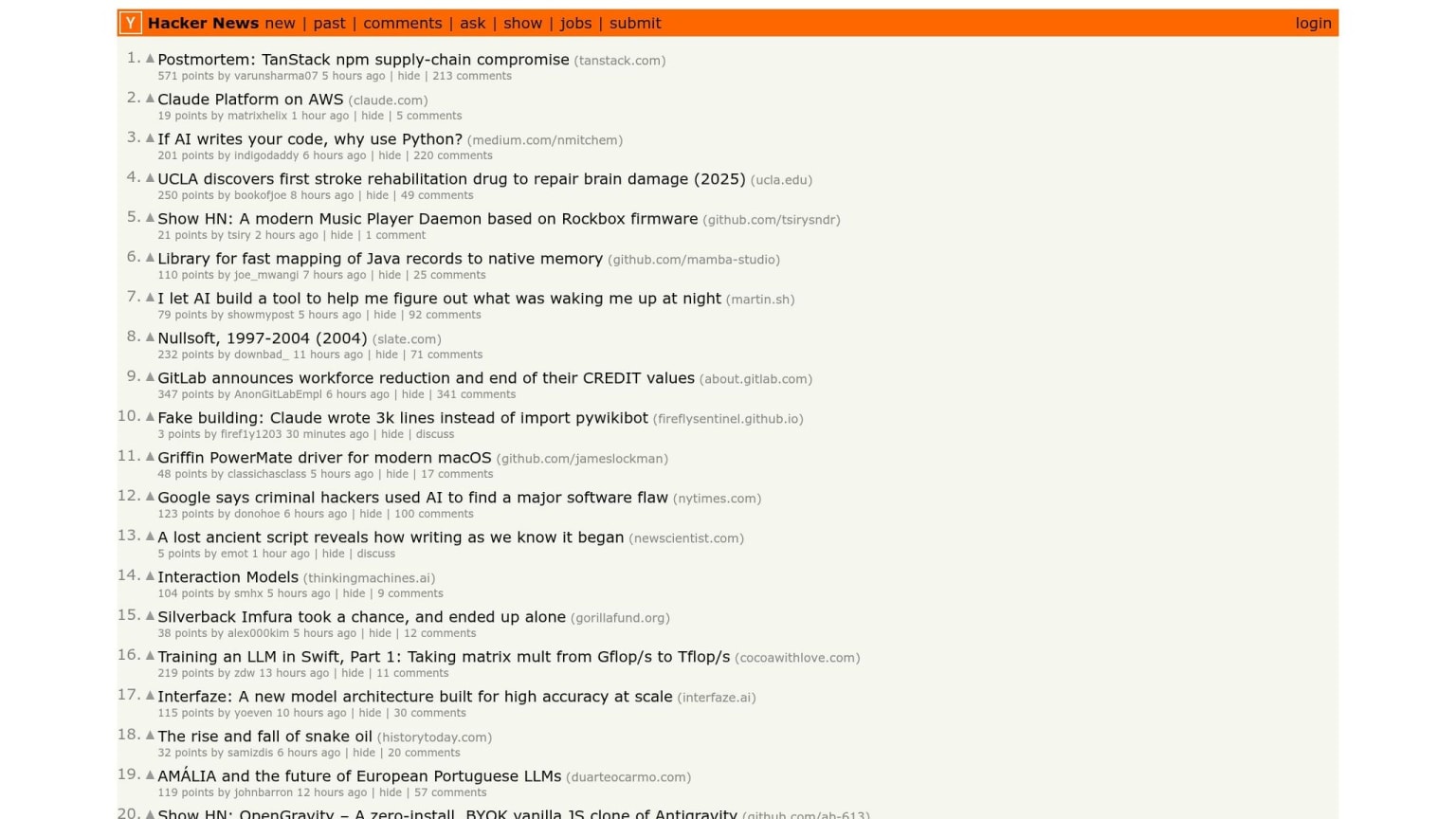
Hacker News and Lobste.rs are great for sharing high-quality, in-depth technical content. These platforms are ideal for thought leadership, but only if you follow their community guidelines .
On Hacker News, submit your link with a straightforward, descriptive title. Avoid clickbait - users value original research, deep technical dives, and unique perspectives. Save your best work for this platform, as posts that gain traction can drive significant traffic. Just know that visibility is often short-lived, as posts typically drop off the front page within hours.
Lobste.rs is smaller and requires an invitation to join, but its audience is highly engaged. Posts need to include relevant tags, and low-effort content is quickly downvoted. The platform is particularly suited for topics like systems programming, security, and infrastructure.
Neither platform supports canonical URLs, so you’re simply sharing a link. The value lies in referral traffic and the potential for backlinks if your content gets picked up by other websites.
Paid Syndication Options for Wider Reach
Free platforms are great for spreading awareness, but paid channels take things a step further by allowing you to precisely target developer audiences. With paid options, you gain better control over who sees your content and when. Plus, these platforms often come with advanced tools to measure reach and engagement, making it easier to track your success .
"By associating a company's content with reputable platforms and services, businesses can inherit a measure of their authority, lending an air of credibility and trustworthiness to their brand."
While free syndication is ideal for building initial awareness, paid channels help you overcome trust barriers and directly connect with decision-makers. Leveraging the credibility of established platforms can speed up your sales cycle, ensuring your content gets in front of the right people at the right time . Below are some standout paid options to maximize the reach of your technical content.
daily.dev Feed Ads: Reaching Developers Where They Are
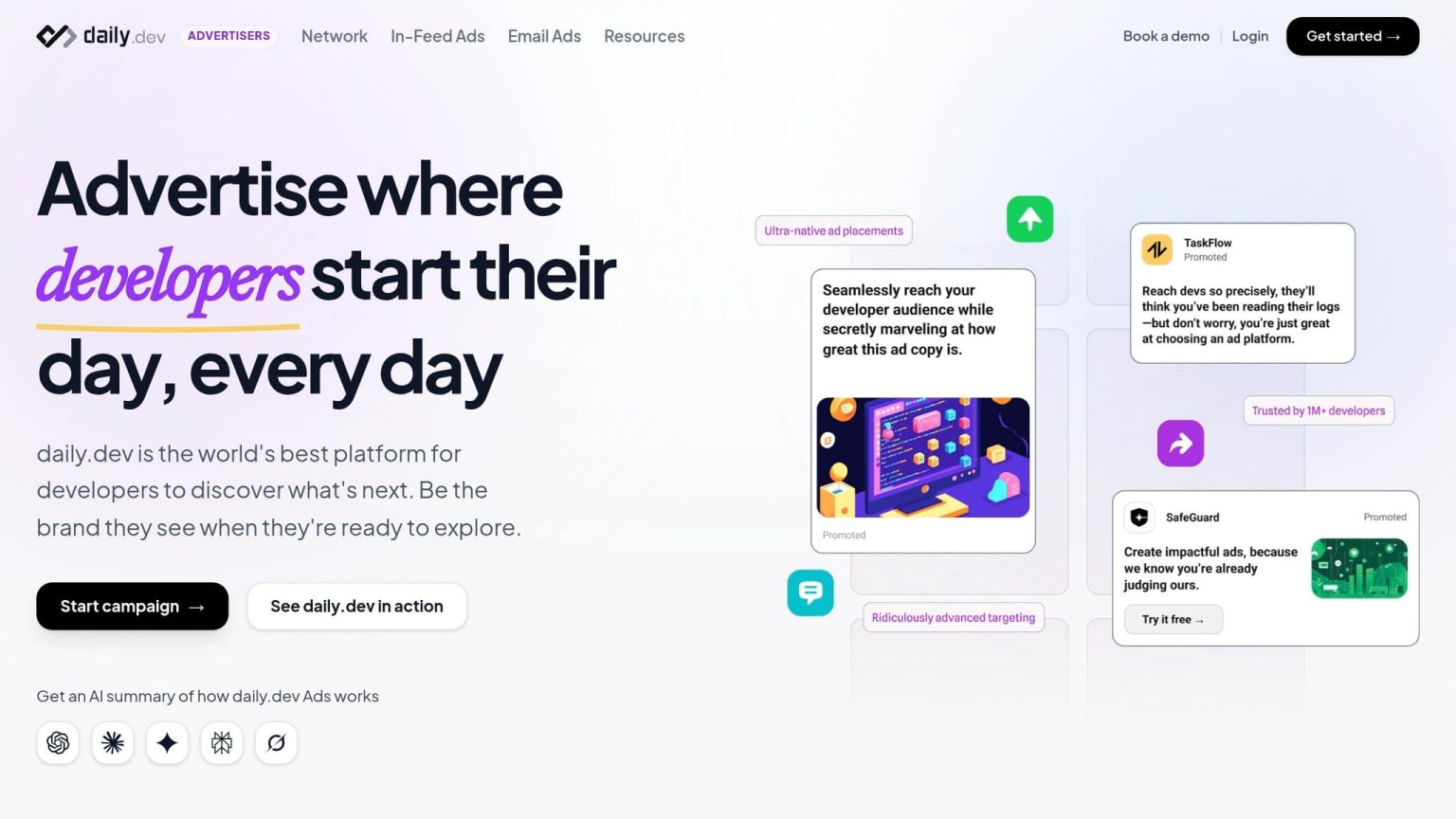
daily.dev Feed Ads provides access to over 1 million developers and offers filters to target specific audiences based on seniority (aspiring, entry-level, mid-level, senior), programming languages (like JavaScript, Python, or Go), and tools (such as Docker, Kubernetes, or VS Code) . Ads are seamlessly integrated into personalized feeds and weekly digests, ensuring they feel natural and relevant. The platform focuses on desktop traffic in professional settings and is trusted by major brands . With a 4.8/5-star rating from over 2,500 reviews, a Product of the Year award from Product Hunt, and 20,000+ stars on GitHub, it’s a trusted choice for developer-focused campaigns .
Newsletter Sponsorships: Authentic Engagement
Sponsoring newsletters like TLDR, Bytes, or This Week in React puts your content directly in front of engaged developer audiences. Unlike banner ads, these sponsorships feel more authentic and personal . TLDR caters to a broad developer base, Bytes focuses on JavaScript and web development, and This Week in React is perfect for React enthusiasts. Choosing newsletters with strong open and click-through rates - and minimal competing sponsors - can make a big difference. Tailoring your headlines and introductions to align with each newsletter’s tone can improve performance by 40–60% . Transparency is key, so always disclose sponsorships to maintain trust with readers .
Sponsored Posts on Developer Platforms
Sponsored posts give you control over where and when your content appears on platforms developers already frequent. For example, In Plain English garners 3.5 million monthly views, making it a powerful option for reaching a broad audience . This approach allows for precise targeting: technical content can reach end-users, while business-focused material can be directed at decision-makers, such as CTOs, on platforms like LinkedIn .
"Developer channels are vastly different in terms of how they're used, and that affects how and what should be marketed to them in these channels."
- Darren Yuen, Director of Marketing Programs, Iron Horse
Focusing on niche communities often results in higher-quality leads with less friction. For instance, enterprise-focused content performs well on DZone, where tutorials average over 4,000 pageviews in the first month, making it an effective option for technical audiences .
Canonical URLs and SEO for Cross-Posting
A canonical URL is an HTML element placed in the <head> section of a webpage that tells search engines which version of a page is the primary source. When syndicating technical articles to platforms like Dev.to, Hashnode, or Medium, setting the canonical URL on the republished version ensures all ranking signals and authority point back to your original blog post. Without this setup, search engines might divide SEO value among multiple versions - or worse, rank the syndicated post higher than your original. That’s why it’s so important to get your SEO strategy right before publishing on other platforms.
Publish on your domain first. Always prioritize publishing on your own site and wait 2–10 days before syndicating. For high-authority sites, 2–3 days is usually enough, while newer blogs may need 7–10 days to ensure search engines index the original version first. This approach keeps your cross-posting strategy aligned with your content goals.
Thankfully, most developer platforms make adding canonical URLs a straightforward process. For example:
- Dev.to allows you to use a
canonical_urlfield in its front matter or API. - Hashnode provides an
originalArticleURLsetting for this purpose. - Medium’s "Import a story" tool automatically assigns the canonical URL to your original post.
In March 2026, Engineering Leader Navin Varma even created an automated pipeline using GitHub Actions to insert canonical URLs into posts on Dev.to and Hashnode. As Varma aptly put it:
"Set the canonical URL. Every time. No exceptions."
After cross-posting, double-check your setup by viewing the page source to confirm the presence of the <link rel="canonical" href="YOUR_ORIGINAL_URL" /> tag in the <head> section. You can also use Google Search Console's URL Inspection tool to ensure Google recognizes your blog as the original source. If a platform doesn’t support canonical tags, use a noindex, follow meta tag to prevent the duplicate version from appearing in search results while still allowing search engines to follow its links.
Getting canonical URLs right consolidates your ranking signals and ensures your blog remains the authoritative source for your content.
Measuring Syndication ROI: What to Track
Tracking the right metrics is the backbone of any successful syndication strategy. Once you've chosen your distribution channels, the next step is to measure performance effectively. Your metrics should align with the stages of your sales funnel - from creating awareness to driving conversions.
Start by evaluating the immediate impact of your syndicated content. A key metric here is referral traffic. To measure this accurately, use unique UTM parameters for each platform and placement, allowing you to trace sessions back to your CRM. A well-executed syndication plan should aim for a 40% increase in referral traffic within 90 days . Don’t stop at raw traffic numbers - dig deeper by analyzing metrics like engaged time and scroll depth to gauge how much your audience interacts with the content.
Backlinks and SEO authority provide a broader, long-term view of success. To ensure syndicated posts contribute to your site's SEO, use canonical URLs. Tools like Ahrefs or Moz can help you track the growth of your domain authority. Another indicator of success is an increase in branded search volume - when people start searching for your company name directly, it’s a sign that your syndication efforts are building trust and recognition .
For paid syndication efforts, such as newsletter sponsorships, focus on Cost Per Lead (CPL). Divide the sponsorship cost by the number of leads generated to calculate this metric. Since B2B developer buying cycles are longer, use attribution windows of 30 to 90 days to track how these leads move through your funnel . This data not only helps justify your investment but also highlights the broader impact on brand awareness.
Pay special attention to developer-specific signals that go beyond traditional metrics. These include GitHub repository stars and forks, documentation pageviews, sandbox downloads, and CLI tool installs that stem from your syndicated tutorials . These mid-funnel indicators often offer better predictions of future conversions than pageviews alone. Additionally, monitor engagement on platforms like Dev.to and Hashnode - comments, reactions, and saves can provide direct insight into how well your content resonates with your audience .
Building a Syndication Workflow: 4 Steps
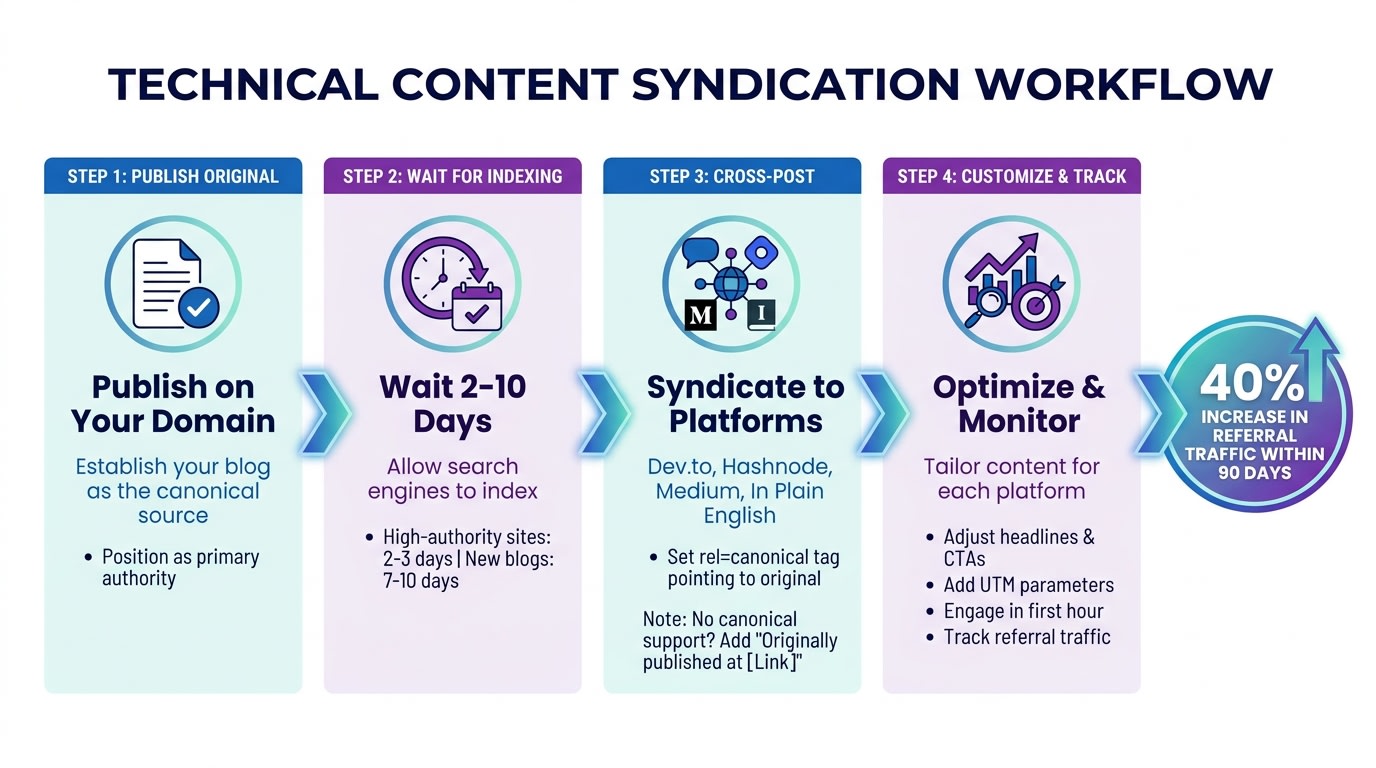
Creating a repeatable workflow ensures that every article you publish reaches its full potential. Start by publishing the canonical version of your content on your own domain. This step positions your blog as the primary, authoritative source before distributing it elsewhere .
Next, give search engines time to recognize and index your original post. Typically, this takes anywhere from 2–10 days. Established, high-authority sites may only need 2–3 days, while newer blogs should wait closer to 7–10 days to ensure Google identifies your site as the original source .
Once your content is indexed, cross-post it to platforms that align with your audience, such as Dev.to, Hashnode, or In Plain English . Be sure to set the rel=canonical tag on these platforms to point back to your original post. This helps consolidate link authority and avoids duplicate content issues . If a platform doesn’t support canonical tags, include a clear note at the top of the article, such as “Originally published at [Link]” .
After your content is live across multiple platforms, focus on customizing and promoting each version. Adjust headlines, introductions, and calls to action to suit the specific audience. For instance, swap out generic phrases like "Contact Sales" for more targeted options like "Check the Repo" or "Try the Sandbox" when addressing a developer community . Add UTM parameters to all links to track referral traffic and conversions . Engagement in the first hour is key, so encourage interactions early to boost visibility .
Conclusion
Relying solely on your blog limits your reach to about 10% of your potential audience. The key isn’t picking between free or paid syndication - it’s creating a distribution plan that blends both approaches. Free platforms like Dev.to, Hashnode, and Medium offer opportunities for community interaction and organic visibility. On the other hand, paid options such as newsletter sponsorships and daily.dev feed ads allow you to connect with specific developer personas through targeted exposure.
Syndication can expand your reach by 300–500%, with properly attributed posts seeing around 85% higher engagement .
"Your blog is not where discovery happens. Discovery happens where developers are already reading." - Mohos Sad
A strong distribution strategy combines free and paid channels effectively. As outlined earlier in the syndication workflow, always begin by publishing on your own domain. Allow 2–10 days for indexing before cross-posting, ensuring you use proper canonical tags. Allocate 60–80% of your core content to free platforms to increase awareness, while reserving paid placements for high-value resources like implementation guides or whitepapers . Use UTM parameters to monitor referral traffic, track conversions, and measure audience engagement.
Focus on being strategic rather than trying to be everywhere. Choose 2–4 platforms that resonate with your audience, customize your messaging for each, and analyze the results. With the right process, you can see a 40% increase in referral traffic within 90 days without compromising SEO . By following these steps, you’ll build a measurable and impactful distribution strategy.
FAQs
How do I choose the best 2–4 syndication platforms for my audience?
Choose platforms that not only have active developer communities but also offer high engagement and the potential for wide distribution. Here are some solid options to get started:
- In Plain English: This platform provides curated content with global reach and opportunities for editorial exposure.
- DEV Community (dev.to): A vibrant and interactive space where you can gain visibility and receive feedback from a highly engaged audience.
- Hashnode: Tailored for developers, it allows you to own your domain while tapping into a strong community network.
- Medium (via curated publications): Perfect for reaching a broad audience, especially if you're targeting technical readers through specific publications.
When choosing a platform, weigh factors like editorial requirements or the level of community interaction needed to make the most of your efforts.
What’s the safest way to cross-post without hurting my SEO rankings?
To cross-post content safely without risking your SEO rankings, use canonical URLs to point back to the original source. This step helps avoid duplicate content problems and ensures the original content gets proper credit. Always double-check that canonical tags are set up correctly when sharing content across different platforms to maintain your search engine visibility.
Which metrics best prove syndication ROI beyond pageviews?
Metrics that show the return on investment (ROI) for syndication go far beyond just pageviews. Key indicators include referral traffic, which highlights how syndicated content drives visitors to your site; backlinks generated, which can boost your site's authority and search rankings; and brand search lift, which reflects increased interest in your brand. These metrics collectively offer a deeper understanding of how your content is engaging audiences, expanding visibility, and strengthening your brand's presence.