

Developers don't respond to flashy ads - they want to learn and solve problems. That's why education-focused marketing works so well for developer tools. By offering tutorials, certifications, and workshops, companies can build trust, demonstrate expertise, and drive product adoption. Here's the key takeaway: focus on teaching, not selling.
Why It Works:
- Tutorials: Solve real problems developers face, leading to trust and long-term engagement.
- Certifications: Boost career prospects, turning learners into loyal advocates.
- Workshops: Hands-on events inspire immediate action and product use.
- Self-Paced Learning: Flexible options like online courses attract curious developers early in their journey.
Key Stats:
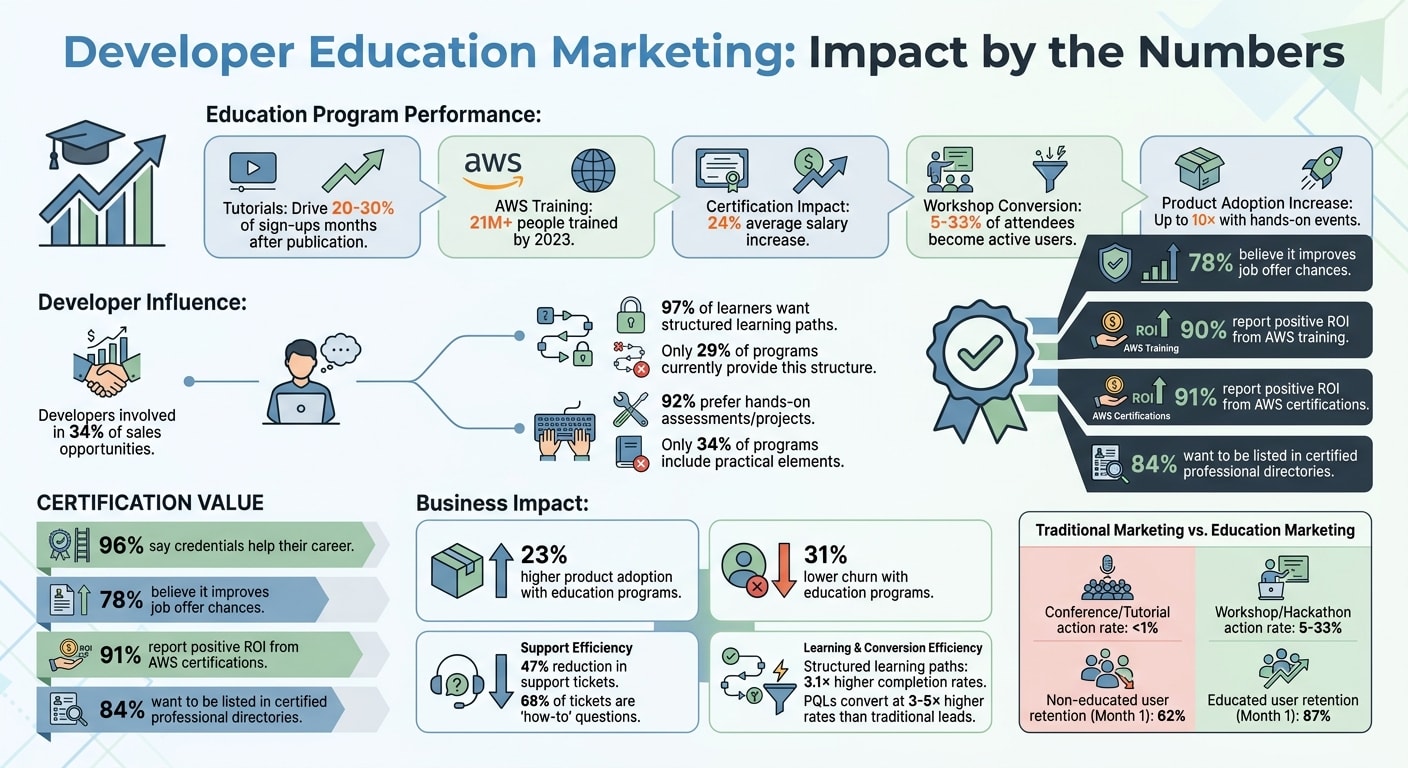
- Tutorials can drive 20-30% of sign-ups months after publication.
- AWS trained 21M+ people by 2023; certifications led to 24% salary increases for some.
- Hands-on workshops convert 5-33% of attendees into active users.
This approach isn’t just about education - it’s about creating a pipeline of skilled users who champion your product within their organizations. Keep reading to learn how companies like AWS, HubSpot, and Google use these strategies effectively.
How Education Programs Drive Growth for Developer Tools
Education programs give developers the chance to engage with a product firsthand, rather than being marketed to. By investing time in structured courses or certifications, developers not only gain valuable skills but also integrate those skills into their professional identity. This kind of connection fosters loyalty in ways that traditional marketing often can't match.
Developers play a role in about 34% of sales opportunities . Earning their trust is critical to tapping into these opportunities. As Sean Carolan, Technologist and Sales Engineer, puts it:
"If you don't win the hearts and minds of developers, you could lose a lot of sales opportunities" .
When developers are well-educated about a tool, they often become its biggest advocates within their organizations.
Free education also lowers barriers. Tools like browser-based labs make it easy for developers to experiment without complex installations. This not only encourages exploration but also reduces support demands - users who understand the product well submit fewer basic support tickets, allowing teams to focus on more complex issues.
Let’s take a closer look at how AWS uses structured certifications to create long-term loyalty.
AWS Certifications: Building Loyalty Through Structured Learning
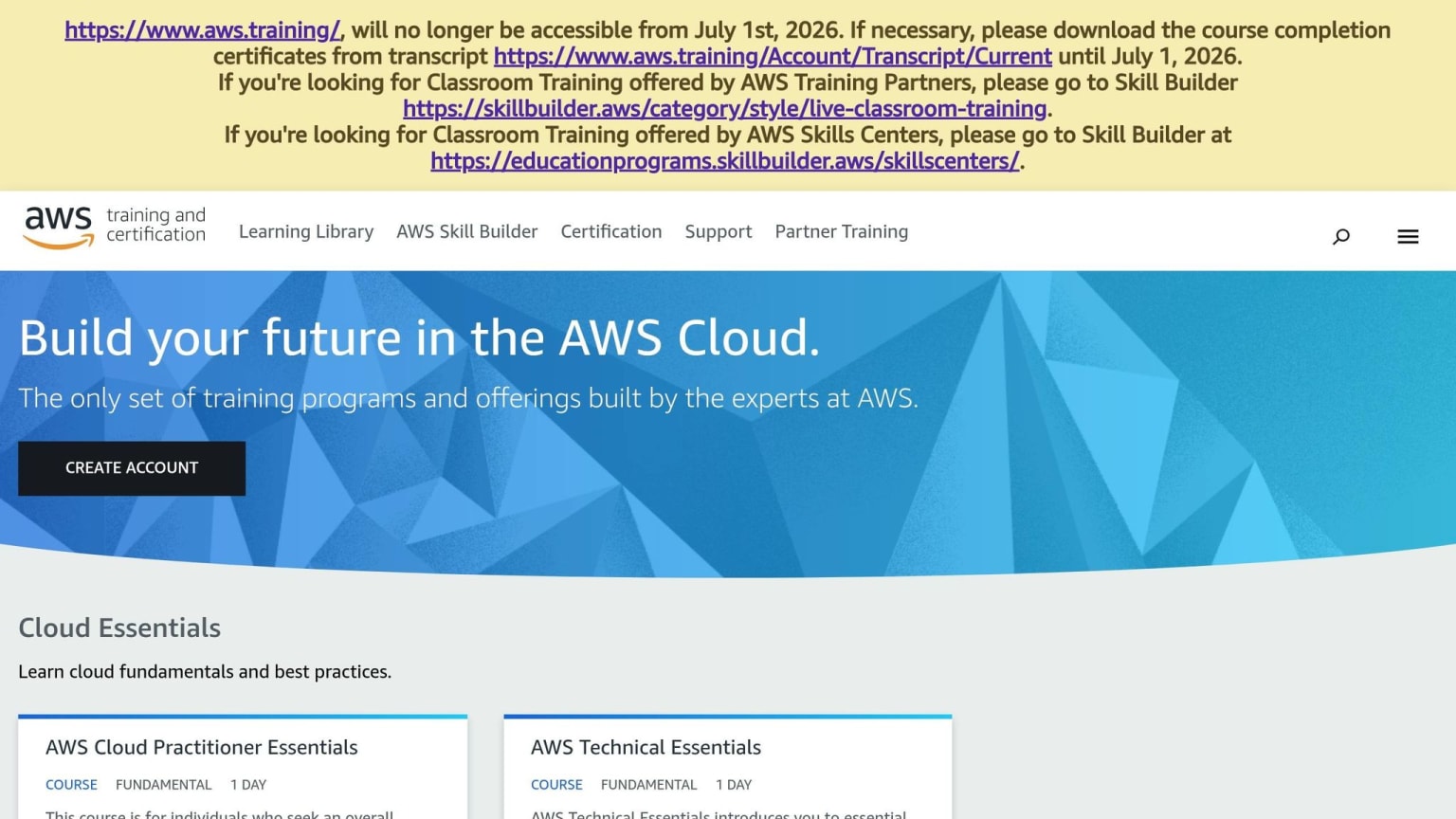
As of November 2023, AWS has trained over 21 million people through its free cloud skills programs, with a target of 29 million by 2025 . Their AWS Skill Builder platform offers more than 600 free digital courses, covering topics from beginner-level cloud concepts to advanced architecture techniques.
AWS certifications provide clear career benefits. Developers who earned multiple certifications within two years reported a 24% average salary increase compared to those without certifications . Additionally, 90% of learners noted a positive return on investment from AWS training, while 91% said the same for certifications . These tangible career boosts - like higher salaries and better job prospects - turn developers into loyal advocates for AWS.
Gamification also plays a role in keeping developers engaged. For example, AWS Cloud Quest, a 3D role-playing game, allows users to complete a 12-part quest that builds practical cloud skills in an interactive way . This gamified learning makes the transition from training to real-world use of the platform almost effortless.
While AWS focuses on deep technical training and gamification, HubSpot takes a different approach, emphasizing practical marketing skills and free access to full-featured software.
HubSpot Academy: Free Courses That Convert
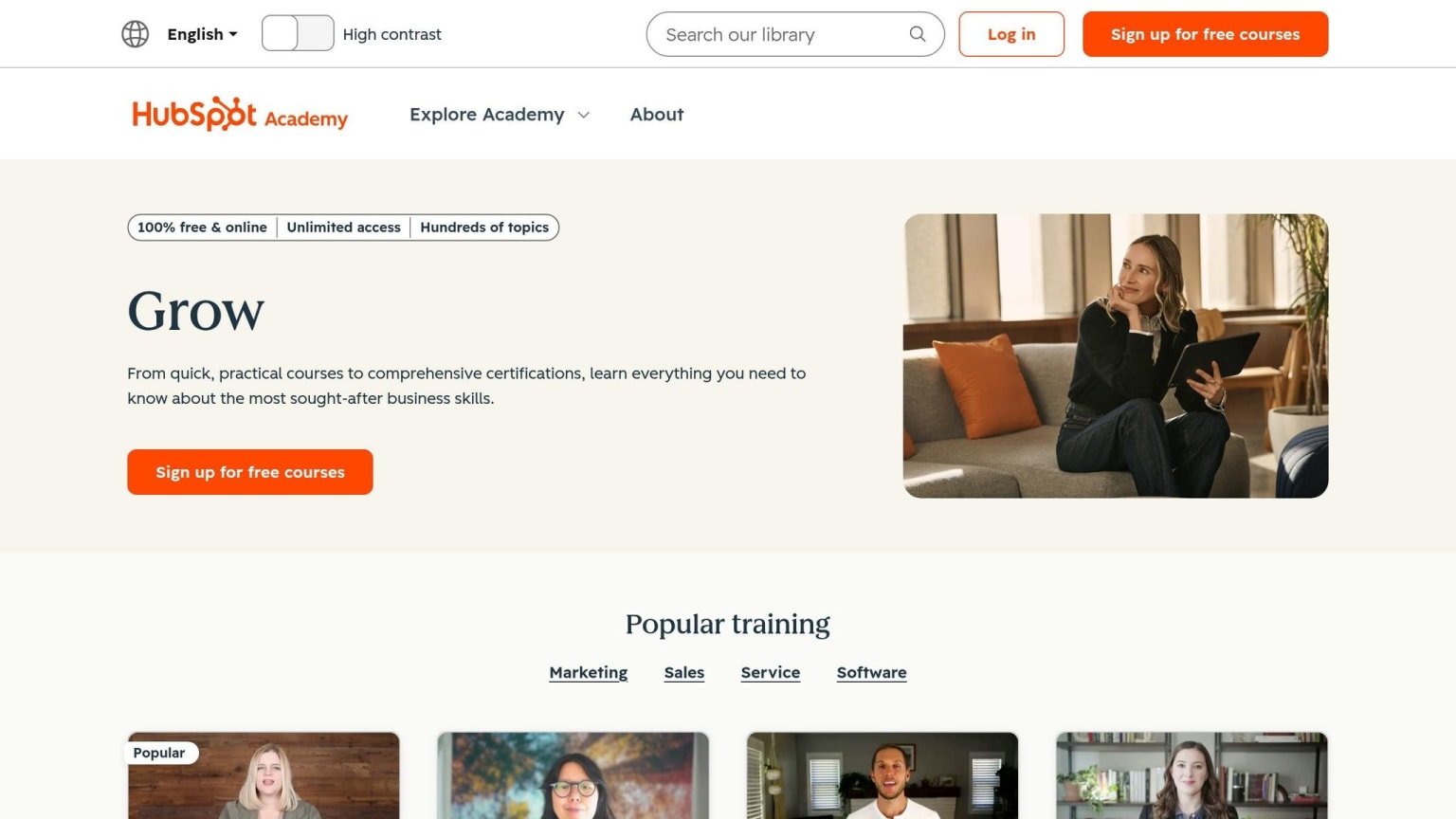
HubSpot provides free certifications, courses, and learning paths . Through its Education Partner Program, students and educators get free access to Pro or Enterprise-level software. This means they can train on the full version of the tool rather than a restricted demo . By removing all barriers to entry, HubSpot enables users to earn certifications in areas like Marketing Hub, Sales Hub, and CMS Hub for Developers without any cost.
This hands-on experience builds confidence, making users more likely to recommend HubSpot when they join companies in need of similar tools. The key difference between HubSpot and AWS lies in their focus. While AWS emphasizes broad technical expertise in cloud infrastructure, HubSpot blends marketing and sales concepts with software training. This approach offers real value upfront, encouraging deeper product commitment and turning learners into enthusiastic advocates.
How to Build a Developer Certification Program
Creating a successful certification program means offering structured learning paths and delivering clear career benefits for participants.
Program Structure and Learning Paths
Developers crave structured learning, but many programs fall short. While 97% of learners want a clear pathway with interconnected modules to master a topic, only 29% of programs currently provide this structure . This gap presents an opportunity: programs with well-organized, progressive modules see much higher completion rates.
Break your certification into step-by-step skill modules. For instance, Chef’s "Learn Chef" online university teaches essential skills like Ruby, Git, and Bash alongside its automation tools . This ensures developers build the foundational knowledge they need to succeed.
Hands-on projects set great programs apart. A whopping 92% of learners prefer assessments or projects to test their skills, but only 34% of programs include these practical elements . Instead of relying solely on multiple-choice tests, challenge developers to solve practical problems using your product. This approach confirms they’ve gained real-world skills - not just theoretical knowledge.
Gamification can also boost engagement. Frogames tripled course completion rates by introducing "Pathways", which gamify learning modules . Offering digital credentials at key milestones keeps developers motivated to progress through the program.
Once the structure is in place, focus on ensuring these certifications provide real-world career benefits.
Creating Value for Developers
Career growth is the ultimate motivator for developers. Certifications need to deliver measurable benefits. The numbers back this up: 96% of learners say earning a digital credential helps their career, and 78% believe it improves their chances of getting a job offer . Without clear career value, developers won’t engage with your program.
Add verifiable metadata to every credential. David Leaser, co-founder of Digital Badge Academy, emphasizes:
"Anybody looking at a badge [or certificate] should be able to understand what it took to earn it, what kind of assessment the person took, what kind of rubrics were used, and all that should be verifiable" .
This transparency ensures employers can easily validate the skills a developer has gained, making the credential more impactful in hiring decisions.
Build a searchable directory of certified professionals. According to Tara Miller, Certification Services Coordinator at Snowflake, 4 out of 5 global employers struggle to find skilled workers. Snowflake addresses this by offering a directory where employers can quickly identify certified professionals . It’s a win-win: 84% of learners want to be listed in such directories , and companies like Workato have seen an 80% increase in learners after launching digital credentials and a branded directory .
Make it easy for developers to share their achievements. UiPath used automated email sequences to encourage certificate sharing, leading to a 26.7% increase in LinkedIn profile updates and a 19.7% jump in LinkedIn shares within just a few months . This not only gives developers professional recognition but also acts as organic marketing for your program.
Certification programs can improve key metrics by 10%–16% across the customer journey . Developers gain career opportunities, while your product benefits from a growing community of skilled users who can champion its adoption within their organizations.
Using Workshops and Bootcamps to Convert Attendees into Users
Workshops and bootcamps are a powerful way to turn interested developers into active users. Traditional marketing methods like conferences or tutorials often result in action rates of less than 1%. In contrast, hands-on events like workshops and hackathons can inspire 5% to 33% of participants to start building with a product . Companies that invest in these experiences often see product adoption increase by up to 10× .
Teaching Through Hands-On Projects
Developers prefer to learn by doing rather than watching . A well-designed hands-on session can compress months of learning into just one or two days, giving participants the confidence to use the product right away . The key is to create challenges that showcase the product’s strengths while addressing real-world problems.
Take the example of a cloud provider’s AI training day in August 2025, held in San Francisco and facilitated by BeMyApp. The event brought together 90 senior developers and engineers from the finance and retail sectors. Participants used the provider’s AI APIs and SDKs to build functional prototypes. Impressively, over 40% of attendees continued using the platform afterward, with several moving forward to launch pilots and full integrations within their companies .
To ensure success, provide immediate technical support through skilled mentors who can help participants overcome challenges quickly. This approach leaves attendees with working prototypes and the momentum to advocate for the product within their organizations .
Striking the right balance is critical: the content should challenge experienced developers while still being accessible enough for quick onboarding . Ricky Diep, Product Marketing Manager for Azure Data and AI at Microsoft, explains:
"I love to run hackathons because it's a really fun way to engage with developers and see what the community can build by giving them the tools within [our product]" .
These hands-on sessions not only teach but also create a natural lead-in for effective marketing strategies.
Marketing Strategies for Workshop Attendance
Once the hands-on learning experience is set, targeted marketing can help convert attendees into loyal users. Focus on developers who are already aware of their technical challenges and are actively evaluating solutions. Use problem-solution tutorials and experience reports to draw interest - showing how your product can address their needs.
Promote workshops where developers already spend their time. For example, submit technical content to Hacker News during U.S. business hours, share concise summaries on niche subreddits, and pitch to curators of developer-focused newsletters. Highlight the unique technical value of the workshop to grab attention.
After the event, follow up strategically. Use surveys, targeted emails, and testimonials to keep the conversation going. Offer additional resources like documentation and support to encourage ongoing development . As Param Birje puts it:
"Hackathons are a great way to explore and learn about the latest tech. The speed at which you enhance your skills by participating in hackathons and working with cutting-edge tech is crazy fast" .
A virtual-first approach can broaden the reach of these events. By eliminating travel barriers, developers from around the globe can participate, creating a pool of "sticky users" who often become internal advocates for the product - driving long-term adoption and growth .
Online Courses and Tutorials for Early-Stage Awareness
Online courses and tutorials are often the first stop for developers exploring new tools. Unlike structured workshops, self-paced content lets developers learn at their convenience - whether during a lunch break or after work. This flexibility is crucial for reaching those who are curious but not yet ready to fully commit.
Reaching More Developers with Self-Paced Content
Self-paced learning removes many of the barriers that might prevent someone from diving into new technologies. Take Google Cloud Skills, for example, which offers over 3,000 resources, from bite-sized tutorials to in-depth, multi-module courses . Developers can pick exactly what suits their needs - whether it’s a quick 15-minute "Codelab" on a specific API or a full course tailored to their role or use case .
One standout feature is the inclusion of hands-on labs using real credentials. Instead of relying on simulations, Google provides temporary access to actual cloud environments, allowing developers to experiment with real-world tools . This approach has proven effective: 80% of developers say earning skill badges through these exercises helps them secure cloud-related jobs more quickly . Software Engineer Nikiya Simpson shared her experience:
"I was able to directly apply the skills obtained by earning skill badges in my career as a software engineer. I know more about cloud infrastructure, logging, and monitoring, and how to create new solutions in ways that make me a better engineer."
The key to success here is focusing on problem-solving rather than product promotion. For instance, a course titled "How to Reduce Onboarding Time" is likely to attract more interest than one called "Introduction to Our Platform" . By addressing developers' challenges first, you build trust and credibility before showcasing your solution.
This approach not only educates developers but also sets the stage for turning them into active users of your product.
Turning Course Participants into Product Users
Once developers are engaged with accessible learning paths, interactive course features help deepen their involvement. Quizzes, coding challenges, and real-world projects allow participants to build functional solutions right from the start, demonstrating immediate value .
Gamification and credentials can also play a big role. Offering verifiable certificates - like Google Career Certificates, which cost $49 per month - provides tangible rewards. Over 70% of graduates from these programs report career advancements, such as promotions, raises, or new jobs, within six months of completing the course . This kind of career impact motivates developers to complete training and continue using the tools they’ve learned.
To make these programs accessible, it’s important to lower the cost of entry. Options like free trials, community programs, and student credits can open the door to more participants . For instance, university students can apply for 200 learning credits to access hands-on labs, while faculty can request up to 5,000 credits . These initiatives create a pipeline of developers who become familiar with your product early on and may advocate for it when they enter the workforce and gain decision-making power.
As with other educational programs, these courses serve as a top-of-funnel strategy, guiding developers from initial curiosity to active use of your product.
Partnering with Universities and Bootcamps
Collaborating with academic institutions creates a direct channel to future developers. Since over 50% of students will eventually shape the technology decisions at their workplaces, introducing them to your tools early can have a lasting impact . Instead of competing for attention later, you can influence their preferences during their formative learning years.
Working with Coding Bootcamps
Coding bootcamps emphasize fast-tracked skill development, so partnerships with them need to offer practical, hands-on value. Instead of one-off lectures, provide resources that instructors can use repeatedly, like standardized project templates, lab guidelines, and reference architectures . These tools help bootcamps incorporate your technology into their teaching, leading to immediate adoption.
A great example is HubSpot's Education Partner Program, which has teamed up with over 1,555 colleges and universities. They provide a full $6,000/month software subscription free of charge to accredited institutions . Faculty members also receive structured teaching materials that align with their courses. Dr. Debra Zahay-Blatz, a Marketing Professor at St. Edward's University, shared her perspective:
"The HubSpot materials reinforce my textbook and help the students apply major inbound marketing methodologies... The certification not only helps the students learn but elevates the quality of class discussion."
HubSpot further supports students through its Micro-Internship Program, created in partnership with Parker Dewey. This initiative connects trained students with companies using HubSpot for short-term, paid projects lasting 15–30 hours . It’s a win-win: students gain real-world experience, and your tools become part of actual business workflows.
Creating University Programs
While bootcamps focus on quick skill-building, universities provide an environment for deeper, foundational learning. By offering isolated lab setups, students can experiment with real-world scenarios - like DNS changes or registrar processes - without the risk of disrupting live systems .
DigitalOcean takes this approach by offering $100 in credits for one year to students through the GitHub Student Developer Pack. These credits let students host group projects and build portfolios, while GitHub's verification system ensures only legitimate students access the perks, maintaining brand integrity and reaching over 5 million students globally .
AWS has also made an impact by hosting a 4-hour workshop for 75 students from a STEM mentorship group. During the session, students developed functional generative AI prototypes, complete with business cases they could showcase in their portfolios . These immersive, hands-on projects leave a lasting impression on students and tie your tools to their career growth.
To make the most of university partnerships, focus on supporting portfolio projects, offering industry-recognized certifications, and creating capstone challenges . When your tools align with these educational goals, they naturally become part of students' learning journeys. As graduates move into the workforce, they carry that familiarity with your technology, influencing its adoption in their future workplaces.
Measuring ROI from Developer Education Programs
Investing in developer education programs is more than just a goodwill gesture - it’s a strategic move that can yield measurable results. Companies with structured education initiatives report 23% higher product adoption and 31% lower churn . However, the real challenge lies in tracking the right metrics to prove their value and move beyond assumptions.
Metrics to Track
To start, focus on learning activity metrics such as course enrollments, completions, and certifications. These numbers reflect user engagement. For example, structured learning paths lead to 3.1x higher completion rates compared to standalone videos . While engagement is a good sign, it’s essential to tie these efforts directly to product outcomes.
One critical metric is feature adoption. Compare usage patterns between educated and non-educated users. A compelling case study comes from SuccessAcademy, which introduced a 12-course certification program in July 2025. Under VP Lisa Park’s leadership, feature adoption jumped from 31% to 67%, churn dropped from 7.1% to 4.2%, and support tickets decreased by 51%. This initiative generated $340,000 in annual value from just an $8,200 investment .
Another key measure is Product Qualified Leads (PQLs) - developers who hit specific technical milestones. PQLs convert at rates 3-5x higher than traditional leads . For instance, as of August 2025, Datadog defines a PQL as a user who sends at least 100 monitoring events and remains active for over seven days, achieving a 22% conversion rate from PQL to paid user .
Also, track Time to First Value (TTFV), which measures how quickly users derive value from your product. Aim for under 15 minutes for freemium models and under 30 minutes for trials . Additionally, monitor support ticket volume - education programs can reduce tickets by 47%, especially since 68% of tickets typically involve "how-to" questions that education can preemptively address . Calculate ROI by multiplying the ticket reduction by the average cost per ticket.
Finally, don’t just stop at initial engagement. Long-term cohort analysis can provide a clearer picture of sustained program impact.
Analyzing Long-Term Impact with Cohort Data
Cohort analysis is a powerful tool for understanding the lasting effects of education programs. Segment users into "educated" and "non-educated" groups. For instance, users who complete onboarding programs show 87% retention after the first month, compared to just 62% for non-educated users .
Retention should be tracked at key milestones: Week 1 (first integration success), Month 1 (project deployment), Month 6 (workflow establishment), and Year 1 (platform dependency). For developer tools, typical retention benchmarks range from 40-60% in Week 1, dropping to 10-20% by Year 1 . Educated users should outperform these averages significantly.
To refine your analysis, use unique attribution methods like QR codes or short links for events such as webinars. This allows you to connect attendance directly to product signups and calculate cost per conversion rather than relying solely on attendance numbers .
Lastly, consider Net Dollar Retention (NDR), which averages 110-130% for developer tools. This metric is often driven by usage expansion rather than new user growth. Educated users are likely to contribute more to this expansion over time .
Promoting Education Programs Through daily.dev Ads
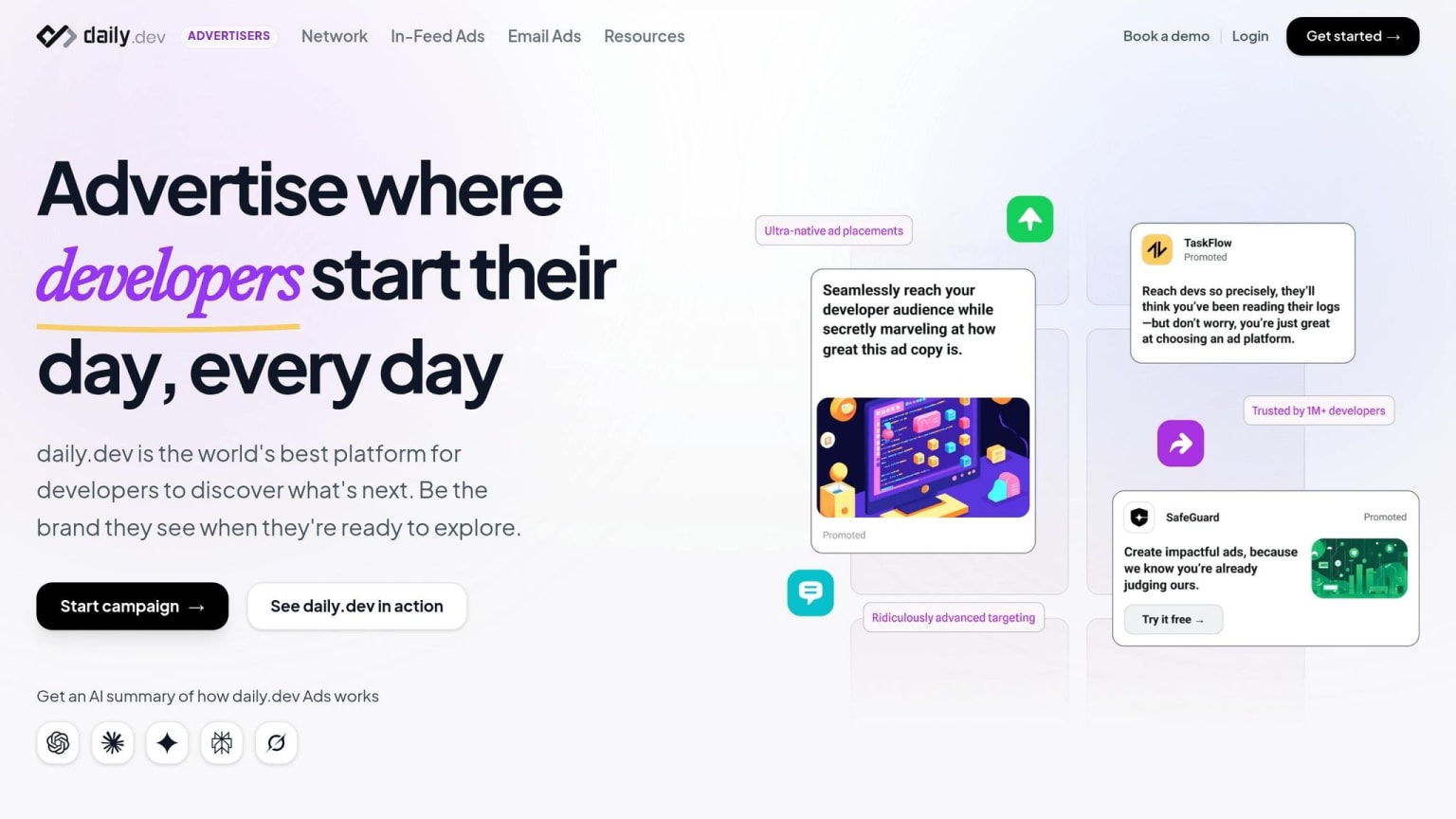
Once you've crafted your education program, the next step is connecting with developers eager to learn. daily.dev Ads provides a direct line to over 1 million active developers who regularly consume technical content. By placing your courses, certifications, or workshops in front of developers in an environment where they’re already seeking knowledge, daily.dev Ads offers a natural way to promote educational opportunities. It also builds on the measurable returns outlined earlier by expanding the reach of your initiatives.
Targeting Developers by Skills and Interests
With daily.dev Ads, you can target developers based on their tech stack, seniority, and specific interests. This precision is especially useful for promoting niche education programs. For example, if you're offering a Kubernetes certification, your ads can reach developers focused on container orchestration and cloud infrastructure. Similarly, you can tailor your campaigns by experience level - offering foundational courses to junior developers and advanced certifications to senior engineers. This approach helps you allocate your budget effectively, focusing on audiences most likely to enroll.
To measure success, track both leading metrics (like click-through rates and traffic to your educational pages) and lagging metrics (such as program completion rates and conversions). Use UTM links to pinpoint which ad creatives drive the most qualified signups. Additionally, qualitative feedback from developers can provide valuable insights, especially when numbers alone don’t tell the whole story.
By integrating daily.dev Ads into your education strategy, you can leverage targeted efforts to enhance your program's ROI. The platform also offers in-feed ad placements, seamlessly blending your content into developers' daily reading habits.
Using In-Feed Ads to Promote Educational Content
In-feed ads appear directly within developers’ content streams, making them feel like a natural part of the experience. This placement ensures your educational offerings are seen as relevant resources. For instance, a developer reading an article about React might encounter an ad for your React certification program - timely and relevant.
To maximize results, direct your campaigns toward high-intent pages like detailed certification descriptions, workshop signups, or course syllabi. These pages typically convert better than generic homepages. Beyond clicks, keep an eye on metrics like time spent on the page and enrollment rates to measure deeper engagement. Aiming for a 5:1 ROI - earning $5 for every $1 spent - is a solid benchmark. To calculate your Marketing Return on Investment (MROI), use this formula:
(Marketing Value - Marketing Cost) / Marketing Cost .
Conclusion
Developer education marketing offers a direct route from awareness to adoption by connecting with developers eager to expand their knowledge and skills. Through certifications, workshops, and courses, it addresses the skepticism many developers feel toward traditional marketing by providing genuine technical value. As Katie Miller, Director of Developer Marketing at Slack, shared about a developer marketing course:
"The best way to sum up this course is - I wish it had existed when I started my developer marketing journey. It's comprehensive, yet thoughtful, tactical and easy to navigate..." .
This insight highlights why education programs resonate - they focus on delivering practical, actionable skills rather than empty marketing promises.
Concrete results back this up. For instance, Kasten by Veeam attracted over 7,000 qualified leads with a free Kubernetes training course, while Codefresh awarded more than 1,000 GitOps certifications through its platform . These successes stem from understanding how developers make decisions: they value hands-on experience and technical depth over sales-driven messaging. As industry experts emphasize, failing to engage developers effectively can mean missing out on substantial opportunities .
To overcome these engagement hurdles, targeted promotion is essential. daily.dev Ads fills this need by connecting education programs with over 1 million developers who regularly consume technical content. By focusing on factors like tech stack, seniority, and interests, the platform ensures certifications and workshops reach the right audience. Its in-feed ads integrate seamlessly with developers' daily routines, presenting educational opportunities as valuable resources rather than distractions.
FAQs
How do I choose between tutorials, courses, workshops, and certifications?
Choosing the right format depends on your goals and how much engagement you’re aiming for.
- Tutorials are perfect for offering quick, practical solutions. They’re great for earning trust by showing immediate value.
- Courses provide a more structured way to dive deeper into a topic, helping learners gain a thorough understanding.
- Workshops focus on hands-on experiences, making them excellent for turning participants into active users.
- Certifications serve as proof of skills, boosting credibility and confidence.
By combining these formats, you can effectively guide developers through different stages - awareness, learning, and adoption.
What should a developer certification program include to be credible?
A trustworthy developer certification program needs a well-defined structure, a compelling reason for its existence, and credentials that are widely acknowledged. It should feature skill-based assessments to verify expertise and use analytics to maintain both quality and relevance. These components build confidence in the program and highlight its practical value.
Which metrics prove developer education is driving product adoption?
When it comes to measuring how developer education impacts product adoption, several key metrics stand out:
- API Call Frequency: A higher number of API calls indicates that developers are actively using and integrating your product.
- SDK Implementation Rates: Tracking how often developers implement your SDK shows how effectively they’re adopting your tools.
- Feature Activation: This metric highlights whether developers are exploring and using product features after learning about them.
- Onboarding Completion: Successful onboarding completion rates suggest that educational efforts are helping developers get started smoothly.
- Documentation Views: Increased views of your documentation often reflect developers engaging with your resources to solve problems or learn more.
- Sandbox Sign-Ups: A rise in sandbox sign-ups signals interest in trying out your platform in a risk-free environment.
These metrics collectively paint a clear picture of how education programs drive engagement and encourage developers to adopt your product.