

Want your open source project to gain traction without alienating your community? Here's how.
Open source marketing is about making your project easy to find, use, and trust - without relying on pushy tactics. Developers value transparency, clear documentation, and organic discovery over traditional ads or flashy promotions. Missteps like overly commercial messaging or restrictive licensing can erode trust quickly.
Key Takeaways:
- Build trust first: Ensure your project has clear documentation, transparent licensing, and visible security practices.
- Focus on organic discovery: Optimize GitHub visibility, engage in curated communities, and use platforms like daily.dev.
- Tell your story: Frame release notes and updates as narratives to engage users.
- Monetize respectfully: Offer opt-in paid options like hosted services or support contracts without compromising the open-source ethos.
The goal? Grow your project by aligning with developer values while maintaining community trust. Let’s dive into the details.
Building Trust With a Strong Legitimacy Stack
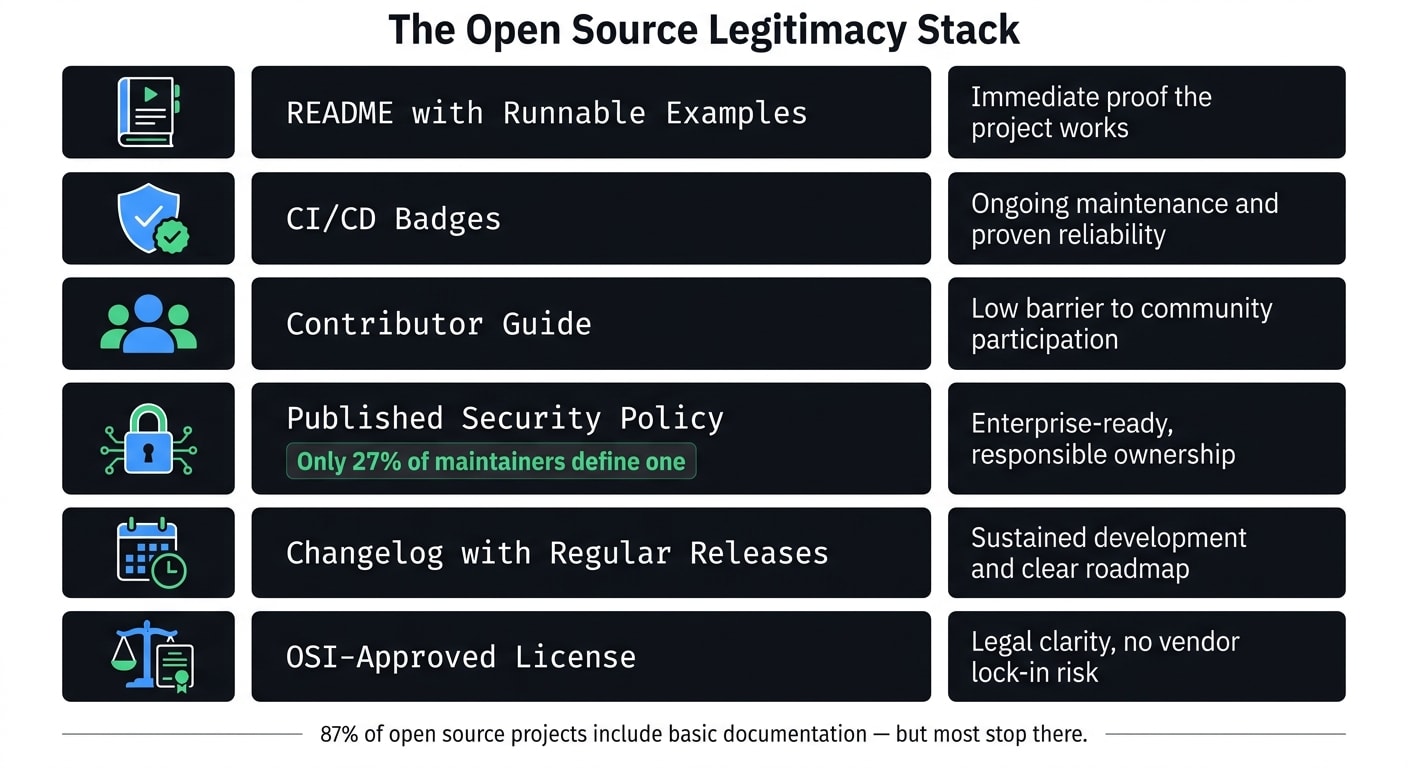
Before you start promoting your project, you need to ensure it's something people can confidently adopt. That’s where the idea of a "legitimacy stack" comes in - a set of signals that assures developers your project is dependable. This stack forms the backbone of organic growth and community trust. Without it, even the best promotional efforts will fall flat.
The Role of Documentation and Transparency
Your README is often the first thing developers see, and it plays a bigger role in marketing than many project maintainers realize. Louis Corneloup, Founder of Dupple, emphasizes this point:
"Documentation produces more pipeline than the marketing site. Good docs = runnable examples, clear error handling, honest edge-case coverage."
Ask yourself: Can a developer get a working "Hello World" running within five minutes of discovering your project? If not, that’s where you need to start. Beyond the README, a clear contributor guide helps reduce barriers for those who want to get involved, and a well-maintained changelog shows the project’s progress and future potential. While 87% of open source projects include basic documentation , most stop there. Going beyond the basics with thorough, honest documentation can set your project apart.
Governance and Licensing as Trust Signals
Clear licensing is essential for enterprise adoption. An OSI-approved license reassures users that they won’t face legal risks or vendor lock-in. Deviating from this can have serious consequences. Projects like Redis, MongoDB, Elastic, and HashiCorp learned this the hard way when they shifted to more restrictive licenses. The backlash included community forks, loss of contributors, and reputational harm.
As Aleksandra Mitroshkina, Director of Solutions Marketing at Percona, explains:
"Transitioning from a permissive license to a more restrictive one can help prevent competitors from exploiting the software for profit, but it also risks alienating the community that contributed to the project's success."
Governance is equally important. When roles and responsibilities - like who reviews pull requests, decides on releases, or resolves conflicts - are clearly defined, it signals stability. This predictability is a key factor for enterprise teams when deciding whether to rely on your project. Strong governance also lays the groundwork for effective security practices.
Security and Reliability Practices That Build Confidence
Good governance pairs naturally with strong security practices to solidify your project’s credibility. One of the most impactful steps a maintainer can take is publishing a security policy. Despite its importance, only 27% of maintainers currently define one , leaving a big opportunity for those who do. A clear policy outlining how vulnerabilities are reported and handled directly addresses a major concern for enterprise users.
Tatiana Krupenya, CEO of DBeaver, highlights the tension around security in open source:
"Security is a controversial topic for open source projects... companies often demand a single point of contact to handle possible issues and integration difficulties, which directly contradicts the open source model of shared responsibility."
Additional signals like CI/CD badges, test coverage, and a consistent release schedule further reinforce trust. These elements aren’t just about technical upkeep - they’re visible markers of active maintenance and reliability.
Here’s what a complete legitimacy stack might look like:
| Component | What It Signals |
|---|---|
| README with runnable examples | Immediate proof the project works |
| CI/CD badges | Ongoing maintenance and proven reliability |
| Contributor guide | Low barrier to community participation |
| Published security policy | Enterprise-ready, responsible ownership |
| Changelog with regular releases | Sustained development and clear roadmap |
| OSI-approved license | Legal clarity, no vendor lock-in risk |
Discovery Channels That Get Your Project Found
Once you've established trust, the next step is making sure developers can actually find your project. Discovery channels play a big role here, working alongside your trust signals to encourage natural adoption. Let’s dive into strategies for boosting visibility on code hosting platforms, engaging curated communities, and leveraging daily.dev for content amplification.
Getting More Visibility on Code Hosting Platforms
GitHub is a go-to destination for developers searching for new tools, so optimizing your presence there is crucial. Start by using relevant GitHub topics - these act like searchable tags, helping your project show up when developers filter by language or specific use cases. Additionally, tagging beginner-friendly issues with labels like good first issue or help wanted can attract contributors. These labels are indexed by GitHub’s discovery tools, making it easier for people to find projects where they can get involved.
Making it onto GitHub Trending is trickier since it relies on organic momentum. However, a well-coordinated release announcement - shared across your community channels on the same day - can create a surge in stars and forks, potentially landing your project on the trending page. For instance, Hono, a lightweight web framework, successfully used this tactic to gain visibility and sustain interest well after its launch.
But GitHub isn’t the only place to focus. Curated communities can also amplify your reach.
Getting Featured in Curated Communities and Newsletters
Developers often rely on curated platforms like Hacker News, awesome lists, and language-specific newsletters to discover new tools. On Hacker News, the "Show HN" format is a great way to introduce your project. This approach invites authentic feedback from an active technical audience. To make an impact, frame your post around a specific problem your project solves, such as, "How we reduced Kubernetes alert noise by 80% with [Project]", rather than just pitching how great your tool is.
Newsletters are another powerful channel. Publications like the Cooperpress network (JavaScript Weekly, Node Weekly, Rust Weekly) and independent ones like Bytes (reaching 200,000 JavaScript developers), Changelog (80,000 open-source engineers), and Console Dev (40,000 devtools-focused developers) are worth targeting . Curators often source content from popular Hacker News posts, Reddit threads (e.g., r/javascript or r/python), and GitHub discussions. When submitting to these newsletters, avoid overly promotional language - terms like "seamless" or "enterprise-grade" can turn off developer-focused audiences .
Using daily.dev to Reach Engineers With Your Project Content
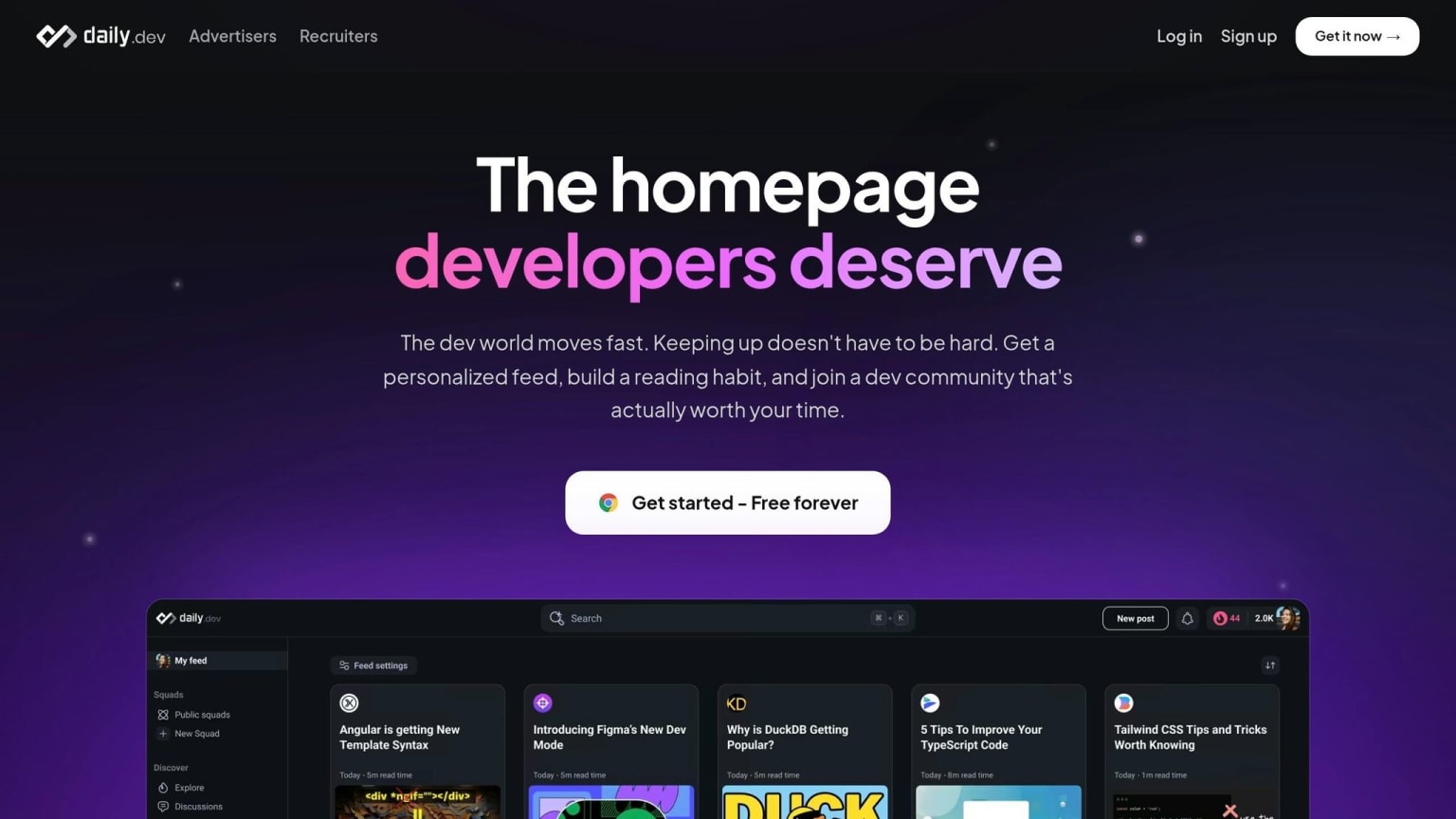
With over 1 million developers using daily.dev, this platform is a goldmine for sharing technical content like release notes, RFCs, design documents, and project updates. Since daily.dev integrates directly into developers’ feeds, your content feels like a natural part of their ecosystem rather than a traditional ad.
To expand your reach, you can use daily.dev’s Post Boost for updates like major releases or Squad Boost to build a dedicated community hub for your project. These boosts use the platform’s internal currency, Cores, with a minimum daily budget of 5,000 cores . The platform’s recommendation engine targets your content based on user tags, reading habits, and engagement patterns. For projects introducing new categories, Tag Page Takeovers allow you to pin a banner at the top of relevant tag feeds, such as #observability or #devsecops . Importantly, all boosted content is clearly marked, maintaining transparency and trust within the community .
Story-Driven Marketing: Turning Your Work Into Content
Your projects aren't just tools - they're stories waiting to be told. By tapping into the stories behind your work, like release notes, design decisions, or incident reports, you can transform them into impactful marketing content that resonates with your audience.
Writing Release Notes That People Actually Read
Skip the dry feature lists. Developers want more than a bullet-point summary - they want a story. Focus on framing release notes as a narrative: What was the challenge? How did you solve it? What measurable improvements does it bring?
This structure does two things: it helps current users see the value of upgrading, and it gives prospective users a reason to take notice. For even greater impact, include a small code snippet that delivers results in under five minutes. This turns your release notes into a mini onboarding tool .
When release notes are written by engineers themselves, they carry a level of credibility that's hard to replicate with polished, generic copy. That authentic voice makes the content more relatable and trustworthy .
This storytelling approach isn't limited to release notes - it can elevate all your project communications.
Using Open RFCs and Postmortems to Show Your Process
Publishing an open Request for Comments (RFC) before major changes sends a clear message: your project is built with care and thoughtfulness. For developers deciding whether to rely on your library, that transparency can be a game-changer.
When sharing a design document, lead with the data and code that informed your decisions. This approach invites meaningful community input and demonstrates your problem-solving process, not just the end result . Similarly, postmortems can be powerful tools. By documenting what went wrong, why it happened, and how you fixed it, you show a level of operational maturity that experienced engineers value in a dependency.
These practices build trust and set the stage for celebrating your project's achievements.
Sharing Milestones and Community Wins
Publicly celebrating milestones is more than just a pat on the back - it’s a way to show your project’s real-world impact. Whether it’s a new integration, a first-time contributor's pull request, or a team maxing out your free-tier usage, these moments signal that your project is solving real problems .
Share these wins in your changelog, on social media, or in your project's Discussions. It keeps your community engaged and provides natural, unforced social proof for potential adopters. For example, a post like "We just hit 10,000 weekly downloads on npm - here's who's using it and how" is far more compelling than a standard feature announcement. These stories connect with people in a way that raw numbers or technical specs never could.
Monetization Paths That Do Not Alienate Your Contributors
Monetizing an open source project is a balancing act. It needs to fund the work behind the community without breaking the trust that holds it together. If handled poorly, years of trust can crumble overnight.
Monetization Models That Respect the Open Source Ethos
When done right, monetization aligns with the open source spirit. The key? Keep it opt-in. Let users and contributors decide if the commercial offering is worth their investment.
A common approach is starting with a free tier, then layering paid options for those with advanced needs. Take Supabase and PostHog as examples - they grew their open source communities first, then introduced hosted services once adoption was solid. This hosted or SaaS model is especially helpful for tools like databases, monitoring systems, or authentication platforms, where managing them yourself can be a real headache .
Other respectful monetization paths include platforms like GitHub Sponsors and Open Collective, which allow individuals and companies to support your work directly without changing licenses or governance. Support contracts are another straightforward option - companies pay for perks like faster response times or prioritized issue handling, which caters to enterprise-level demands .
Anti-Patterns to Avoid When Commercializing
Some missteps can quickly erode trust. Monetizing too soon, before the project has a solid foundation, can signal misplaced priorities. Developers are quick to notice when revenue becomes the focus over community needs. Similarly, relying on automated documentation or filling your README with buzzwords can come across as disingenuous. Developers value clarity and authenticity, and anything less can harm your credibility .
Communicating About Money Openly and Clearly
Transparency is your ally when introducing monetization. Just as clear documentation fosters trust, being upfront about financial decisions strengthens that bond. Founders and senior contributors should communicate changes directly and plainly. Use your README, blog, or other channels to explain why monetization is necessary and how the funds will be used - whether for infrastructure, maintainer salaries, or security improvements.
For instance, a simple note explaining that a new hosted tier allows a maintainer to work on the project full-time often resonates better than a polished press release about "expanding commercial offerings." Engaging the community through open discussions - on GitHub or elsewhere - shows that you're working with them, not just profiting from them. This openness helps ensure that monetization feels like a shared step forward, not a departure from the project's roots.
Conclusion: Growing Your Project Without Compromising What Makes It Good
Projects like Hugging Face, Resend, Hono, and Tauri have one thing in common: they prioritized trust before monetization. Whether it’s through building a solid legitimacy stack or carefully selecting discovery channels, these steps highlight how trust within a community leads to genuine adoption. Transparent documentation and engaging authentically with your community are the bedrock of long-term growth.
In recent years, the industry has leaned heavily on open source communities as a launchpad for developer tools before introducing monetization . The standard today? Product-led growth with a free tier and self-serve access. It’s no longer a bonus - it’s what developers expect. They don’t want sales pitches; they want to test your code in minutes and make their own decisions.
What sets you apart is clarity. Clear documentation, dependable releases, an open roadmap, and straightforward discussions about pricing are what foster lasting adoption. As Hackmamba wisely put it:
"If a developer has a problem and your product solves it, they will choose it. The issue is not the channel, the issue is that most advertisement campaigns for developers are written by marketers who do not understand developers." - Hackmamba
FAQs
What’s the minimum “legitimacy stack” I need before promoting?
Before you start promoting your project, make sure it has a solid legitimacy stack in place. This includes essentials like a clear README, predictable release schedules, transparent governance, clear licensing, and reliable security disclosures. Your documentation should also feature runnable examples and openly address edge cases, helping new users get started with ease. If any of these elements are missing, prioritize completing them first - promotion is far more effective when users trust your project and find it easy to use.
How do I increase GitHub discovery without sounding salesy?
Boosting GitHub discovery is all about building trust and connecting with the community. Start by showcasing your project's credibility with clear documentation, regular release schedules, and open governance practices. Treat your README, issue tracking, and project roadmap as tools to naturally promote your work.
Make it easy for others to join in. Provide guidance on how contributors can get involved, transforming casual users into active collaborators. Share engaging, story-driven updates - like detailed release notes or design documents - that offer insight into your project's journey. To reach a broader audience, tap into community-driven platforms, such as language-specific newsletters or forums. These steps can help your project gain visibility while fostering a genuine connection with its audience.
What’s the safest way to monetize without triggering community backlash?
To monetize effectively while maintaining goodwill within your community, prioritize building trust and choosing options that align with long-term goals. Consider approaches like hosted services, sponsorships, or offering support contracts. Steer clear of sudden license changes or rushing into commercialization, as these can alienate your audience.
A good starting point is to offer a free, self-serve tier. This allows users to engage with your product while feeling respected and valued. Ensure your strategy is clear, aligns with community expectations, and genuinely delivers value. Developers tend to respond better to honest communication and solutions that address their needs, rather than pushy sales tactics.