
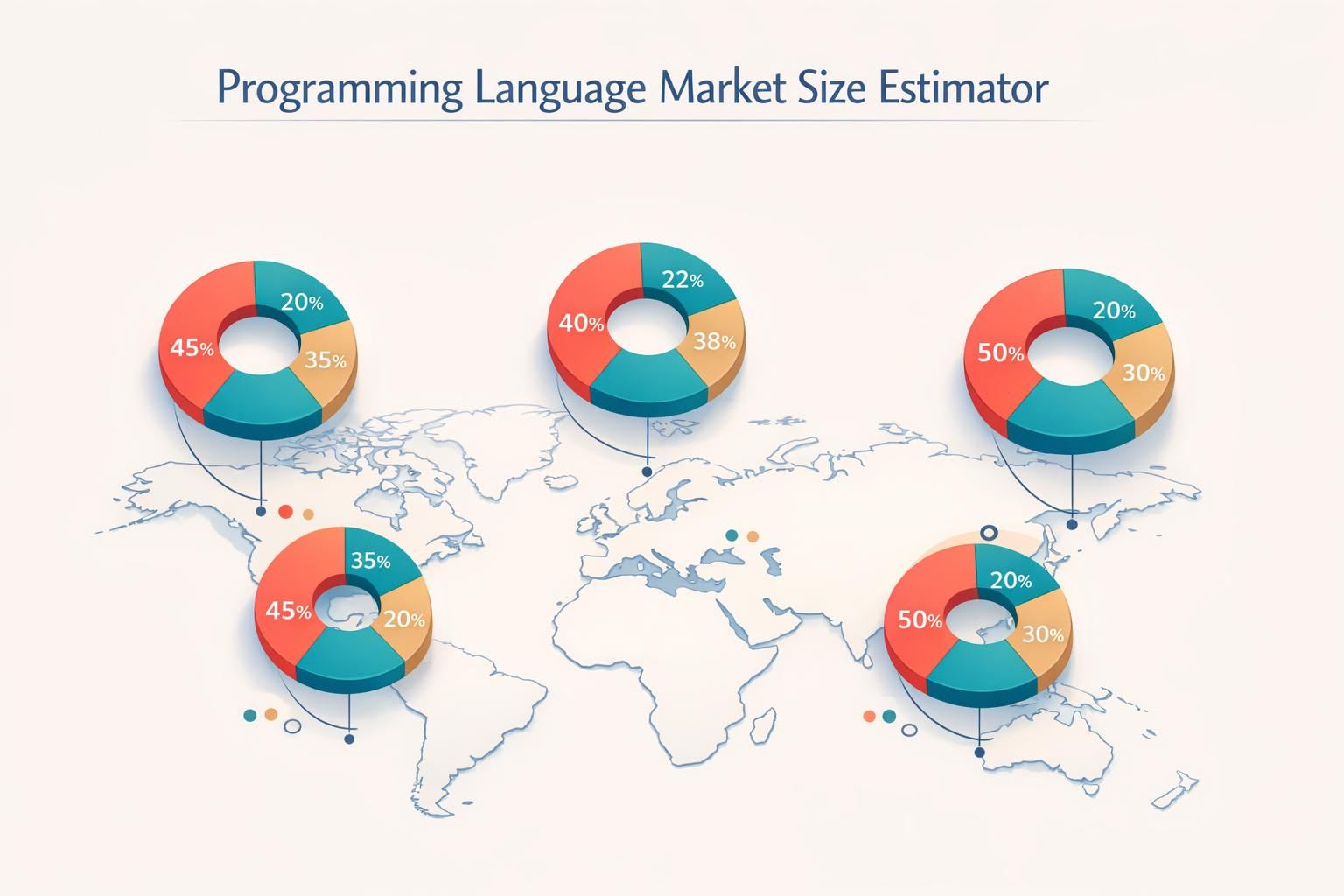
Discover Trends in Coding with Our Market Size Estimator
In today’s fast-evolving tech landscape, understanding the dominance of certain programming languages can shape career paths and business strategies. Whether you're a developer weighing options or a company planning tech investments, knowing which tools lead the industry is invaluable. Our Programming Language Market Size Estimator provides a quick, user-friendly way to explore the popularity of languages like Python or JavaScript across different regions.
Why Popularity Matters
The tech world thrives on adaptability. A language’s market presence often ties to its ecosystem—think vast libraries, community support, or specific use cases like AI and web development. For instance, some languages gain traction in particular areas due to local industry demands, making regional insights just as critical as global stats. With our estimator, you get a glimpse into these patterns without diving through endless reports.
Beyond the Numbers
While raw data is helpful, context is key. Pairing estimated user bases with brief insights, this tool helps you see not just how many but why a language matters. Stay ahead of the curve by exploring software development trends today, and make decisions that align with the future of tech.
FAQs
How accurate is the market share data in this tool?
Our data is based on mock estimates derived from industry reports and trends up to 2023. While not real-time, it reflects realistic approximations of programming language popularity. Think of it as a starting point for research—perfect for strategic planning or curiosity, though for precise, up-to-date stats, you'd want to consult live surveys like Stack Overflow’s Developer Survey.
Why do market shares vary by region?
Different regions often prioritize certain technologies due to local industry needs. For instance, Python might have a higher share in North America because of its heavy use in data science and AI hubs. Meanwhile, Java could dominate in Asia due to its prevalence in enterprise and mobile app development. Our tool adjusts the numbers slightly to mimic these real-world variations.
Can I use this tool to decide which language to learn?
Absolutely, though it’s just one piece of the puzzle. This tool shows you which languages are popular and where, which can hint at job opportunities or community support. Pair this with your interests—like web dev for JavaScript or AI for Python—and check job boards to see what’s in demand. It’s a solid way to narrow down your options.