
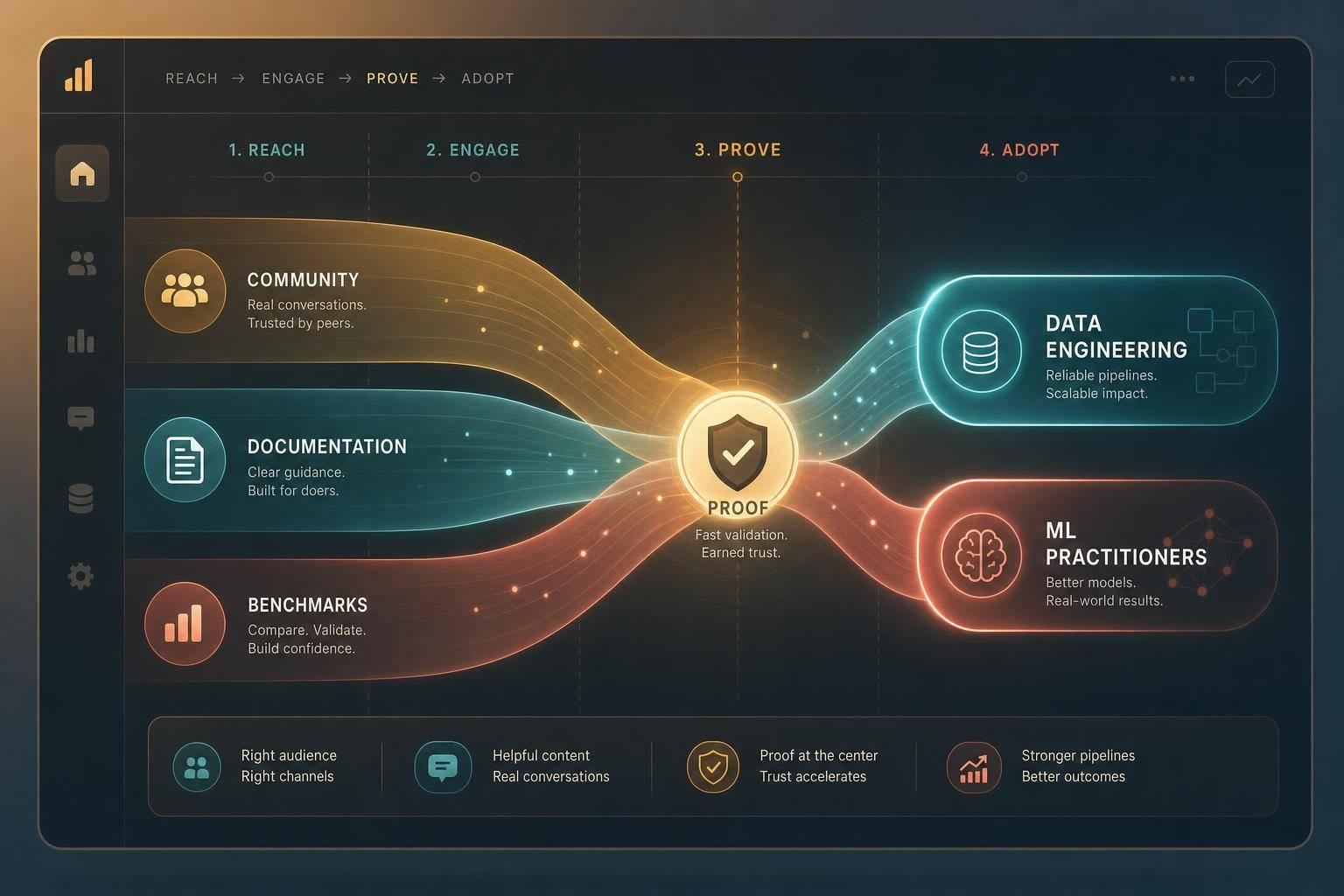
If you want to reach data engineers and ML practitioners in 2026, skip broad ads and show up where they already vet tools.
I’d boil the article down to this: use role-specific channels, show proof fast, and match the message to the job. Data engineers and ML practitioners may both care about pipeline health, reliability, model deployment, and cost. But they do not look for the same proof or spend time in the same places.
Here’s the short version:
- Data engineers tend to pay attention in places like dbt Slack, r/dataengineering, and niche newsletters.
- ML practitioners tend to spend more time in MLOps Community, workflow-driven spaces, and hands-on product trials.
- Newsletter and podcast sponsorships can work when the audience is narrow and already evaluating tools.
- Sponsored coding challenges can get 20 to 40 minutes of focused product use.
- Big display buys usually miss because this market is small, and ad-block use is often above 50%.
- Conference timing and release cycles matter because buyers often look at tools during migrations, upgrades, and stack reviews.
- Copy has to be specific: uptime, latency, cost, drift, migration work, and tradeoffs.
A few numbers stand out:
- r/dataengineering: 240,000+ members
- MLOps Community: about 30,000 members
- Data Engineering Weekly: about 25,000 subscribers
- Newsletter sponsorships: about $500 to $5,000 per send
- Podcast sponsorships: about $1,000 to $8,000 per episode
- Community events: about $20,000 to $100,000
- daily.dev: 1 million+ developers
| Audience | Where I’d focus | What tends to work |
|---|---|---|
| Data engineers | dbt Slack, Reddit, data newsletters | Benchmarks, migration notes, code-heavy demos |
| ML practitioners | MLOps groups, hands-on product spaces | Trials, coding challenges, workflow-based proof |
The main idea is simple: don’t chase reach for its own sake. I’d put budget into places where practitioners already compare tools, ask hard questions, and test claims against their own stack.
Where this audience actually spends time
This audience checks out tools in the places where their peers already talk shop: Slack, Reddit, newsletters, and podcasts. That’s why broad display ads usually fall flat. The people you want aren’t idly browsing. They’re in places where they can ask hard questions, compare notes, and pressure-test claims.
Community and discussion channels
The dbt Slack #i-made-this channel is a live proving ground for analytics engineers and data engineers. People share tools there, but they also get picked apart in public. That peer pressure matters.
r/dataengineering with 240,000+ members is another key spot for Q&A and tool comparisons . And the MLOps Community with ~30,000 members across Slack and its newsletter draws production ML practitioners who follow deployment and drift tooling .
These aren’t casual hangouts. People use them to solve implementation problems and validate tools before they make a call. So trust has to be built in context. A technical post, walkthrough, or demo needs to stand up when other practitioners start digging into it.
The same thing happens in newsletters and podcasts. The audience is already screening for technical fit, which changes how they pay attention.
Newsletters, podcasts, and editorial media
Data Engineering Weekly with ~25,000 subscribers and the MLOps Community Newsletter are trusted reads for people tracking releases, migrations, and changes across the ecosystem . If you sponsor a vetted newsletter, you’re showing up in front of readers who are already watching their stack shift.
The Data and Databases Digest track can play a similar role for data infrastructure readers. Typical pricing lands between $500 and $5,000 per send .
Podcasts work in much the same way, especially when the audience is hands-on. Shows like the Data Engineering Podcast reach people who are actively building, not just window-shopping. Sponsorships usually cost $1,000 to $8,000 per episode .
Conferences, meetups, and release cycles
Events like dbt Coalesce, Snowflake Summit, and MLOps World are strong attention points for practitioners comparing stacks and weighing migration risk . People show up to see what changed, what’s worth switching to, and what might break if they move too fast.
Release cycles matter too. A major launch can trigger a burst of attention: teams start checking benchmarks, planning upgrades, and thinking through migration risk. Those moments matter most when they line up with an actual product decision or a migration already on the table.
Channels that work for each practitioner type
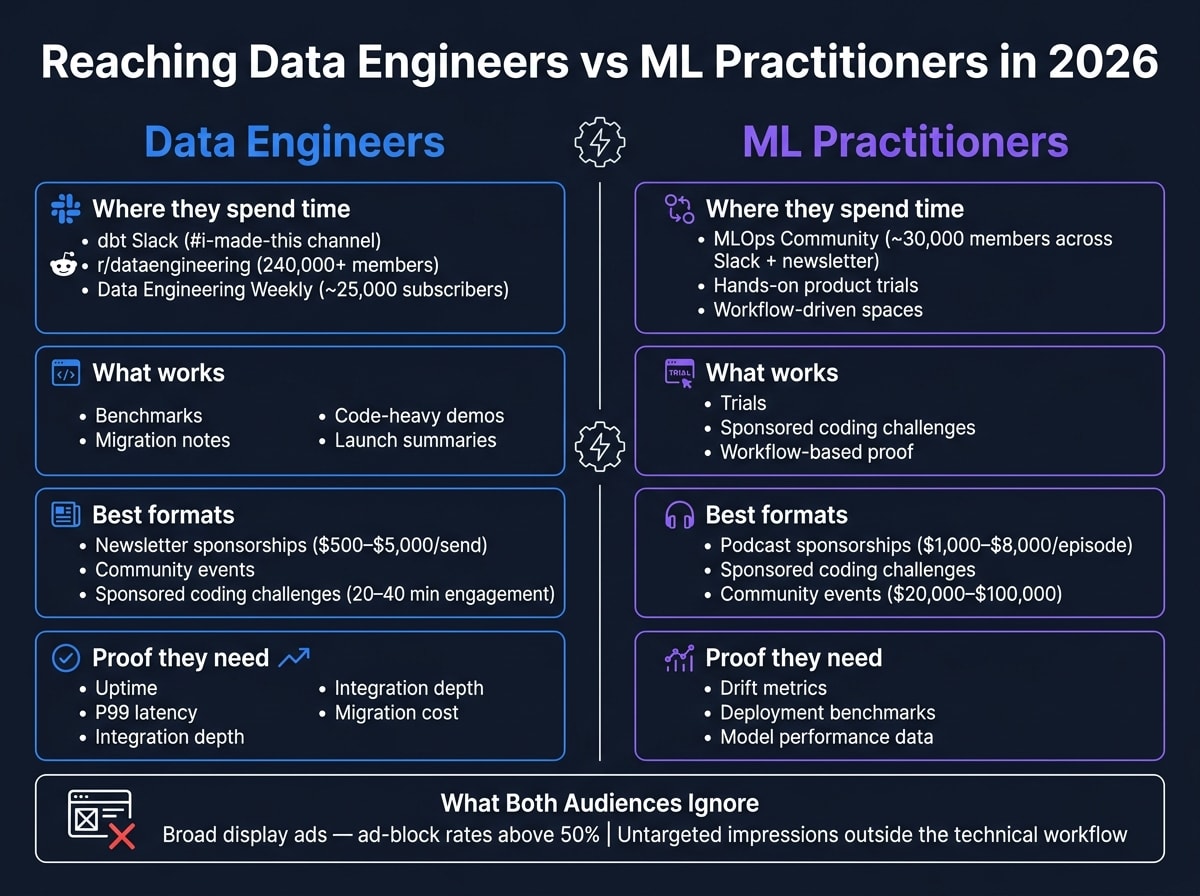
Where people spend time matters. But format matters even more.
Different groups look for different kinds of proof. And this section is about data infrastructure buyers, not LLM app builders. So the job here is simple: match each channel to the kind of proof each role needs before they’ll try a tool.
What works for data engineers
Data engineers respond to channels that show working code and real implementation detail.
That’s why dbt Slack, r/dataengineering, and vetted newsletters like Data Engineering Weekly tend to work. These places let tools get judged in context, by peers working in dbt, Spark, warehouse, and observability workflows.
For newsletters, the angle matters. A launch summary, benchmark, or migration note fits. A brand-heavy pitch usually doesn’t. Launch posts make sense only when the product has a clear technical hook and a concrete demo.
What works for ML practitioners
If data engineers want proof out in the open, ML practitioners want proof inside the workflow.
They respond best to channels where they can try the product directly, especially in MLOps, model deployment, and drift monitoring settings. Sponsored coding challenges work well because practitioners get to use the product instead of just reading about it. That creates focused attention and a better test of fit.
Format-to-channel comparison table
| Format | Best Use Case | Strengths | Limitations |
|---|---|---|---|
| Sponsored coding challenges | Product evaluation | 20–40 minutes of deep engagement | Limited inventory; needs realistic data |
| Newsletter sponsorships | Awareness & launches | High trust; broad awareness | Single impression; quality varies by publisher |
| Podcast placements | Brand building | Borrowed host credibility | Hard to measure direct conversion |
| Community events | Hands-on adoption | Direct interaction with the people who evaluate, integrate, and maintain the tool | High cost ($20,000–$100,000); long attribution cycle |
These formats work because they reward relevance. Broad, untargeted impressions don’t.
Why display advertising fails with this audience
Standard display tends to underperform with this audience for a simple reason: it tries to buy attention outside the technical workflow. These buyers size up tools while working through actual pipeline and model problems, not while casually browsing ads.
Why broad reach wastes budget
The senior data engineering market is small and concentrated. So broad display often spends money reaching people who aren’t buyers. On top of that, data engineers and ML practitioners block ads at rates above 50%, which means a lot of impressions never even render.
What actually gets their attention
The answer isn’t more impressions. It’s better context.
What works is context-rich placement inside technical workflows. A placement in Data Engineering Weekly or the Data and Databases Digest track reaches readers when they’re actively sizing up tools, and vetted-audience newsletter sponsorships can outperform display advertising by 5 to 10 times on attributed conversions for B2B developer-tool campaigns .
"Reach in developer advertising isn't about total impressions - it's about impressions inside the workflow." - Idlen
A placement in the Data and Databases Digest track reaches readers who are already comparing tools. That context should shape both the message and the placement.
Build your message and media plan
Write for technical credibility
Once you know where your audience reads, the next job is simple: make the copy pass a technical sniff test.
Start with proof that lines up with the reader’s stack and how they judge tools. Data engineers and ML practitioners tend to make a call fast. Pipeline owners want to see integration depth. Model operators want clear benchmarks. That means using concrete signals like uptime, P99 latency, cost, and drift.
If your tool has a limit, say so. Don’t bury it. Technical readers tend to trust copy that is specific and plainspoken more than copy that sounds polished but empty.
Here’s a good gut check: if the same copy could describe almost any tool, it’s too vague. When the message matches the stack, it becomes much easier for a dbt Slack member or an r/dataengineering reader to see that it fits their setup.
How daily.dev Ads fits into the mix
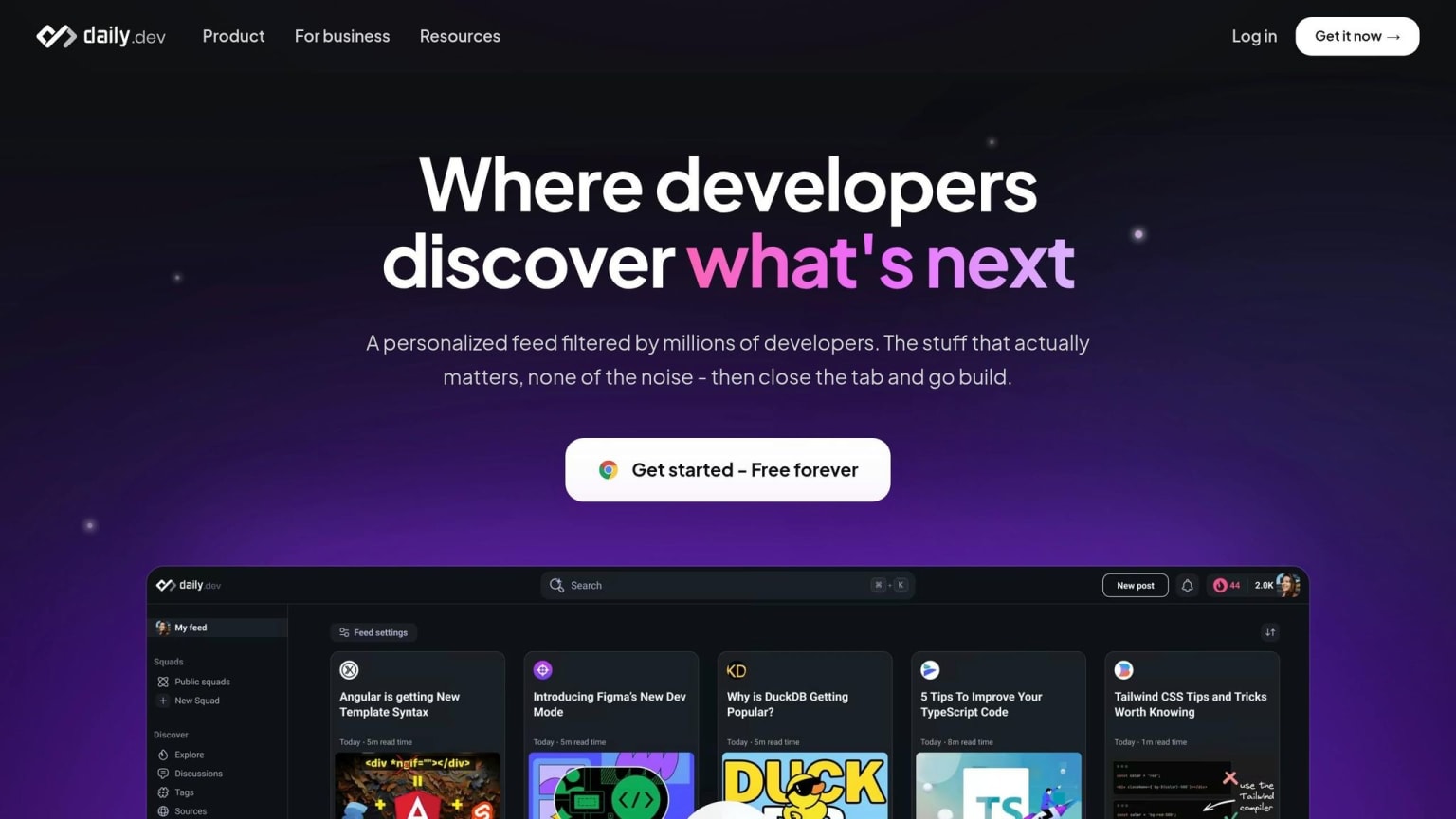
The same rule applies to native placements: targeting helps, but it only goes so far if the creative doesn’t speak to the stack.
daily.dev Ads puts your message inside a feed used by more than 1 million developers to keep up with tools and releases. You can target by seniority, languages, and tools. That matters when you’re trying to reach a senior data engineer looking at warehouse tooling, not just a broad software crowd.
That kind of precision helps, but it doesn’t do the whole job. Pair targeting with role-specific creative. Otherwise, the placement turns into one more skipped impression.
Data infrastructure deals are long and involve more than one stakeholder . That’s why a single channel rarely closes the loop. Use a simple multi-touch attribution model so you can account for long evaluation cycles and brand-building touchpoints like newsletters, podcasts, and OSS .
Conclusion
The best plan pairs precise targeting with copy that proves fit fast. Reach data engineers and ML practitioners with role-specific proof, workflow-native placements, and technical credibility.
FAQs
How should I split budget by role?
Use a funnel-based split:
- Put 60%–70% into awareness campaigns aimed at individual contributors, such as data engineers.
- Put 30%–40% into conversion campaigns aimed at engineering managers and directors.
When you reallocate budget, make those shifts gradually. Move no more than 20%–30% at a time so the platform can stay stable while you push more spend toward the roles and channels that perform best.
What proof do data engineers need first?
Data engineers need concrete, verifiable technical proof before they trust a new tool. They want hands-on evidence, not marketing claims. They also need to see how it performs under stress in actual production settings.
What do they look for? The nuts and bolts:
- Benchmarks
- Architecture diagrams
- Hardware specs
- Security and reliability documentation
- Working code snippets
- Realistic datasets
- Clear trade-offs and limitations
That kind of proof helps them judge whether a tool can hold up when the pressure is on.
When should I run campaigns?
For the best shot at solid engagement, run campaigns Tuesday through Thursday. The strongest windows are usually 9:00 AM–12:00 PM and 2:00 PM–5:00 PM local time.
It also helps to steer clear of crowded periods like December and major tech conference weeks. People are busy, inboxes fill up, and response rates often slip.
On timing, give yourself enough runway:
- 2–4 weeks for content creation
- 4–8 weeks for execution
That extra prep time can make the whole campaign feel a lot less rushed.