Top Open-Source Platforms for Developer Ads

Ivan Dimitrov Ivan Dimitrov
15 min read
Link copied!
Top Open-Source Platforms for Developer Ads
Quick Take

Native ads embedded in open-source developer tools reach developers in their workflows and drive higher engagement.

Developers spend most of their time in tools like IDEs, documentation sites, and package managers, making traditional ads less effective. Open-source platforms provide a better solution by embedding ads directly in developer workflows, offering higher engagement and relevance. Here's a breakdown of the top platforms for reaching developers:

  • daily.dev Ads: Connects with 1M+ developers through in-feed and email ads. Offers targeting by programming languages, seniority, and tools like Docker and Kubernetes.
  • WooCommerce: Focused on PHP developers and eCommerce builders. Advertising options include sponsored plugins and marketplace listings.
  • Magento Open Source: Ideal for PHP developers in enterprise eCommerce. Offers extension marketplace ads and sponsorship tiers.
  • Spree Commerce: Targets Ruby on Rails developers creating headless commerce solutions. Provides GitHub placements and partner network leads.
  • Strapi: Appeals to JavaScript/TypeScript developers working on JAMstack projects. Features plugin marketplace ads and sponsorship opportunities.
  • Ghost: Designed for JavaScript/TypeScript developers and publishers. Advertising includes newsletter sponsorships and custom theme promotions.

Each platform integrates ads into tools developers already use, ensuring higher engagement compared to traditional ads.

::: @figure Comparison of Top 6 Open-Source Developer Advertising Platforms{Comparison of Top 6 Open-Source Developer Advertising Platforms}

Quick Comparison

Platform Community Size Developer Audience Ad Formats Key Features
daily.dev Ads 1M+ active users Full-stack, JavaScript, Python, Go In-feed, email ads AI-driven targeting, high click-through
WooCommerce 5M+ installations PHP, WordPress, eCommerce developers Sponsored plugins, marketplace ads Focus on eCommerce tools and integrations
Magento Open Source 250K+ developers PHP, enterprise eCommerce specialists Marketplace ads, sponsorships Tiered sponsorships, large ecosystem
Spree Commerce 15.3K GitHub stars Ruby on Rails, headless commerce devs GitHub placements, partner leads Modular architecture, free open-source
Strapi 72K developers JavaScript/TypeScript, JAMstack Plugin marketplace, sponsorships API-first CMS, high customization options
Ghost 52.5K GitHub stars JavaScript/TypeScript, publishers Newsletter ads, theme marketplace Headless CMS, RESTful API

These platforms allow advertisers to reach developers in their natural workflows, ensuring higher engagement and measurable results.

sbb-itb-e54ba74

1. daily.dev Ads

daily.dev

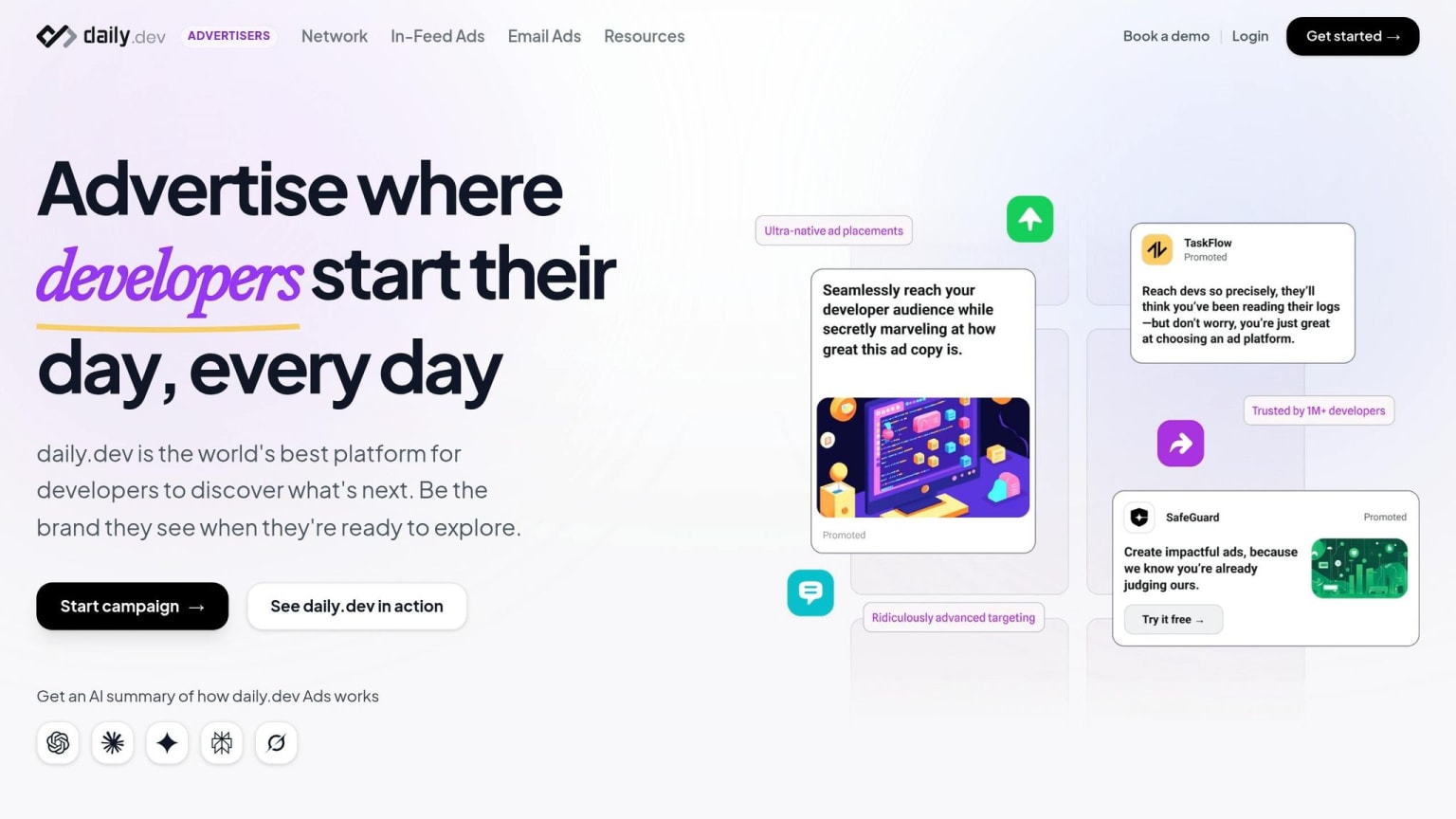
daily.dev Ads connects advertisers with a vibrant and engaged global community of developers.

Community size and engagement

With over 1 million active developers worldwide, daily.dev has built an impressive presence. It boasts 20,000 GitHub stars, a thriving community of 11,000 members, and a following of 160,000. The platform has earned a 4.8/5 rating from more than 2,500 reviews and was even crowned Product Hunt's "Product of the Year" .

Target audience (developer type and focus)

daily.dev Ads specializes in reaching a diverse range of developers, including Software Engineers, DevOps professionals, Data Engineers, QA specialists, Frontend Developers, and Full Stack Engineers. Advertisers can target audiences based on career stage and programming languages such as JavaScript, Python, Java, Swift, and Go . Additionally, tool-specific targeting allows you to connect with developers using platforms like Docker, Kubernetes, Jenkins, Jupyter Notebook, and Visual Studio Code .

Advertising opportunities (formats and placements)

The platform offers two key advertising formats: in-feed native ads and personalized email ads. These ads are displayed on desktop devices during moments of active tool discovery, ensuring high visibility. To maximize results, daily.dev uses AI-driven real-time optimization to fine-tune campaigns for better conversions .

Customization and integration potential

daily.dev Ads provides detailed targeting options, enabling advertisers to focus on specific programming languages, developer seniority, and tools. This allows brands to position themselves alongside industry leaders like Google, Atlassian, and Sentry. Whether the goal is driving signups, free trials, or event attendance, daily.dev offers the flexibility to align campaigns with developers' workflows seamlessly .

2. WooCommerce Community

WooCommerce

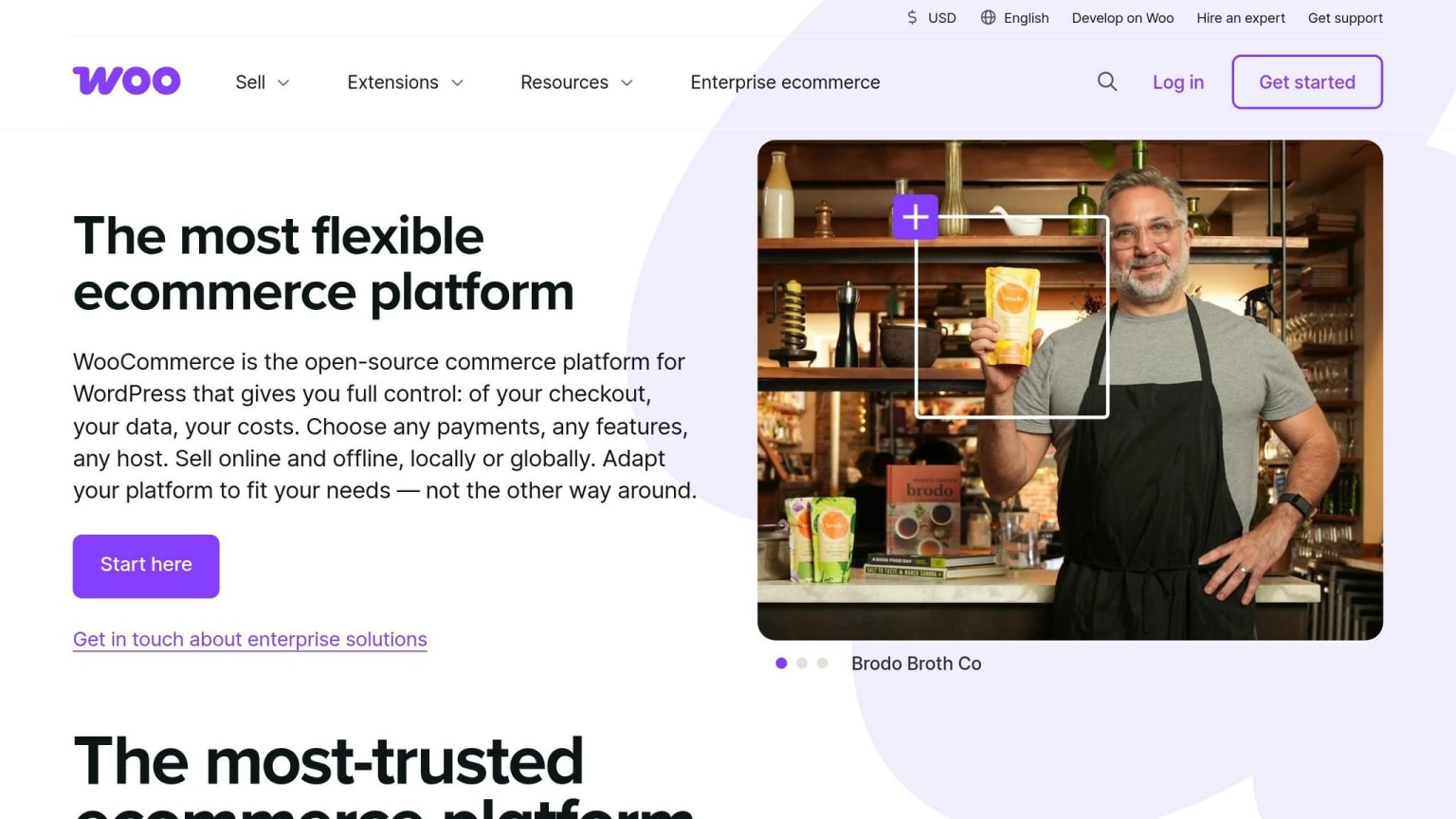
WooCommerce, like other open-source platforms, weaves advertising opportunities directly into the daily workflows of developers. It brings together extension creators, store builders, agencies, and contributors, forming a dynamic hub for ecommerce innovation.

Community Size and Engagement

The WooCommerce community is massive, with thousands of contributors worldwide creating open-source ecommerce tools. Every month, tens of thousands visit the Developer Portal and Marketplace in search of solutions for automation, shipping, and marketing. Engagement happens in various spaces, such as Slack (with dedicated channels for Marketing, Jobs, and Developer Office Hours), GitHub discussions, and both local and virtual meetups .

Target Audience

This community attracts a wide range of technical professionals, from seasoned store builders to developers just starting out. Their main goals include growing ecommerce businesses, tailoring stores to specific needs, and creating tools for automation and marketing. Developers frequently collaborate on GitHub, Slack, and the Developer Portal to design and refine extensions for the WooCommerce Marketplace .

Advertising Opportunities

The WooCommerce Marketplace provides developers with a direct line to store owners, allowing them to showcase their tools and generate recurring revenue from extensions. To build trust within the ecosystem, the marketplace also offers a 30-day money-back guarantee on its products .

Customization and Integration Potential

Since WooCommerce is open-source and hosted on GitHub, developers have vast opportunities to customize and create third-party services. The Developer Portal provides resources to help developers build, tailor, and sell extensions that address merchant needs . This thriving ecosystem has established WooCommerce as a standout platform for developers looking to advertise and innovate.

3. Magento Open Source Community

Magento Open Source

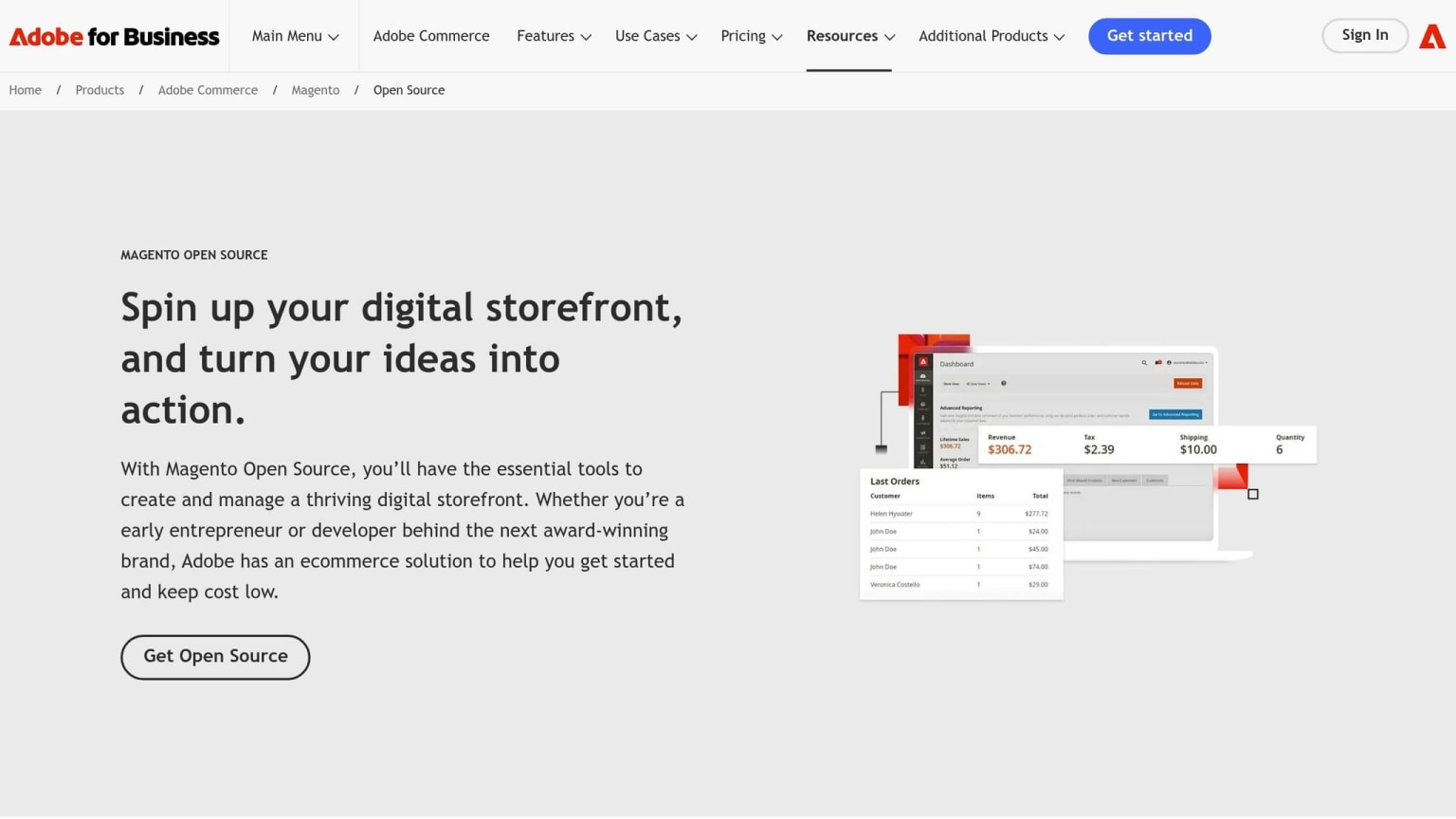
Magento Open Source brings together a large and dynamic e-commerce developer community. Its GitHub repository is a hub of activity, boasting 12,100 stars, 9,400 forks, and 1,642 contributors who have made over 159,749 commits. With updates happening daily, this level of engagement highlights the community's dedication . Let's dive into the key aspects of this ecosystem, including its community engagement, target audience, advertising options, and customization capabilities.

Community Size and Engagement

The Magento Open Source community thrives across multiple platforms and regions. The Mage-OS community, a community-driven distribution, has attracted more than 1,350 Discord members and 194 financial contributors . Developers actively collaborate on Slack, Discord, GitHub, and through local chapters in Europe, the US, and India . Regular weekly tech meetings, held every Tuesday at 3 PM CET, serve as a cornerstone for core contributors to connect and share updates .

Target Audience

Magento's ecosystem is particularly appealing to developers with expertise in PHP (81.1%), JavaScript (8.1%), and HTML (7.5%) . These specialists focus on creating advanced digital storefronts, B2B commerce solutions, and scalable multi-site systems . Many developers operate within e-commerce agencies, managing everything from backend inventory systems to frontend design using tools like Page Builder and PWA Studio . Globally, the Magento ecosystem powers over 100,000 live online stores .

Advertising Opportunities

Mage-OS offers partnership tiers ranging from Bronze ($1,375/year) to Platinum ($27,500/year). These tiers provide benefits like logo placements, social media mentions, and event sponsorship opportunities . Additionally, the Magento Extension Marketplace serves as a prime platform for developers to showcase their solutions directly to a targeted audience . Arron Moss, Co-founder of MDOQ, expressed enthusiasm about the platform's potential:

Making the decision to sponsor Mage-OS and become a gold partner was the easiest decision we've made. We are very excited for the future of the Magento platform .

Customization and Integration Potential

Magento Open Source stands out as a free platform with no licensing fees, offering complete flexibility for customizing both front-end and back-end systems . It is a strong foundation for headless commerce architectures, ERP integrations, and PIM connections . This adaptability makes it a valuable tool for developers exploring innovative solutions. As Vinai Kopp, a founding member of Mage-OS, stated:

The Mage-OS community represents the best of what open source can be - collaborative, innovative, and focused on delivering real value to merchants and developers alike .

4. Spree Commerce Developer Network

Spree Commerce

Spree Commerce fosters a thriving environment for developers specializing in Ruby on Rails and JavaScript/TypeScript. With a GitHub repository boasting 15,300 stars, a Slack community of 7,000 members, and 2.5 million RubyGems downloads, the platform clearly has an active and engaged ecosystem . Add to that 5,200 forks, 864 contributors, and over 27,844 commits, and it’s evident that Spree is a hub for developers tackling complex eCommerce challenges .

Target Audience

Spree primarily appeals to developers working with Ruby (which accounts for 81.6% of the platform’s codebase) and JavaScript/TypeScript, especially those creating headless commerce solutions . It’s built for intricate commerce scenarios like B2B eCommerce, multi-vendor marketplaces, and multi-tenant SaaS platforms . Companies like Maisonette and GoDaddy showcase Spree’s ability to handle complex, multi-vendor environments . Wilson Lau, President of Nuherbs, highlights Spree’s adaptability:

Spree has given us the flexibility to run our B2B wholesale and consumer brands from one unified catalog with custom pricing, ERP integration, and multi-store management .

Advertising Opportunities

Spree’s advertising strategy is tightly integrated with its partner network, offering agencies direct access to marketing exposure and new client leads. The Spree Partner Network connects agencies with projects while promoting their work through official Spree marketing channels. Mike Faber, Spree Evangelist and CEO of Vendo, explains:

We'd like to share those leads with Spree Partners who'd be willing and able to work on such projects and contribute back to the Spree ecosystem .

Partners benefit from daily RFQs (Request for Quotations) sent by the core team, project showcases after successful launches, and the ability to display the Spree Partner Network badge on their websites . The program operates on an NDA-protected lead-sharing system and requires no upfront fees .

Customization and Integration Potential

Spree’s modular "layer by layer" architecture gives developers the freedom to swap out components like payment providers or search engines without altering the core code . The platform is entirely free and open source under the BSD 3-Clause license, with no platform or transaction fees . Developers can quickly launch full-stack headless commerce projects using npx create-spree-app@latest .

The community is also embracing AI integration, offering features like MCP servers and OpenAPI specifications to support AI coding assistants . This modular and flexible design reflects the collaborative spirit of the open-source community, making Spree a versatile choice for developers.

5. Strapi Headless CMS Community

Community Size and Engagement

Strapi has built a thriving community of over 72,000 active developers . Its GitHub repository stands out with more than 71,900 stars and 9,600 forks, driven by contributions from 1,093 individual developers . The platform has been downloaded over 50 million times and is used by 28,300+ organizations .

The community stays connected through several official channels, including a Discord server for live discussions, a Community Forum, and a public roadmap that invites user input for product development . This level of interaction fosters a strong network of developers focused on creating modern digital experiences.

Target Audience

Strapi primarily appeals to JavaScript/TypeScript developers and those working with backend or full-stack technologies. Developers using frameworks like Next.js, React, Vue, Angular, and Astro find it particularly useful . Its API-first approach, supporting both REST and GraphQL, makes it a go-to choice for projects like headless commerce, multi-platform content systems, and scalable digital solutions.

Industries such as Financial Services, Tech and Business Services, Telecommunications, Media, and Gaming are among its prominent users . Additionally, digital agencies frequently rely on Strapi to speed up project timelines while offering user-friendly content editing tools. Michał Pawłowski, Head of Software Development at Tesco Technology, shared his perspective on Strapi's flexibility:

With Strapi, we can be sure that the solution can be customized to always fit our needs. It helped us reduce time-to-market and deliver the project on time .

This developer-focused audience also presents excellent opportunities for targeted advertising campaigns.

Advertising Opportunities

Strapi provides multiple avenues for advertising. The Strapi Market is a key channel, allowing developers and companies to showcase verified plugins . This platform ensures products are displayed directly to users seeking to enhance their CMS capabilities. Technology companies and systems integrators can also join the Solution Partners program, gaining official recognition and access to Strapi's user base .

Additional opportunities include engaging with the audience through the Blog, Discord, Forum, Video Tutorials, and by sponsoring community events. Open Collective sponsorships offer another way for brands to support the open-source project while building trust within the developer ecosystem . A noteworthy example of Strapi's capabilities came in 2026 when Google and WallDecaux used its API-first infrastructure to power real-time outdoor ads, generating 55 million impressions .

Customization and Integration Potential

Strapi's open-source design prioritizes developers, offering extensive customization options. The Community Edition is free, while paid plans start at $45 per seat/month (billed annually) with the Growth Plan. For advanced needs like single sign-on (SSO) and audit logs, custom Enterprise pricing is available . Built on a Node.js/TypeScript stack, the platform delivers what users describe as "blazing fast" performance .

Guillermo Rauch, CEO of Vercel, emphasized the scalability of Strapi:

Strapi and Next.js both build on the same philosophy: open source is the path to success. Combine them with Vercel deployment and you have a stack with virtually infinite scalability .

6. Ghost Publishing Platform Community

Ghost

Community Size and Engagement

Ghost has a vibrant presence on GitHub, boasting 52,500+ stars and 11,500 forks as of April 2026 . With 707 contributors and over 44,800 commits, the platform continues to evolve rapidly, with version 6.30.0 released on April 14, 2026 .

In just one week in April 2026, approximately 10,988 new publications were launched on Ghost . Collectively, publications using the platform generate more than $100 million in annual revenue . Notable success stories include Platformer, which has 197,000 members, and Tangle, reporting $281,000 in monthly recurring revenue (MRR) as of April 2026 .

Target Audience

Ghost appeals primarily to JavaScript and TypeScript developers, with these languages making up 60.7% and 29.9% of its core codebase, respectively . The platform is particularly suited for those interested in modern publishing workflows, headless CMS architecture, and membership-driven business models. Developers working with Node.js stacks, REST APIs, and newsletter automation tools find it especially useful.

High-profile projects from organizations like YCombinator, Buffer, and Kickstarter utilize Ghost . Additionally, tech-focused publications such as 404 Media (123,000 members) and Creator Science ($39,000 MRR) leverage its membership features to grow their audiences . Jeff Atwood, the founder of Coding Horror, highlighted Ghost's minimalist approach:

I've been a blog minimalist from the start, and finding a truly open source platform which reflects that minimalism and focus is incredibly refreshing .

Advertising Opportunities

Ghost provides several avenues for businesses to connect with its audience. Publishers can feature sponsored content or integrate ad networks directly into their sites . The Dynamic Cards feature enables embedding rich media and sponsored posts directly into articles . Additionally, Ghost's built-in newsletter functionality supports direct-to-inbox sponsorships, which are highly effective for targeting niche developer communities .

One of Ghost’s standout features is its 0% platform fee on publisher revenue , making it an attractive choice for ad-supported sites with high traffic. Developers also create and sell custom themes through the Ghost marketplace, offering opportunities for promoting design tools and CSS frameworks . This adaptability aligns with Ghost's broader emphasis on customization.

Customization and Integration Potential

Ghost's flexibility is a key strength. Its RESTful JSON API and MIT-licensed open-source code allow for custom front-end development . While the open-source version is free for self-hosting, the managed Ghost(Pro) service starts at $15/month for the Starter plan, with Business plans available at $199/month . The platform’s headless architecture also supports building custom front ends using frameworks like React or Vue, enabling more interactive advertising experiences .

The Ghost Foundation underscores this versatility:

Ghost is the only option which gives you enough power to build entirely custom workflows... it can be extended, modified and customised for your needs in an unlimited number of ways .

Platform Comparison

This comparison builds on individual platform insights, showcasing how each platform's features cater to developer advertising needs. Choosing the right platform depends on your specific goals, budget, and target developer audience. Each platform offers distinct advantages in terms of reach, engagement, and ad flexibility.

Platform Community Size Primary Developer Audience Ad Formats Customization Options
daily.dev Ads 1+ million active developers Full-stack, JavaScript, Python, Java, Swift, Go developers In-feed ads, post page ads, personalized digest ads Targeting by programming languages, seniority levels, and developer tools (Docker, Kubernetes, Jenkins, VS Code)
WooCommerce Community 5+ million active installations PHP developers, WordPress specialists, e-commerce builders Sponsored plugins, marketplace listings, community forum sponsorships Custom plugin integrations and theme marketplace placements
Magento Open Source Community 250,000+ developers, 300,000+ merchants PHP developers, enterprise e-commerce specialists Extension marketplace ads, developer documentation sponsorships API-based integrations and custom module promotions
Spree Commerce Developer Network 12,500+ GitHub stars, 4,600+ forks Ruby on Rails developers, headless commerce specialists GitHub README placements, developer documentation ads Open API integrations and custom storefront solutions
Strapi Headless CMS Community 65,000+ GitHub stars, 8,000+ forks JavaScript/TypeScript developers, JAMstack enthusiasts Plugin marketplace listings, community forum sponsorships Custom plugin development and API extension promotions
Ghost Publishing Platform Community 52,500+ GitHub stars, 11,500+ forks JavaScript/TypeScript developers, content creators, newsletter publishers Dynamic Cards, newsletter sponsorships, custom theme marketplace RESTful JSON API integrations and headless architecture customization

The table captures the core strengths of each platform, while ongoing trends in contextual targeting and integration methods further shape advertising strategies.

The push toward contextual targeting has gained momentum, particularly as third-party cookies are set to phase out by 2026. This shift has encouraged platforms to focus on seamless, native ad experiences that naturally fit into developers' workflows . For instance, daily.dev Ads stands out with its granular targeting options, allowing precise campaign execution . On the other hand, commerce-focused platforms like WooCommerce and Magento excel at promoting e-commerce tools and payment solutions to their specialized audiences.

When it comes to integration, platforms vary in their approach. Some, like Spree Commerce, offer straightforward markdown placements. In contrast, daily.dev Ads leverages AI-driven optimization to align ads with developer engagement patterns and minimize the impact of ad blockers .

Conclusion

daily.dev Ads fits naturally into developers' workflows, offering precise targeting and native ad formats that resonate with full-stack engineers worldwide. If you're marketing developer tools or resources, this platform allows you to target audiences based on programming languages, seniority levels, and preferred tools.

Platforms that integrate non-intrusive, native ads into developers' existing routines often outperform traditional display ads. daily.dev Ads leverages contextual placements to drive strong engagement while maintaining reliable performance through its integration and security features.

For advertisers looking for simplicity, daily.dev Ads provides managed services, robust API integrations, and plugin support. This flexibility lets you tailor campaigns to your specific goals, whether you're focusing on brand awareness or driving conversions . The platform prioritizes privacy, transparency, and delivering real value to the developer community.

With its targeted reach and customizable features, daily.dev Ads ensures your advertising goals are achieved within a trusted and developer-friendly environment.

FAQs

How do I pick the right platform for my developer ads?

To pick the best platform for developer ads, prioritize factors like audience targeting, ad formats, and your specific campaign objectives. daily.dev for Business stands out by offering native ads, in-feed placements, and highly accurate targeting within a trusted developer community. This makes it an excellent choice for connecting with active, engaged developers.

It's also important to consider how well a platform fosters community engagement and aligns with relevant content. Platforms like daily.dev naturally integrate ads into developers' daily workflows, ensuring your message reaches the right audience in a way that feels seamless and impactful.

What targeting options does daily.dev Ads support?

daily.dev Ads provides the ability to target developers based on a variety of factors, including their personas, skills, behaviors, programming languages, tools, seniority levels, and preferred platforms. These targeting options allow you to segment your audience with precision, ensuring your ads are seen by the developers most relevant to your campaign.

How do I measure results from native developer ads?

To gauge the effectiveness of native developer ads, focus on tracking key performance indicators (KPIs) such as click-through rate (CTR), conversion rate, and return on investment (ROI). These metrics provide a clear picture of user engagement and overall results.

Additionally, keep an eye on behavioral metrics like bounce rate, pages per session, and average session duration to understand how users interact with your content. By regularly analyzing these metrics and performing brand lift studies, you can fine-tune your strategies and measure how your ads influence brand perception over time.

Launch with confidence

Reach developers where they
pay attention.

Run native ads on daily.dev to build trust and drive qualified demand.

Link copied!