

Developer communities are where technical audiences gather to solve problems, share knowledge, and discover tools. For businesses, they offer direct access to developers who value practical solutions over traditional ads. This guide covers nine key platforms to promote your product effectively:
- daily.dev: News platform with 1M+ developers, great for targeting specific tech stacks. Ads cost $10–$20 CPM.
- GitHub: Ideal for open-source tools and SDKs. Free to use, but success requires ongoing contributions.
- Stack Overflow: Perfect for B2B tools and APIs. Tag-based targeting allows focused promotion. Pricing starts at $10,000/month.
- Reddit: Subreddits like r/programming enable organic and paid promotions. Ads start at $5/day.
- Dev.to: A platform for tutorials and case studies. Free for organic posts; sponsorships vary.
- Hashnode: Best for long-form content and SEO. Free to use with optional sponsorships.
- Discord: Real-time engagement for beta testing and feedback. Free to join; paid features available.
- Indie Hackers: Focused on SaaS and micro-startups. Free to participate; results require consistent activity.
- CodePen: Great for front-end tools and UI libraries. Free plans available; paid options start at $19/month.
- LinkedIn Developer Groups: Connect with decision-makers like CTOs. Free to use; paid options include InMail credits.
Each platform has unique strengths depending on your audience and goals. Below is a quick comparison of the key features and costs.
::: @figure 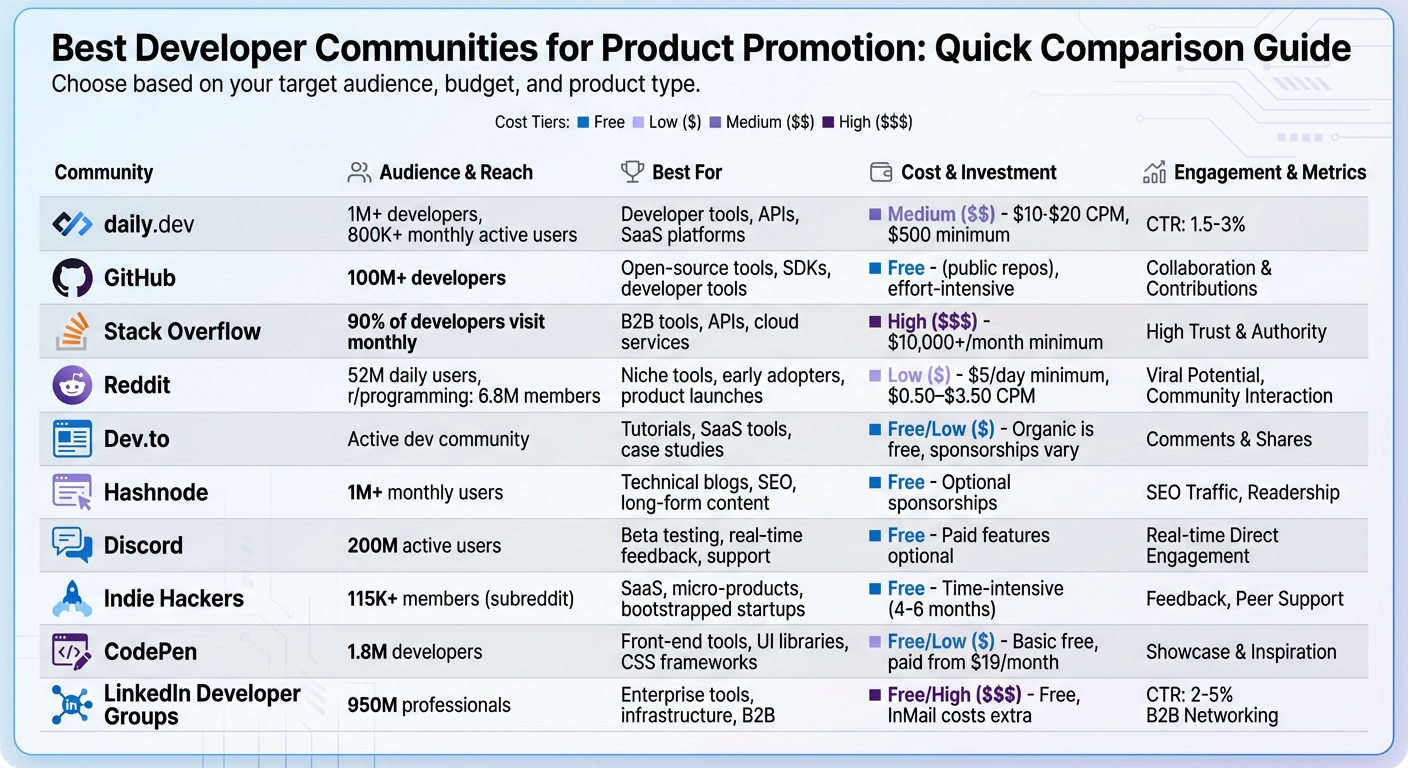 {Developer Communities Comparison: Audience Size, Best Use Cases, and Pricing}
Quick Comparison
| Platform | Audience Size | Best For | Cost |
|---|---|---|---|
| daily.dev | 1M+ developers | Developer tools, APIs | $10–$20 CPM |
| GitHub | 100M+ developers | Open-source tools, SDKs | Free; effort-intensive |
| Stack Overflow | 90% of devs monthly | B2B tools, APIs | $10,000+/month |
| 52M daily users | Niche tools, early adopters | $5/day minimum | |
| Dev.to | Active dev community | Tutorials, SaaS tools | Free; sponsorships vary |
| Hashnode | 1M+ monthly users | Technical blogs, SEO | Free; optional sponsorships |
| Discord | 200M active users | Beta testing, feedback | Free; paid features optional |
| Indie Hackers | Founders, startups | SaaS, micro-products | Free; time-intensive |
| CodePen | 1.8M developers | Front-end tools, libraries | Free; paid plans start $19 |
| LinkedIn Groups | 950M professionals | Enterprise tools | Free; InMail costs extra |
These platforms require tailored strategies, from organic engagement to paid campaigns for developers. Focus on solving developer problems, being transparent, and offering real value to build trust and drive results.
sbb-itb-e54ba74
1. daily.dev Ads
daily.dev is a news platform tailored for developers, offering a personalized feed powered by AI. It pulls content from popular sources like GitHub, Stack Overflow, and Reddit, making it a one-stop hub for tech professionals. With over 1 million registered developers and 800,000+ monthly active users, the platform generates an impressive 40 million+ pageviews each month. Developers spend 5–7 minutes per session, reading an average of 12 articles, highlighting the platform's high engagement. These metrics make daily.dev Ads a prime choice for reaching a dedicated, senior technical audience.
Audience size and engagement
The platform's user base skews toward experienced professionals, with 60% senior developers and 25% engineering managers, mostly aged 28–35 years old. Geographically, the audience is 40% U.S.-based, with 20% in India and 25% in Europe. daily.dev also boasts a newsletter with 2.5 million+ subscribers, achieving 70%+ open rates, far exceeding industry norms. The platform's credibility is backed by a 4.8/5 Product Hunt rating and 20,000+ GitHub stars, underscoring its strong community backing.
Best suited for specific promotion types
daily.dev Ads excel in promoting developer tools, APIs, SaaS platforms, and open-source libraries, delivering click-through rates (CTR) of 1.5–3%, which outperforms typical tech advertising channels. Campaigns can be tailored to specific tech stacks like React, Node.js, or Python, as well as tools like Docker and Kubernetes. Ads are seamlessly integrated across feeds, newsletters, and post pages, ensuring they feel natural to users. The platform reports 2x higher conversion rates for developer tools compared to traditional advertising, with 20–50% higher CTR when targeting specific programming languages.
Cost of participation or promotion
daily.dev offers flexible pricing options. Self-serve ads cost $10–$20 CPM (cost per thousand impressions) with a $500 campaign minimum, while CPC rates range from $0.50–$2.00 per click. Newsletter sponsorships are priced between $2,000 and $10,000 per send, and managed campaigns start at $5,000 per month. Volume advertisers can benefit from discounts, reducing rates to $8 CPM, and open-source projects with fewer than 10,000 impressions can access free tiers. Retargeting campaigns for engaged users have shown a 15% increase in sign-ups, making it a cost-effective choice for targeted outreach.
2. GitHub

GitHub is home to over 100 million developers, making it one of the largest hubs for technical collaboration and innovation. Unlike traditional platforms, GitHub thrives on developers sharing code, solving problems, and building projects in the open. Here, your repository isn't just storage - it's your showcase. Your README file becomes your elevator pitch, offering a direct glimpse into your work.
Audience size and engagement
Engagement on GitHub revolves around stars, forks, and issue discussions. Stars act as a form of social proof, showing that other developers value your project. Forks and issue discussions are more hands-on, as they indicate developers actively engaging with your work. Tools like GitHub Insights give you detailed data on traffic sources, clone counts, and visitor behavior, helping you pinpoint what resonates. Projects that prioritize quick responses to issues and regular updates can experience 30% to 50% faster user activation. Additionally, maintaining a feedback loop with users can lower churn by up to 15%. This level of interaction creates a strong foundation for personalized promotional efforts.
Best suited for specific promotion types
GitHub shines when promoting open-source libraries, SDKs, developer tools, and APIs. It’s the perfect platform for showcasing code rather than relying on traditional marketing materials. For instance, creating GitHub Actions that solve automation challenges can help establish your brand as a problem-solver in the developer community. Demo repositories are another great tool, offering developers a hands-on experience with your product. As Amit Ashwini, Founder of DataDab, puts it:
"GitHub is real - it's your work out in the open, raw, and verifiable. Think of it as your digital resume, but with tangible proof of your skills."
Community features for interaction
GitHub encourages interaction through pull requests, issues, discussions, and code contributions. Activating the Discussions tab creates a dedicated space for Q&A and brainstorming new features. Standardized labels like "Help wanted" or "Good first issue" can attract contributors, while files like CONTRIBUTING.md and CODE_OF_CONDUCT.md set clear expectations for collaboration. To make your project even more accessible, include installation guides, use cases, and visuals like GIFs or demo videos in your README. Aaron Francis, a Sidecar maintainer, offers this tip:
"If you find it's hard to document a particular feature, that's probably a sign that it's too complicated and you need to simplify it."
Cost of participation or promotion
Public GitHub repositories are free to use, making it an attractive option for projects with limited budgets. However, the real cost comes in the form of time and effort. Regularly updating documentation, responding to issues, and managing pull requests require consistent involvement. This "sweat-equity" approach relies on delivering authentic value rather than spending on ads. For projects that qualify, the GitHub Secure Open Source Fund offers financial support, but most growth comes from the organic impact of your contributions.
3. Stack Overflow
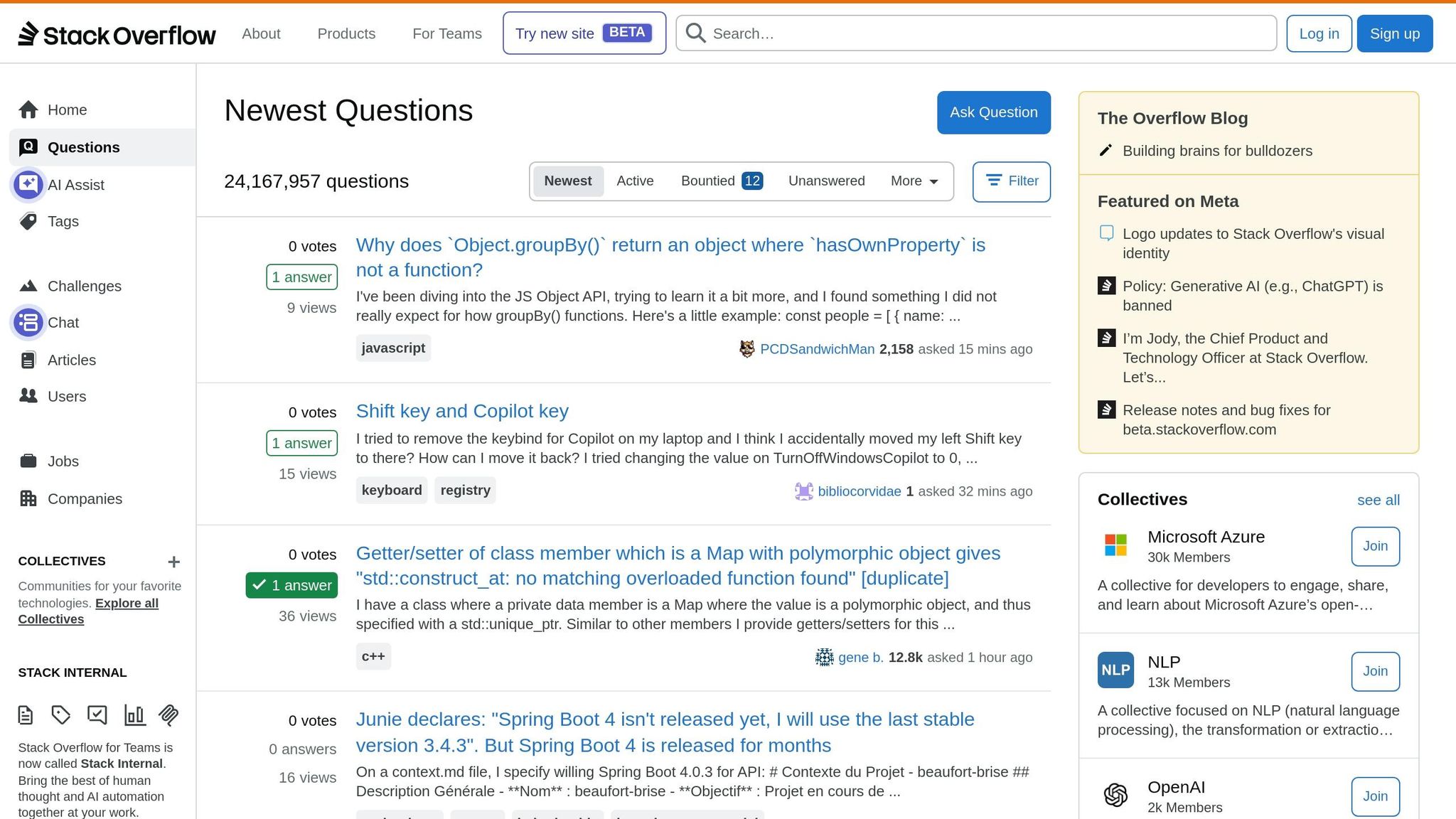
Over 90% of developers visit Stack Overflow multiple times per month, making it a central part of a developer's workflow. Unlike social media platforms, Stack Overflow is a go-to destination for developers looking for specific technical solutions. This intent-driven focus creates a unique opportunity to showcase your product when developers are actively solving problems. These engagement patterns make it an ideal space for targeted promotion.
Audience size and engagement
Stack Overflow is home to 183 unique communities across more than 60 technology-focused network sites. This expansive reach connects you with technical decision-makers, especially since 62% of developers directly influence technology purchasing decisions. The platform's strict guidelines, enforced by community-elected moderators, foster a trusted environment. Ads placed here benefit from this credibility, making them more impactful.
Best suited for specific promotion types
Stack Overflow is particularly effective for promoting B2B technology, developer tools, cloud services, AI/ML platforms, and APIs. Its strength lies in tag-based targeting across over 60,000 active topic tags. This allows you to focus on developers working with specific technologies. For instance, if you're introducing a new Python library, you can target users actively engaging with Python-related questions, ensuring your message reaches the right audience. Additionally, the platform offers Collectives™, where organizations can create dedicated spaces to share trusted content and collaborate directly with users.
Community features for interaction
Stack Overflow provides several tools to position your brand within key technical discussions. Topic Tag and Site sponsorships allow you to integrate your brand into relevant conversations, with Site sponsorships offering 50% voice share on target sites. The platform's newsletter, "The Overflow", features only one advertiser per issue, ensuring undivided attention from its millions of subscribers. For more in-depth engagement, you can use sponsored blog posts and podcast placements to share technical insights instead of relying on traditional sales pitches. As Stack Overflow explains:
"Stack Ads lets you run targeted campaigns based on skills, tags and interests - so you can reach more of the right people."
Cost of participation or promotion
For pricing details, you'll need to contact Stack Overflow directly. The platform follows a "developer-first" advertising philosophy, requiring all promotional content to adhere to guidelines that prioritize being technical, respectful, and helpful. This is not the place for broad, intrusive ads. To succeed, your content must align with the community's straightforward culture and provide real value by helping developers solve genuine problems.
4. Reddit (r/programming and Related Subreddits)
Reddit's developer communities thrive on in-depth, searchable discussions, making it a powerful platform for driving long-term traffic. With 52 million daily active users and subreddits like r/programming boasting 6.8 million members , posts that provide real value can remain relevant for months. Developers openly discuss tools, pricing, and alternatives, creating a space where meaningful conversations flourish . Unlike Slack or Discord, Reddit's threaded conversations are indexed by search engines, which means a well-crafted post can continue to attract visitors long after it's published . Since the 2024 Google licensing agreement, Reddit threads often rank high in technical keyword searches, turning them into lasting distribution channels .
Audience Size and Engagement
Reddit hosts a range of developer-focused communities, each with its own niche. For example:
- r/webdev: 3.1 million members focused on frontend and backend development.
- r/gamedev: 1.9 million members interested in game engines and mechanics.
- r/SideProject: 622,000 members sharing MVPs and revenue milestones.
- r/SaaS: 420,000 members discussing SaaS-specific challenges and ideas .
These subreddits enforce strict participation standards, meaning you'll need to build credibility before diving into promotion .
Best Suited for Specific Promotion Types
Reddit is ideal for promoting developer tools, open-source projects, and early-stage SaaS products through developer marketing, especially when you can showcase technical expertise. For instance, Convex shared a detailed technical post in r/programming, earning 159 upvotes and 49 comments. The post continued to drive organic traffic through search months later . The key is creating "anchor posts" - content that dives deep into technical topics while naturally referencing your product .
Community Features for Interaction
Reddit's structure supports multiple ways to engage with its communities. While many subreddits restrict direct links, they often include weekly threads like "Share Your Startup" for promotional purposes . AMAs (Ask Me Anything) are another effective strategy, especially when the focus is on sharing knowledge rather than making a hard sell. For example, in 2024, WarpStream's co-founders hosted an AMA in r/apachekafka, answering technical questions without overtly promoting their product. The session received 43 upvotes and 64 comments and was later repurposed into a blog post . For paid campaigns, Reddit introduced AI-powered tools like "Insights" and "Conversation Summary Add-ons" in 2025, helping brands fine-tune their messaging to align with authentic user discussions .
Cost of Participation or Promotion
Participating organically is free but requires a significant time investment. Stick to the 9:1 rule - for every promotional post, contribute nine meaningful comments or non-promotional posts . Spend at least two weeks engaging as an active community member before introducing your brand . As SaaSCity Blog puts it:
"Developers smell marketing from miles away. Lead with the problem you solved, tech stack second, promotion last."
Transparency is essential. Always disclose any affiliations, as users often scrutinize post histories, and failing to do so can result in bans .
5. Dev.to
Dev.to is a thriving platform where developers prioritize technical insights over flashy sales pitches. It's a space where tutorials, case studies, and documentation that address real-world problems resonate deeply - especially when they subtly showcase your product's capabilities . As the DEV Community puts it:
"If you want to earn a developer's attention, start by earning their respect. Write like a peer, build like a contributor, and market like a teammate."
Audience Size and Engagement
Dev.to is known for its active and engaged community. Posts often spark lively discussions, with reactions and comments rolling in quickly. For instance, in March 2026, GitHub's announcement of the "GitHub Copilot CLI Challenge" winners received 117 reactions and 49 comments in just two days. Similarly, technical comparison articles typically gather between 25 and 56+ reactions within 24–72 hours . This level of interaction makes Dev.to a powerful platform for sharing content that both educates and promotes.
Best Suited for Specific Promotion Types
If you're looking to promote developer tools, open-source projects, or SaaS platforms, Dev.to is the place to be. The #showdev tag is a go-to for launching new projects, as developers value tangible results over empty claims . A great example is the team behind OpenSaaS.sh, who gained 6,000 GitHub stars by treating their open-source launch like a premium product release. They created polished promotional videos and shared technical content on Dev.to to build momentum . Successful marketers on the platform often focus on topics like "automation", "APIs", or "scripts" to engage this audience effectively .
Community Features for Interaction
Dev.to offers several ways to connect with its community. Companies can create official profiles to share updates, documentation, and technical insights. The platform's tagging system (e.g., #showdev, #ai, #webdev, #opensource) allows for precise targeting of niche developer communities. Additionally, community-driven events like hackathons and challenges - such as the Notion MCP Challenge and GitHub Copilot CLI Challenge - encourage developers to experiment with specific tools and share their creations. Engaging in discussions and responding to comments is crucial for building trust and credibility [27, 29].
Cost of Participation or Promotion
Participation on Dev.to is free for organic activities. Users can create accounts, publish articles, and engage with the community without spending a dime [27, 30]. For those looking to invest in paid promotion, Dev.to offers options like the "Billboard" advertising system for sponsored posts and product placements, used by brands like Heroku, MongoDB, and Sonar. Other premium features include "DEV Takeovers" (homepage banners paired with dedicated posts for product launches) and "DEV Challenges" (customized hackathons). For detailed pricing, you can reach out to partners@dev.to . You can also advertise on daily.dev to reach developers where they start their day.
6. Hashnode
Hashnode allows you to publish on your own custom domain at no cost while benefiting from its community-driven distribution. Your content appears across Hashnode’s feed, topic pages, and newsletters . The best part? You build SEO authority for your brand, not Hashnode’s, which is a major win for developers and businesses alike.
Audience Size and Engagement
Hashnode has seen impressive growth, skyrocketing from 100,000 to 1 million monthly active users in just one year. By late 2025, it was hosting over 60,000 blogs . Developer Catalin Pit reported a staggering 500% increase in his user base (from 19,136 to 116,225) and a 267% boost in page views (from 68,460 to 251,872) between 2024 and 2025 . The platform thrives on community engagement, with trending topics like #ai generating more than 785 posts each week .
Best Suited for Specific Promotion Types
Hashnode shines when it comes to long-form technical content. If you're promoting developer tools, APIs, or SaaS platforms, detailed tutorials and product deep-dives work wonders. Publishing on your custom domain helps you rank in search engines while tapping into Hashnode’s developer-focused audience. Plus, its GitHub integration lets you publish directly from repositories, making it perfect for documentation or "docs-as-code" workflows . For product launches, the "Show & Tell" forum is a great place to get honest feedback from engineers who value substance over marketing fluff .
Community Features for Interaction
Hashnode’s forums foster meaningful discussions with threaded replies and upvotes, helping you build a reputation in areas like AI, WebDev, or DevOps . The Series feature groups related posts, encouraging readers to dive deeper into your content . For collaborative teams, the platform supports shared authorship and real-time co-editing, streamlining the process of technical reviews before publishing . Additionally, Hashnode’s built-in newsletter system automatically captures subscribers, giving you an easy way to share updates directly with your audience .
Cost of Participation or Promotion
All of Hashnode’s core features - publishing articles, mapping custom domains, and community engagement - are completely free . For those looking to monetize, the platform offers options like reader support and sponsorship placements . Teams needing advanced collaboration tools can take advantage of Team Publication features, though basic blogging remains free for all users .
7. Discord Servers
Discord has grown far beyond its gaming roots, becoming a central hub for developer communities. With more than 200 million monthly active users spending nearly five hours daily on the platform , it offers a unique space for connecting with developers. Discord's real-time conversations allow for immediate feedback, live troubleshooting, and building relationships in ways that static forums just can't match .
Audience Size and Engagement
The numbers speak for themselves when it comes to Discord's presence in developer communities. For instance, the official Discord Developers server, dedicated to Discord API work, boasts 270,625 members, with around 59,835 active at any given time . Reactiflux, a community centered on React and frontend technologies, has grown to over 172,474 members . Other notable servers include The Programmer's Hangout, with more than 130,000 developers discussing general programming topics, and The Coding Den, which gathers 115,000+ users across various modern programming languages . Even niche communities like Appwrite’s open-source server maintain active participation, with over 10,000 members engaging in 24/7 support and live code reviews . Interestingly, 78% of Discord users interact with non-gaming content daily across multiple channels .
Best Suited for Specific Promotion Types
Discord is particularly effective for beta testing and early access programs. For example, Tencent Games used Discord during the pre-launch phase of Delta Force, growing their community to 800,000 members by gathering direct feedback from fans . Developer tools, APIs, and frameworks also thrive here, thanks to real-time support options. Ghost Ship Games demonstrated this by integrating Deep Rock Galactic with Discord’s API, which allowed automatic role assignments and rewarded players with in-game credits for achieving milestones . Additionally, many servers offer "Show and Tell" or "Showcase" channels, giving you the chance to promote products - provided you’ve earned credibility by being an active participant .
Community Features for Interaction
Discord’s interactive tools make it easy to engage with your audience. Stage Channels can host up to 1,000 listeners for live audio AMAs or workshops, where audience members can "raise their hand" to join the conversation . Announcement Channels allow you to broadcast updates that users can "Follow", sending messages straight to their personal servers for better visibility . Custom roles are another way to boost engagement; for instance, Epic Games used custom roles in Fortnite to recognize community members who correctly guessed season theories, creating buzz with a bot that announced these activations . For structured feedback, Forum Channels help organize bug reports and feature requests, while webhooks can pull product updates directly from GitHub or social media into dedicated news channels . These features are free to use, though premium options are available for those looking to monetize.
Cost of Participation or Promotion
Joining and participating in most Discord servers is completely free . If you’re building your own community, Server Subscriptions let you offer exclusive perks or channels for anywhere between $2.99 and $199.99 per month, with server owners keeping 90% of the revenue after fees . For paid promotion, advertising networks like AYS offer basic ad plans starting at $4.99, with growth packages ranging from $9.99 to $29.99 per month for automated ads and SEO . Need custom bots or server architecture? Freelance Discord developers usually charge between $60 and $100+ per hour . Discord has also proven effective for campaigns - EA’s Battlefield 6 campaign used Discord Quests, resulting in 4 million Quest ad completions and a 29% increase in player retention .
8. Indie Hackers
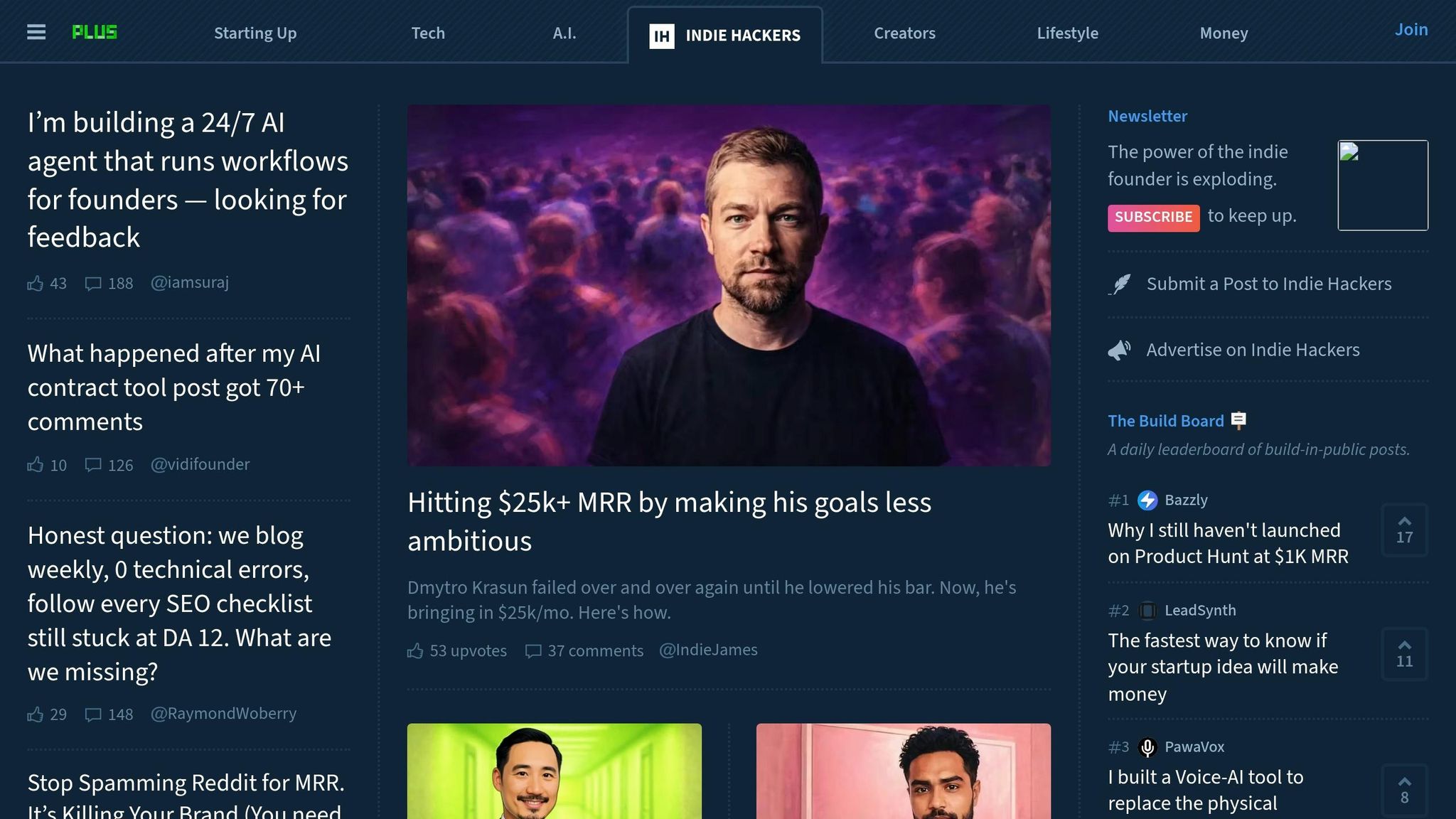
Indie Hackers is a vibrant community where founders and developers openly share their journeys, from revenue figures to growth strategies and pivots . Unlike platforms populated by casual browsers, Indie Hackers attracts a crowd of builders and decision-makers who are eager to learn from one another. The platform boasts a 23.1% engagement conversion rate per engaged post , while the r/indiehackers subreddit has grown to a thriving community of over 115,000 members .
Audience Size and Engagement
Indie Hackers thrives on its "quality over quantity" philosophy. While 54% of products listed on the platform report $0 in revenue - highlighting the community's role in amplifying product-market fit rather than creating it from scratch - it’s still a fertile ground for success stories. For instance, Plausible Analytics leveraged Indie Hackers between 2020 and 2021 to drive over 2,300 monthly visitors, achieving a 24% trial conversion rate. This was 17 times higher than their conversion rate from a #2 Product of the Day launch .
Best Suited for Specific Promotion Types
The platform shines when it comes to "building in public", where founders openly document their product development journey. A great example is Lou Tromans, who promoted his SaaS product, Spread, in 2020 by sharing relatable content that naturally tied into his product. This strategy brought in 1,200 visitors and 188 signups, resulting in a 12.5% conversion rate . Indie Hackers works particularly well for micro-SaaS products, developer tools, and niche AI solutions.
Success here hinges on the 90/10 rule: 90% of your contributions should deliver pure value - like sharing insights, answering questions, or breaking down lessons - while only 10% should subtly mention your product. As Pratham Naik put it:
I kept roughly a 90/10 balance: 90% pure value (sharing insights, answering questions, or breaking down lessons) and only about 10% subtle product mentions when it truly fit the context .
Community Features for Interaction
Indie Hackers offers several tools to deepen engagement and collaboration. The Build Board is a daily leaderboard highlighting "build-in-public" posts, giving founders visibility for their updates . There’s also a Product Listings directory where you can showcase your tools for free, even pre-launch . Need a co-founder or technical partner? The Partner Up section is designed for just that. Over on the r/indiehackers subreddit, using the "SHOW IH" flair to seek feedback (rather than for direct promotion) is encouraged .
Consistency is key to making an impact. Spending just 15–20 minutes daily on the platform can yield impressive results. For example, in October 2024, Pratham Naik adopted a community-first approach, attracting 1,200 targeted visitors to his website in just six weeks without spending a dime .
Cost of Participation or Promotion
The best part? Joining and engaging with the Indie Hackers community is completely free . For those looking for extra visibility, paid advertising options are available directly through the platform . Additionally, founders seeking more accountability and engagement can join the Ramen Club, a related community, for around $38 per month . However, patience is essential - results typically come after 4–6 months of consistent participation .
9. CodePen
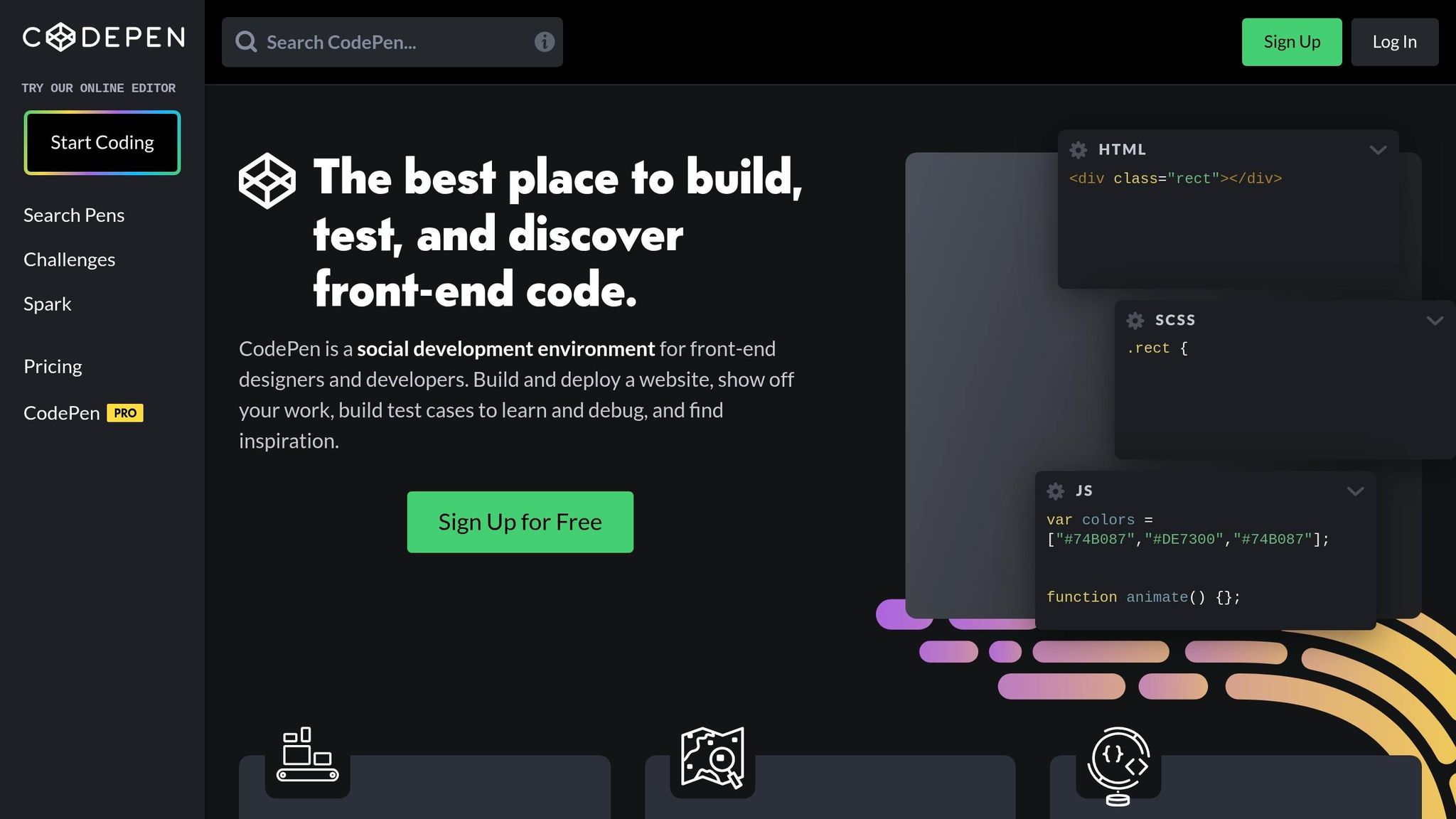
CodePen stands out as a vibrant hub for front-end developers, combining live coding interaction with a strong focus on creative sharing. It’s not just a platform but a lively community where over 1.8 million developers actively build, share, and engage with code [64,70]. Unlike passive forums, CodePen thrives on action. Users can "like" projects they admire, fork (copy and modify) interesting demos, and leave comments, creating a dynamic and interactive ecosystem [65,66]. With an average of 1.6 million visits and over 10 million page views each month, the platform fosters both creativity and collaboration [69,72].
Audience Size and Engagement
The CodePen community is highly specialized, with 45% identifying as front-end developers and 41% as full-stack or back-end developers . Nearly 20% of users have over a decade of experience, showcasing the platform’s appeal to seasoned professionals . Around 36% of the audience works in software development or SaaS companies, with another 17% in IT services . The "Spark" newsletter, which reaches a staggering 6.4 million subscribers, serves as a direct line to front-end professionals .
Best Suited for Specific Promotion Types
CodePen is ideal for showcasing products that benefit from interactive demos, such as UI libraries, CSS frameworks, and animation tools [64,65]. It’s no surprise that major brands like React, Vue, and MDN use CodePen to feature interactive examples in their official documentation, contributing to the platform’s impressive traffic . Co-founder Chris Coyier emphasizes this point:
It has become an integral part of documentation sites for popular technologies like React, Vue, Smashing Magazine, and MDN .
Brands like Slack, AWS, and MongoDB have taken advantage of CodePen’s branded challenges - month-long events where developers create projects using specific tools or themes . For example, in April 2025, developer Diana Moretti crafted a "Product Swiper" 3D slider demo during a CodePen challenge, showing how businesses can creatively highlight e-commerce UI components .
Community Features for Interaction
CodePen offers a range of features to encourage interaction and collaboration. The "Embed Pens" feature allows developers to showcase interactive, editable code snippets on external websites or within the CodePen community itself [66,67]. For live events, Presentation Mode dynamically displays code and results, while Collab Mode supports real-time collaborative coding sessions [64,66,68].
To help showcase products, developers can organize demos into Collections - curated galleries that highlight what’s possible with an API or library . PRO accounts add even more functionality, such as hosting assets like images, JSON files, and SVGs directly on the platform, making it easier for others to fork and experiment with your work [64,66]. For broader exposure, a product review by Chris Coyier shared across CodePen’s channels can amplify visibility .
Cost of Participation or Promotion
CodePen offers a free plan for creating and sharing public Pens, with no limit on the number of projects . Paid plans start at $19/month (billed annually at $228) for the Starter plan, which includes privacy controls, 2GB of asset hosting, and an ad-free experience . The Developer plan costs $29/month ($348 annually) and includes 10GB of hosting and up to 10 collaborators, while the Super plan is priced at $59/month ($708 annually) with 20GB of hosting and 15 collaborators .
For promotional opportunities like newsletter sponsorships, branded challenges, or site sponsorships, pricing is customized through BuySellAds . As BuySellAds explains:
CodePen gives brands the opportunity to reach deep into the developer community and gain valuable exposure for their products .
Next, we’ll compare these communities side by side to showcase their unique advantages.
10. LinkedIn Developer Groups
LinkedIn Developer Groups provide a unique way to connect with technical leaders, adding a business-focused layer to your outreach efforts. Unlike other platforms where developers share technical know-how, LinkedIn allows you to directly engage with decision-makers like CTOs, engineering managers, and principal engineers - those who hold the purse strings. As technical founder Jan van Musscher aptly puts it:
"LinkedIn is where technical decision-makers actually are. CTOs, engineering managers, principal engineers, architects - the people with budgets and buying authority."
Let’s dive into the platform’s audience metrics, promotional strategies, and costs.
Audience Size and Engagement
LinkedIn’s network spans over 950 million professionals , making it a powerful platform to establish credibility. Personal posts perform particularly well here, offering an excellent way to promote enterprise tools and platforms. Following the 70-20-10 rule - 70% technical value, 20% updates, and 10% product mentions - can help you build trust and authority. Engagement rates for technical content typically range from 2% to 5%, and LinkedIn’s detailed profiles and recommendations enhance credibility even before users interact with your content.
Interestingly, LinkedIn’s algorithm favors posts from individual profiles over corporate pages. This is a key advantage for technical founders and engineers looking to share their expertise and connect with peers.
Best Suited for Specific Promotion Types
LinkedIn is particularly effective for promoting products that require buy-in from technical executives, such as enterprise tools, infrastructure solutions, or developer platforms. By sticking to the 70-20-10 rule, you can create content that feels less like marketing and more like genuine knowledge-sharing. As Jan van Musscher notes:
"The best developer marketing doesn't feel like marketing at all. It feels like a senior engineer sharing hard-won knowledge with peers."
The platform also supports in-depth content, such as architecture breakdowns, tutorials, and long-form insights, which are less common elsewhere. A well-crafted technical profile can even achieve a conversion rate of 20% to 30% from profile visits to follows.
Community Features for Interaction
LinkedIn Groups come with several perks, including prioritized visibility in members’ feeds - no paid promotion required. The March 2025 update further enhances visibility for posts with meaningful engagement, rewarding those with diverse and substantive comment threads. Engaging with posts from technical influencers can also help boost your profile.
Optimizing group names and descriptions with relevant keywords improves discoverability. For the best results, post during peak times like Tuesday–Thursday mornings (7–9 AM) or mid-day lunch breaks (12–1 PM).
Cost of Participation or Promotion
Joining LinkedIn Groups is free, making it accessible for companies of all sizes. The platform boasts lead conversion rates three times higher than other major platforms, with 79% of B2B marketers citing LinkedIn as a top source for lead generation in 2024 . However, features like recruiter subscriptions and InMail credits can be costly for smaller businesses .
Community Comparison Table
Selecting the right developer community depends on factors like your budget, target audience, and promotional objectives. Below is a table that highlights the key differences between popular communities, focusing on audience size, promotion options, engagement methods, and costs.
| Community | Audience Size | Best Suited For | Engagement Options | Cost |
|---|---|---|---|---|
| daily.dev Ads | 1M+ developers globally | Developer tools, events, resources | In-feed ads, post page ads, personalized digest ads | Pricing varies – contact for details |
| GitHub | Leading open-source community | Open-source tools, DevOps solutions | Sponsorships, Marketplace listings, organic contributions | $100/month per maintainer to custom enterprise |
| Stack Overflow | 82% of developers visit monthly | Technology-specific tools (React, AWS) | Tag-targeted display ads, community participation | $10,000–$15,000/month minimum |
| 2.3M+ (r/programming) and 800K+ (r/devops) | Early adopters, niche tools, product launches | Community posts, self-serve ads | $5/day minimum; $0.50–$3.50 CPM | |
| Dev.to | N/A | Tutorials, career advice, community engagement | Organic posts, tutorials, sponsorships | Free for organic; sponsorship varies |
| Hashnode | N/A | Technical blogging, thought leadership | Blog posts, community interaction | Free for organic content |
| Discord Servers | N/A | Real-time support, direct feedback | Live chat, community building | Free to participate |
| Indie Hackers | N/A | Bootstrapped products, SaaS tools | Community posts, product launches | Free for organic participation |
| CodePen | N/A | Front-end tools, UI libraries | Code examples, demos | Free for organic; sponsorship varies |
| LinkedIn Developer Groups | 950M+ professionals | Enterprise tools, infrastructure solutions | Personal posts, group discussions | Free; InMail credits cost extra |
Reddit stands out for its ability to reach high-spending tech enthusiasts. Users on the platform are 98% more likely to invest over $1,000 on tech within six months compared to the general population . Additionally, 48% of developers influence technology purchases in their organizations, a figure that rises to 87% for engineering managers and 99% for senior executives .
It's also worth noting that over 50% of software engineers use ad blockers . This makes native, non-intrusive ad formats - like in-feed ads or developer newsletters - far more effective. For example, Stack Overflow's tag-targeted ads see click-through rates of 0.15% to 0.30%, while in-IDE platforms like Idlen achieve 2.1% to 3.5% .
For teams with tighter budgets, platforms like Reddit, GitHub, Dev.to, or Discord offer affordable ways to engage organically. On the other hand, if you're aiming to connect with enterprise decision-makers, LinkedIn and Stack Overflow provide access to senior technical leaders, though they come at a higher cost.
This table serves as a quick reference to help you identify which platform fits your goals and budget, complementing the earlier points discussed.
Conclusion
Developer communities provide an incredible opportunity to build trust, gather feedback, and connect with technical audiences where they naturally spend their time. But here’s the catch: developers are exceptionally skilled at spotting inauthentic marketing. They value genuine interactions over flashy, polished messages . To succeed, you need to focus on solving real problems and offering technical depth, not treating these spaces as just another advertising channel.
A great starting point is adopting a "lurker-first" approach. Spend time observing how the community operates - their norms, language, and unwritten rules - before diving into active participation. This helps you avoid coming across as overly promotional and gives you insight into what resonates with the audience. Whether you're answering questions on GitHub, contributing to Reddit threads, or posting tutorials on Dev.to, your first priority should be to deliver real value. Developers appreciate practical, helpful engagement far more than pushy marketing.
Transparency is another critical factor. Always disclose your affiliation when discussing your product. Pretending to be an unbiased user can backfire and cause lasting damage to your reputation in these circles. Being upfront about your role not only protects your credibility but also strengthens trust within the community. As Amit Ashwini from DataDab aptly puts it:
"The irony is that developer marketing works best when it barely feels like marketing at all" .
Focus your efforts on platforms with active, engaged users, and aim for consistent, long-term involvement. Research shows that 60% of developer marketing budgets fail to deliver strong results, but strategies built on meaningful engagement and targeted outreach perform much better . Instead of one-off promotions, prioritize communities where your audience is already active and invested.
Lastly, don’t shy away from criticism. Handling negative feedback publicly and with respect is a chance to build trust and improve your product. Developers remember how you address issues long after the initial conversation fades, so use those moments to demonstrate transparency and a commitment to improvement.
FAQs
Which community should I start with for my product?
To effectively connect with developers, start by focusing on platforms where they actively engage and trust the content shared. GitHub is perfect for highlighting technical tools, open-source projects, or documentation. For more conversational and real-time interaction, consider Reddit communities like r/programming or relevant Discord servers, where informal discussions can help build credibility.
Pick the platform that aligns with your product's goals. If your focus is on showcasing technical expertise, GitHub is the way to go. If you want to foster community-driven discussions, Reddit might be a better fit. These platforms can serve as a solid starting point for promoting your product effectively.
How do I promote without getting banned or downvoted?
To effectively promote your product without facing bans or downvotes, it’s crucial to respect the rules of the community and engage with authenticity. Take time to participate in discussions, offer helpful insights, and establish trust before introducing any promotions. Always ensure your posts align with the community guidelines, steer clear of spammy links, and back up your claims with factual content such as screenshots or data.
Target niche communities that permit promotional content, but make sure your contributions genuinely add value. By focusing on being helpful and transparent, you can avoid negative feedback and foster positive engagement.
What should I track to measure promotion success?
To evaluate the success of promotions in developer communities, focus on tracking engagement metrics such as comments, shares, and upvotes. Pair these with conversion metrics like click-through rates and the number of new followers gained. It's also essential to measure outcomes like leads or sales generated through campaigns, including sign-ups or downloads. Pay attention to genuine interactions, such as thoughtful discussions and peer endorsements, as these reflect trust and credibility within the community.